
where are the best places to study abroad?
I know a girl, Chidera, who just wanted to study in Canada, and trust me, she had done everything needed. Her family sold their lands to gather her proof of funds and visa application. But she still got rejected. And all the money, gone.
And truly, Canada refused roughly 52% of all study permit applications in 2024. And since December 2025, many students cannot apply to the US at all, because many African countries sit on the current travel ban list.
So if you are searching for the best places to study abroad in 2026, the honest answer is not the answer that was true in 2019.
Where Are the Best Places to Study Abroad in 2026?
The short answer: The best places to study abroad in 2026 for African students are Germany (tuition-free public universities plus DAAD scholarships), Ireland (English-speaking EU access with a 2-year stay-back), and Canada (because you can easily find work after school if your application is done well). The smartest students are also looking at Rwanda, Mauritius, and Ghana, where world-class programmes now exist without the visa lottery, the racism tax, or the winter.
This blog will help you understand the best place to study abroad, what studying abroad actually costs, how to win a scholarship to study abroad, and the step-by-step process to get there.
TL;DR: Best Places to Study Abroad in 2026
- Germany is the best value for money for students. You can get free tuition at most public universities, DAAD stipends of €992–€1,400 per month, and an 18-month post-study job-seeker visa.
- Ireland is also nice. International students can get a €10,000 government scholarship, a 2-year stay-back option, and Europe’s tech and pharma hub in English.
- Canada is harder to enter now, but if you manage to enter, they have easy student work rules since April 2026, and they still offer a 3-year post-graduation work permit.
- Rwanda, Mauritius, and Ghana host Carnegie Mellon Africa, the Mauritius Africa Scholarship Scheme, and Ashesi University and you can get in easily.
- Budget honestly. Total first-year costs range from under $5,000 (Ghana, Rwanda) to over $40,000 (Canada, UK). The scholarship section below shows how to close that gap.
This will be a long post, so please bookmark it if you cannot read to the end at once or listen to the audio version.
How Do You Choose the Best Places to Study Abroad?
You may be driven by your dream. Perhaps you have always dreamt of studying in the UK or Malta, and you will do anything for your dream. Or maybe you are driven by the insecurities in your home country. For example, many Nigerian professionals are running abroad to study so that they can get better work there instead of remaining in Nigeria.
But before you pick, you must ensure that the place you pick is fitting for you and your career goals. Don’t choose by reputation. A country is not a brand. Whichever country you are picking, you are entering their system with the tuition burden, visa structure, labour market, and their daily cost of living. If you make a wrong choice, you may waste your money on a degree that converts into nothing.
We picked all the 7 best places to study abroad in this blog post after they have passed five criteria:
- Acceptability Rate: Does this country approve African student visas at a reasonable rate, or does it collect application fees and say no?
- Scholarships: Are there options for scholarships that African students can realistically win, year after year?
- Cost: Can your household carry the true study abroad cost, including tuition, proof of funds, rent, flights, and travel insurance, without breaking the bank?
- Conversion: Does a degree from this place turn into a job and a residence permit? Or does the path collapse the day after your graduation photos, like in Nigeria?
- Lived experience: Will you find a community, safety, and basic dignity?
Before you fall in love with any flag, ask one question of every option: Is this path a platform, a bridge, or a trap for someone like me?
Anyway, let us start with the most common place, Europe.
What Are the Best Places to Study Abroad in Europe?
One of the best reasons for choosing any place in Europe is its system, called Bologna process.
What is the Bologna Process, and why should African students care?
The Bologna Process is the reason a degree earned anywhere in Europe travels across all of Europe.
This means all the 49 countries under this system use the same bachelor’s–master’s–PhD structure, the same credit currency (ECTS, where a full academic year equals 60 credits), and automatic recognition of qualifications across the entire European Higher Education Area.
For an African student, this means you can finish a bachelor’s in Poland for €3,000 a year, then apply for a master’s in Germany or the Netherlands with no credential-evaluation drama, because the Polish degree carries the same legal weight as a German one.
However, this is only about the degree. Visa is a different thing entirely. Moving from a Polish bachelor’s to a German master’s still means a fresh German visa application, with its own proof of funds.
You can learn everything about the Schengen visa application.
Why is Germany One of the Best Places to Study Abroad in 2026?
Germany is one of the best places to study abroad because most public universities charge no tuition fees, even to international students. While a UK master’s costs between £10,000 and £18,000 a year, a comparable German degree at a public university would cost a few hundred euros per semester.
Wait, there’s more. The major reason almost every African student talks about Germany is its scholarship options.
The DAAD scholarship pays a monthly stipend of €992 for master’s students and €1,400 for doctoral candidates. They also pay for your travel and insurance, and African students are among its biggest beneficiaries. After you graduate, Germany gives you an 18-month job seeker visa with clear routes into a work permit or the EU Blue Card.
But as sweet as it sounds, Germany demands discipline. The biggest constraints are the requirements of the blocked account (over €11,000). Also, embassy appointment slots in Africa are scarce, and the job market rewards Germans more.
Another issue is that many Africans are getting rejected because they write their motivation letters with AI. You must write your own in your own voice. It matters more than ever.
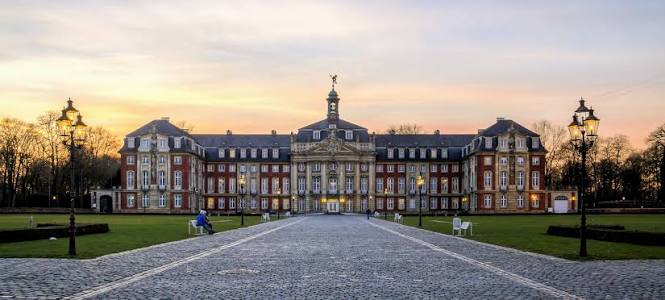
Germany is Best for
Engineering, IT, healthcare, and science students who can raise the blocked account but need a scholarship for tuition.
Is Ireland a Good Place to Study Abroad for African Students?
Yes, and it is the most underrated English-speaking destination in Europe. Ireland gives you an English-taught curriculum inside the EU (with the Bologna process). Ireland also has a scholarship with the Government of Ireland International Education Scholarship worth €10,000 plus a full fee waiver, and a 2-year stay-back permission after a master’s degree.
The job market is even better. Dublin hosts the European headquarters of Google, Meta, Pfizer, and most major pharmaceutical companies. Nigerians and Indians are already among the largest international student groups there. That means you arrive into an existing community with churches, restaurants, and people who can help you (especially with rent) before you sign anything.
Okay, I have to give you this one honestly, that rent is a big issue for most of us. Dublin’s housing crisis is severe, and accommodation can quietly consume a lot. Now Ireland job market rewards precision. If you have a vague degree with no labour-market target, you will not really get any real job.
Ireland is Best for
Tech, pharma, finance, and healthcare students who want Europe in English with a genuine stay-back route.
Differences Between Germany and Ireland
Ireland is not like Germany. They don’t have the German-style blocked account, but you’ll still need to show roughly €10,000–€12,000 in accessible, seasoned funds for the visa.
A blocked account (Sperrkonto) means you deposit the money into a special German bank account before your visa is issued, and it’s literally locked. You can only withdraw a fixed amount each month (around €992) during your studies. That’s Germany’s way of guaranteeing you can support yourself.
Ireland only requires proof of funds. Naturally, Ireland requires you to show proof of roughly €10,000–€12,000 in living costs. The Irish system asks you to demonstrate you have the money, but it doesn’t lock the funds away in any bank like Germany.
So the practical difference is:
- In Germany, money must physically sit in a German blocked account before the visa. The money is released to you in monthly drips.
- In Ireland, money must be shown as available, and it stays under your control.
What About the UK in 2026?
The UK still works, but it is no longer the default. The Graduate Route visa survived the policy battles of 2024–2025 and gives most new graduates 18 months to work. Chevening and Commonwealth Shared Scholarships remain among the most accessible fully funded awards for African students anywhere.
However, the cost structure is brutal. You will still pay tuition of £10,000–£18,000, show proof of £13,000+ in living funds, an Immigration Health Surcharge of more than £1,600, and restrictions on dependants for taught master’s students.
The UK is Best for:
Scholarship students (Chevening, Commonwealth) and those with strong family networks already in the UK.
Is Canada Still One of the Best Places to Study Abroad?
As one of the best places to study abroad, Canada is still worth it for the right student. However, the process is no longer casual. The era of treating Canada as an easy conveyor belt from classroom to PR card ended with the study permit caps.
In 2024, 52% of study permit applications were refused, and the government cut permit targets again for 2026.
Still, the Post-Graduation Work Permit gives you up to 3 years of open work after graduating. This is the clearest runway to permanent residency anywhere in the West. And in April 2026, Canada loosened the rules for students already in the system. Now, co-op placements and internships no longer require a separate work permit, and proposals are in motion to let students keep working while waiting on permit extensions.
Canada now punishes weak planning ruthlessly. A vague diploma from an obscure private college is a trap. A targeted degree at a credible public institution, in a field on a provincial shortage list, with a genuinely personal study plan letter, is still a platform. Most refusals trace back to the officer not being satisfied with the applicant’s purpose, which means your statement of purpose must be treated very seriously.
Moreover, Canada is not a European country, so the Bologna process doesn’t work here.
Canada is the best for
Disciplined students targeting nursing, skilled trades, and tech at established public universities.
What Are the Best Alternative Places to Study Abroad on a Budget?
If Germany’s blocked account or Canada’s refusal rate puts the big destinations out of reach, three names keep coming up in Nigerian study-abroad conversations: Poland, Georgia, and Ukraine. One of them is a genuine opportunity, one is a calculated trade-off, and one is a hard lesson we should never forget.
Is Poland a good place to study abroad for African students?
Yes, Poland is the strongest budget route into the EU right now. Tuition at Polish universities runs €2,000–€7,000 a year. This is a fraction of UK or Irish fees. They have English-taught programmes in medicine, engineering, IT, and business.
Students can work 20 hours a week during the semester and full-time during holidays, and several Polish medical schools (Warsaw, Gdańsk, and others) hold the international recognition that lets graduates sit licensing exams back home and abroad.
The good thing is that the Bologna Process covers Poland. This means your €3,000-a-year Polish bachelor’s carries the same legal weight in Germany or the Netherlands as a degree earned there. You can finish undergrad in Kraków and apply for a master’s in Berlin with zero credential-evaluation drama. The cheap entry point does not produce a second-class degree, and that is the whole point of the strategy.
The only reason why this is not on the same level as Germany is that black communities in Poland are small outside Warsaw and Kraków, and many students report that racism in smaller towns is real and tiring. Also, the job market rewards Polish-language skills, so treat Poland either as a place you commit to (and learn the language) or as a Bologna stepping stone toward Western Europe.
Poland is Best for:
Students who need an EU education under €7,000 a year and are playing a two-step game toward Germany, the Netherlands, or Ireland.
Should African students study medicine in Georgia?
Georgia works best for the medical students. Public-university medical degrees cost $3,500–$8,500 a year. They are taught in English, and Georgia is easy to enter for Africans, and they also have a low cost of living. Georgia is also a Bologna Process member (it joined in 2005), so its degrees follow the standard European structure even though the country sits outside the EU.
Now, the caveats, because agents will not give them to you. Georgia offers no EU work rights and no meaningful post-study pathway. The local job market is tiny, so nearly every graduate must leave Georgia to build a career. Now, before you sign up for any degree, ensure that the country you intend to use the degree in recognises it. For example, if you want to use your Gerogia degree in Nigeria, you will have to check the MDCN’s list. A six-year medical degree from an unrecognised school is the most expensive piece of paper you will ever own.
Georgia is Best for:
Medical students with a verified, recognised university and a clear plan for where they will practise after they get the degree. It should be seen as a bridge.
Can you still study in Ukraine in 2026?
Many of my friends graduated from Ukraine universities. In fact, over 70,000 international students, including more than 4,000 Nigerians, got their best and respected medical and engineering degrees at low fees in Ukraine. But the war ended that overnight.
As of mid-2026, the fighting continues. We are hearing of brief truces in April and May, but it collapsed within days, and peace negotiations, despite American pressure and deadlines, have not produced a signed agreement. No responsible adviser can recommend enrolling for the coming intake.
But the deeper lesson is what happened to African students when the missiles started falling, because it should shape how all of us choose destinations. Students reported being ordered off evacuation buses at the Polish border while Ukrainian nationals rode on. Then the EU’s Temporary Protection Directive, which gave millions of Ukrainians instant refuge and rights, excluded most third-country nationals entirely. Of nearly half a million non-Ukrainians living in Ukraine, only around 54,000 received protection. Thousands of African students who had done everything right found themselves undocumented, homeless, or pressured to return to a war zone to sit final exams.
The point is that you must plan for things of this nature. When you choose a destination, ask who protects you if things go wrong. For many Africans, our government either doesn’t care or cannot protect us out there. So choose carefully.
What Are the Best Places to Study Abroad Within Africa?
Hey, traveller, let’s talk about Africa. Generations of us were taught, without anyone saying it aloud, that education only counts when it happens in a cold country that once colonised a warm one. That instinct is colonial residue. While Western embassies are busy rejecting Africans, several African countries are building institutions that compete globally, and they will actually let you in.
Why is Rwanda Becoming Africa’s Education Hub?
Rwanda paired political stability with deliberate institutional recruitment. Kigali hosts Carnegie Mellon University Africa, the only US research university with a full degree-granting campus on the continent. This university keeps producing master’s graduates in engineering, AI, and IT hired across Africa and globally. The African Leadership University (ALU) runs its flagship campus there with substantial financial aid.
It is more practical because you can have visa-on-arrival or visa-free entry as an African passport holders. The streets in Kigali safe enough to walk at midnight, and Rwanda has a growing tech ecosystem hungry for graduates. Nobody at the airport will eye you or assume that you are an economic threat just because you are black. That is worth more than people admit.
What is the Mauritius Africa Scholarship Scheme?
The Mauritius Africa Scholarship Scheme is a government programme that funds African students at Mauritian public universities. They will cover your bachelor’s, master’s, and doctoral degrees, covering tuition and a living allowance. It runs annual cycles (the 2026 edition is open through national bodies like Rwanda’s Higher Education Council) and remains one of the most genuinely winnable fully funded schemes on the continent.
Beyond the scholarship, Mauritius offers an English and French-speaking environment, a stable economy built on finance and tourism, and ALU’s second campus. For a student priced out of Europe, Mauritius is a beautiful and better replacement.
Should International Students Consider Ghana?
Ghana deserves serious consideration, especially for West Africans and the diaspora. The University of Ghana, Legon, ranks among the continent’s strongest institutions, and Ashesi University has built a global reputation for engineering and ethical leadership education with generous financial aid, that it appears on Yale’s own list of African universities offering substantial funding to international students.
Accra offers a city actively organised around welcoming Black students and diasporans since the Year of Return, ECOWAS free movement (no visa at all for West Africans), and tuition that costs a fraction of a single UK semester.
However, there are issues with bureaucracy, and you may see that there are fewer research labs than in big places like Germany. Yet the daily experience of being default-normal rather than perpetually foreign changes what many students can achieve academically.
How Much Do the Best Places to Study Abroad Actually Cost?
Studying abroad costs anywhere from under $5,000 to over $40,000 for your first year, depending on which of the best places to study abroad you choose. In 2026, Ghana and Rwanda sit at the low end, Germany in the middle (free tuition but an €11,000+ blocked account), and Canada, the UK, and Australia at the top.
This table breaks down the real numbers, including the proof of funds, fees, and insurance that ambush unprepared families.
| Destination | Tuition (per year) | Proof of Funds + Living Costs | Flagship Scholarship | Post-Study Work |
|---|---|---|---|---|
| Germany | Free at most public unis | €11,000+ blocked account | DAAD (€992–€1,400/month) | 18-month job seeker visa |
| Ireland | €10,000–€25,000 | ~€10,000–€12,000 | Govt of Ireland (€10,000 + fees) | 2-year stay-back |
| Canada | CA$16,000–$25,000 | CA$23,000 + fees | Vanier, university awards | 3-year PGWP |
| UK | £10,000–£18,000 | £13,000+ plus IHS £1,670 | Chevening, Commonwealth | 18-month Graduate Route |
| Rwanda | ~$3,000–$16,000 | Modest; low cost of living | Mastercard Foundation, ALU aid | Growing tech market |
| Mauritius | Covered under scheme | Living allowance included | Mauritius Africa Scholarship | Finance/tourism economy |
| Ghana | $1,000–$8,000 | Low for ECOWAS students | Ashesi aid, Mastercard Foundation | ECOWAS work mobility |
Let me give you an honest advice for when you want to budget for where you pick. First, the visa stage itself costs money, and it is not refundable. You will need to spend money on things like application fees, medicals, biometrics, and service charges. This can total $1,500–$3,500 before you board a plane, and if they reject your visa application, the money is gone. Second, the proof-of-funds figure is not a decoration. Canadian and UK officers will reject your application if the money just magically appeared in the account in like 2 weeks before your application. Season your funds for at least three to six months.
How Do You Get a Scholarship to Study Abroad?
You get a scholarship to study abroad by matching your profile to the right scheme early, applying to several at once, and writing essays in your own voice. More than 5,000 fully funded scholarships are available to African students at top universities worldwide, but they require preparation.
Let me give you a clear guide:
- Start 12–18 months before your intake. Chevening closes in November for the following September. DAAD deadlines fall a full year ahead. Commonwealth Shared Scholarships open in November and close in December.
- Match the scholarship to your profile. DAAD favours development-relevant master’s fields. Chevening wants demonstrated leadership and a commitment to return home. Mastercard Foundation Scholars targets academically strong students with financial need, with partner universities in Ghana, Rwanda, Kenya, South Africa, the US, and the UK. Applying to schemes that don’t fit you wastes your strongest months.
- Stack partial awards. A £18,000 Global Futures award (Manchester) or a university merit discount can combine with family funds where a full ride doesn’t land. Two partial yeses beat ten full-ride rejections.
- Write the essay yourself. Selection committees and visa officers are now trained to spot AI-generated statements, and German embassies are rejecting applications over it. So you must use your specific story and the actual problem you want to solve at home. If you need help with writing, hire a writer.
- Apply to African schemes too. The Mauritius Africa Scholarship Scheme and Ashesi’s aid packages have far less competition per seat than Chevening, and the education is not the lesser option people assume.
What About Racism and Daily Life?
See, to be honest with you, many of the best places to study abroad have racism issues. Choosing a place to study abroad is also choosing how often you will be the only Black person in a room, how a landlord reacts to your name, and whether the police see a student or a suspect.
We have seen many patterns from students who have lived it. Bigger, more international cities like Berlin, Dublin, Toronto, and Montreal are consistently easier than small towns. The first thing to look for is an existing community. And this is where the African destinations hold an advantage that no Western city can match. In Kigali, Accra, or Port Louis, your competence is never read through your skin first. That mental energy can go into your studies, instead of always looking over your shoulder.
Frequently Asked Questions About Best Places to Study Abroad
What are the best places to study abroad in 2026?
For African students, the strongest Western options are Germany (free tuition, DAAD scholarships, 18-month post-study visa), Ireland (€10,000 government scholarship, 2-year stay-back), and Canada (3-year post-graduation work permit, though refusal rates are high). Within Africa, Rwanda, Mauritius, and Ghana offer globally credible programmes with far easier entry.
How much does it cost to study abroad?
Between roughly $5,000 and $40,000+ for the first year, all-in. Ghana and Rwanda sit at the low end; Germany costs little in tuition but requires an €11,000+ blocked account; Canada and the UK demand $35,000–$45,000 once tuition, proof of funds, and fees are counted. Budget an extra $1,500–$3,500 in non-refundable visa-stage costs.
Is Poland cheaper than Germany for international students?
For tuition, no. Germany’s public universities are free, while Poland charges €2,000–€7,000 a year. But Poland’s total entry cost is often lower because it has no €11,000+ blocked account requirement, and living costs in Polish cities undercut Munich or Hamburg. Both sit inside the Bologna zone, so either degree travels across Europe.
What is the Bologna Process and why does it matter?
The Bologna Process is an agreement among 49 European countries that standardised university degrees into one system: the same bachelor’s–master’s–PhD structure, the same ECTS credit system, and automatic recognition across the European Higher Education Area. It means a degree from a budget country like Poland carries the same weight as one from Germany or France, though visas still have to be applied for separately in each country.
Is it safe to study in Ukraine now?
No. As of mid-2026, the war is ongoing, ceasefires have not held, and no peace agreement has been signed. Students should also know that when the war began, most African students in Ukraine were excluded from the EU’s temporary protection scheme. Poland now offers much of what Ukraine once did, with EU protections attached.
How do I get a scholarship to study abroad?
Start 12–18 months early, match schemes to your profile (DAAD for development-related fields, Chevening for leadership, Mastercard Foundation for high-achieving students with financial need), apply to several simultaneously, and write your essays yourself as committees and embassies now reject AI-written statements.
Which country gives free tuition for international students?
Germany charges no tuition at most public universities, even for international students. Within Africa, the Mauritius Africa Scholarship Scheme covers both tuition and living costs at Mauritian public universities.
Can Nigerian students still study in the United States?
Not at present. Nigeria was placed on the US travel ban list following the December 2025 visa processing freeze, and Nigerian students already in the US face an indefinite hold on OPT applications. Build your plan around other destinations until policy changes.
Is studying in Africa respected by employers?
Increasingly, yes. Carnegie Mellon Africa awards the same degree as Pittsburgh. Ashesi graduates are recruited by multinationals, and the University of Cape Town and the University of Ghana carry global weight. Employers hiring for African markets often prefer graduates trained on the continent.
What is the biggest mistake students make when choosing where to study abroad?
Choosing by reputation instead of fit. A famous country with an 80% refusal rate, no scholarship for your profile, and no job market for your field is worse than a less prestigious country where you can enter, fund yourself, work, and convert the degree into a career.
Planning your journey from Africa? Explore our guides on Schengen visa applications, German long-term residency pathways, and intra-African relocation destinations on travelradio.live.