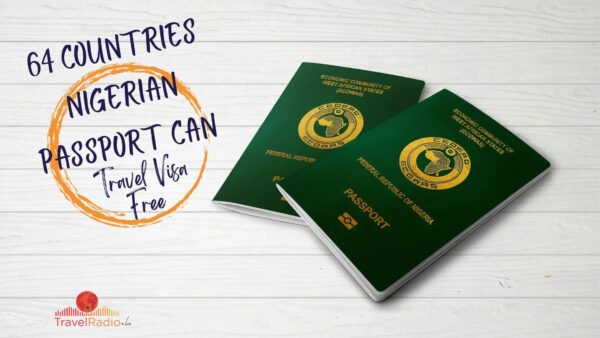
Schengen Visa Application is not new in Nigeria.
The good thing about Europe travel is that no matter how many countries you want to visit, all you need is one visa. And we have literally talked about all the countries you can visit on a trip with the Schengen Visa.
Read all about it here: Cost to Travel from Nigeria to Europe in 2026: Real Budget Breakdown (No Fluff)
This post is a complete comprehensive guide on everything you must know about Schengen visa application, how to apply, mistakes to avoid and all. Bookmark this post and share with your friends.
TL;DR about Schengen Visa Application
- A Schengen visa gives you access to 29 European countries with one permit, valid for up to 90 days within any 180-day period.
- Nigerians must apply for the visa at least 6 to 8 weeks before travel. However, nearly half of all Nigerian applications (45.9%) were rejected in 2024.
- The official visa fee is €90 for adults. If you are using an agent, like VFS Global, add their service charges (₦35,000–₦50,000) and insurance, and your real cost is closer to ₦200,000+.
- VFS Global handles most embassies, but France uses TLScontact and Spain uses BLS International. You can and should use those alternatives where they apply.
- If you want to avoid rejection, have a solid bank statement, a well-written cover letter, and travel insurance from a compliant provider.
- A Schengen visa cannot be used to relocate permanently to European countries like Germany. For long-term residence, the right pathways are the EU Blue Card, the Opportunity Card, a student visa, or family reunification.
What Is a Schengen Visa and Who Needs One in Nigeria?
A Schengen visa is a short-stay travel permit that lets you enter and move freely across 29 European countries under a single document. As a Nigerian passport holder, getting this visa is compulsory before you board any flight to Europe.
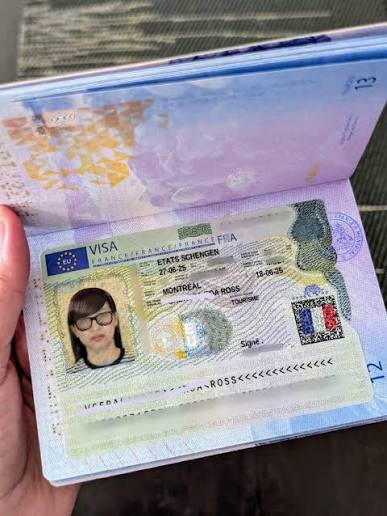
The Schengen Area covers 29 countries including France, Germany, Italy, Spain, Portugal, Austria, Belgium, the Netherlands, and Switzerland, as well as non-EU members like Norway, Iceland, and Liechtenstein. As of 2025, Bulgaria and Romania have fully joined the Schengen zone. This means that you can also enter the two countries with the same Schengen visa you used to enter Spain or Germany.
The most common type of Schengen visa is the Type C visa. This is what most tourists, business travellers, and family visitors apply for. It allows a maximum stay of 90 days within any 180-day period. There is also a Type A (airport transit only) and Type D (long-stay national visa, issued by individual countries separately).
How the Schengen Visa Application Process Works in Nigeria
For a successful Schengen visa application in Nigeria, you must have booked an appointment at least 2 months in advance. This means you have submitted your biometrics in Lagos or Abuja, and are waiting up to 15 to 45 days for a decision.
Let me give you a full breakdown of a Schengen visa application from Nigeria, from start to passport collection:
Step 1: Identify your primary destination country: Apply at the embassy or visa application centre of the country where you want to stay the longest, in case you plan to visit many countries at once. If you plan equal time across multiple countries, apply through the embassy of your first port of entry.
Step 2: Gather your documents: The documents you bring are the most important part of your application. I will also give you a full list of the documents you will need to provide for Schengen visa application in the section below.
See full details on documents you need to provide for different visas: Nigeria Visa Requirements: Here’s How To Travel Abroad Without Problems
Step 3: Book your appointment: In Nigeria, you may have to book an appointment through one of three outsourced centres depending on your destination. Most countries use VFS Global, TLScontact (France and Belgium), or BLS International (Spain). You will see details on each of the agencies in the sections below.
Step 4: Attend your appointment in person: You will submit your physical documents, pay your fees, and have your biometrics collected (fingerprints and a photograph). All Schengen countries now issue biometric visas only. Applicants aged 12 and above must be present in person to allow biometric data to be collected.
Step 5: Track and collect: Processing typically takes 15 calendar days, though it can extend to 45 days for Nigerians during peak seasons. Once a decision is made, you can collect your passport in person or opt for courier delivery.
Schengen Visa Requirements: Documents You Need in Nigeria
For a Schengen visa application from Nigeria, the requirements include a passport valid for at least six months, travel insurance covering a minimum of €30,000, and proof of financial means and ties to Nigeria, such as a bank statement and an employment letter.
Below is the complete document checklist for Nigerian applicants in 2026:
#1. Identity Documents
- Valid international passport with at least two blank pages and valid for at least three months beyond your planned return date
- Old passports (if applicable, to prove travel history)
- Two recent biometric passport photographs (35mm x 45mm, white background, taken within the last three months)
#2. Application Form
- Schengen visa application forms are always free and must be obtained from official portals like VFS Global, TLScontact, or BLS International, depending on your destination country. Some countries, like France and Germany, require digital completion before printing.
- For Germany: complete digitally on the VIDEX portal, then print.
- For France: register on France-Visas first, then print the generated form and receipt.
- For Spain: download directly from BLS Spain Visa Nigeria.
#3. For Financial Proof
- Bank statements for the last 3 to 6 months, showing consistent credit activity and sufficient balance
- The general benchmark is approximately €100 per day of your trip
- For sponsored applicants, you need a sponsorship letter plus the sponsor’s bank statements and employment documents
#4. Travel Plans
- Round-trip flight reservation (not necessarily a paid ticket, a reservation or “dummy ticket” is acceptable at most embassies)
- Hotel bookings or a confirmed invitation letter from your host in Europe
- A detailed day-by-day travel itinerary
#5. Proof of Ties to Nigeria (Critical for Rejection Prevention)
- Employment letter from your employer, on letterhead, stating your position, salary, and approved leave
- For self-employed applicants, you need a certificate of Incorporation, CAC registration, and recent tax clearance certificate
- For students, you need a school enrollment letter
- Property documents, family commitments, or anything that demonstrates you have concrete reasons to return
#6. Insurance
- Travel insurance covering a minimum of €30,000, valid for the full duration of your trip and across all Schengen countries. Buy from a reputable provider because some consulates reject policies from unknown insurers.
#7. Additional Documents by Country
- France: Campus France letter (if applying for a student visa)
- Germany: Purpose-specific documents (invitation letter for business, admission letter for studies)
- Italy: Proof of paid accommodation (not just a reservation)
Schengen Visa Application Fee and Costs in Nigeria
For the Schengen visa application from Nigeria, the fee has two parts: (1) the embassy fee and (2) the visa centre (agency) service charge. They are separate payments.
Embassy Fee (Paid to the Consulate)
As of March 2026, the Schengen visa fee for adults is €90, a figure set by the EU Visa Code and uniform across all 29 Schengen states. Children aged 6 to 11 pay €45, but children under 6 are free.
VFS Global/TLScontact Service Charge
VFS charges around €38 in Nigeria. As of 2026, the VFS service charge is approximately ₦35,000 to ₦50,000 depending on the embassy and any optional services you select, such as courier delivery of your passport, SMS notifications, or premium lounge access. These fees are separate from the €90 Schengen visa fee paid to the embassy.
Let me help you breakdown the costs:
| Item you will pay for | Approx. Amount |
|---|---|
| Embassy visa fee (adult) | €90 (~₦143,000–₦150,000) |
| VFS Global/TLScontact service charge | ₦35,000–₦50,000 |
| Travel insurance | ₦1,500–₦67,000 |
| Courier delivery (optional) | ₦15,000–₦25,000 |
| Biometric passport photos | ₦3,000–₦8,000 |
| Total estimated cost | ₦200,000–₦300,000+ |
Let me put this one here, so it doesn’t surprise you later. Visa fees are non-refundable even if the visa is rejected. Payment is for processing, not an approval guarantee. This is why getting your documentation right before you pay matters enormously.
VFS Global in Nigeria: Why Applicants Rate It Poorly
VFS Global is a private company contracted by European governments to receive and process visa applications from countries like Nigeria. They do not decide whether your visa is approved. That decision belongs entirely to the embassy or consulate. VFS Global is simply the front desk. They take your documents, collect your biometrics, and send everything to the embassy.
But people don’t really like VFS Global, though. For example, VFS Global has a rating of 1.4 stars from 359 reviews on Sitejabber, indicating that most customers are generally dissatisfied.
People complain about poor customer service, rude or incompetent staff, unhelpful call centres that require multiple calls without resolution, and a lack of timely follow-ups on applications.
Their website can also have booking issues. People complain of extended delays in processing visas and returning passports, and reports of lost documents due to poor organisation.
People often pay for premium lounge services to improve their experience, only to find the difference negligible. The VFS Global call centre is frequently unreachable. And when errors occur with your application or passport, the system for reporting and resolving them is nearly opaque.
But the issue is that VFS Global has a monopoly contract with most European embassies in Nigeria. That means we don’t have any other choice.
Alternatives to VFS Global for Schengen Visa in Nigeria
Yes, for certain countries, during a Schengen visa application from Nigeria. The Schengen embassies in Nigeria do not all use VFS Global. These are some other agencies you can use for your Schengen visa application.
TLScontact — For France (and Belgium)
TLScontact facilitates the visa application process by informing applicants about requirements, offering visa appointments, collecting biometrics, and forwarding visa applications to the relevant embassy.
France operates TLScontact visa application centres in Lagos and Abuja. The Abuja centre is located on the ground floor of Murkhtar El-Yakub Place, beside Metro Plaza, on Plot 1129 Zakariya Maimalari Street, Central Business District.
To apply for a French visa, you first need to fill out the application form on the France-Visas website before booking an appointment at the TLScontact centre. So there is a two-step process: France-Visas first, TLScontact second. Complete your France-Visas registration, download the confirmation receipt, then proceed to book your TLScontact appointment.
User experience at TLScontact tends to be slightly better reported than VFS, though the same fundamental issues with slot availability apply during peak periods.
BLS International For Spain
BLS International handles Spain visa applications in Nigeria exclusively, receiving and processing Spanish visa applications as authorised by the Ministry of Foreign Affairs, Spain.
Their website is nigeria.blsspainvisa.com. The application form is free and available for direct download. BLS also advises applicants strongly against making payments to any staff member outside of official channels, which signals that informal “facilitation” has been a documented problem in their centres.
How to Navigate VFS Global for Your Schengen Visa
If your destination country uses VFS Global for the Schengen visa application from Nigeria and you have no alternative, let me teach you how to navigate the system as efficiently as possible.
Book Your Appointment Early
Begin checking for appointment slots at least 8 to 10 weeks before your planned travel date. The earliest you are legally allowed to apply is six months before travel.
Check for Slots at Multiple Times of Day
Slots are released in batches and disappear fast. Early morning (around 7am–8am Nigerian time) and late evening are when new slots tend to appear. Set a reminder and refresh consistently, especially mid-week.
Use the Official Website Only
The only legitimate booking portal is nigeria.vfsglobal.com. BLS and VFS both warn that their staff never ask applicants to make cash payments or any other form of payment to obtain an appointment or expedite the visa application process. If anyone contacts you claiming to sell VFS Global appointments, they are scammers operating outside the system. Confirmed appointment bookings are paid through the official portal only.
Choose the Right Service Tier Deliberately
VFS offers optional add-ons including premium lounge access, SMS tracking, and courier return. The premium lounge does reduce your waiting time and gives you a more structured document review before submission. Whether it justifies the additional ₦50,000+ cost is a personal calculation. The regular service works, even if the waiting room experience is stressful.
Prepare Your Documents to Perfection Before You Arrive
VFS staff do a preliminary document check at the counter. If your documents are incomplete, you may be turned away without refund of your service charge. Print a document checklist from the embassy’s official website (not VFS’s checklist, which is sometimes generic) and cross-reference everything the night before your appointment.
Track Your Application Using Your Reference Number
Once documents are submitted, you can track your application status on the VFS portal using the reference number on your appointment confirmation. Do not call to chase. Use the online tracking system. It’s faster and more reliable.
Nigeria’s Schengen Visa Rejection Rate in 2024/2026
According to data from the European Commission, Nigeria recorded the third-highest rejection rate globally in 2024, with 45.9% of applicants denied. This indicates that nearly half of Nigerian applicants were refused entry into the Schengen Zone.
Nigeria filed 111,201 Schengen visa applications in 2024. France was the top destination with 55,833 applications, but France also rejected 24,301 of those applications. Switzerland had the highest approval rate for Nigerian applicants at 79.40%.
Nigerians lost an estimated $5 million in non-refundable visa fees to rejected applications in 2024. If you did not apply correctly, the money is gone before a single flight is boarded.
Common Reasons for Schengen Visa Rejection in Nigeria
When evaluating a Schengen visa application from Nigeria, the ten most common reasons for Schengen visa refusal in Nigeria are:
- incomplete or incorrect documentation with missing forms, mismatched dates, or passport validity issues;
- insufficient financial proof;
- unclear purpose of travel;
- weak ties to Nigeria; and
- problems with travel insurance.
Let me try to explain what each one of them means in practice, and how to fix it:
Incomplete or Incorrect Documentation
Missing a single document or having a document that doesn’t match another (like a flight date that doesn’t align with your hotel booking, for example) is grounds for instant refusal. Go through every document as a set, not individually, and ensure the dates and details are internally consistent.
Insufficient Funds
The general guide is approximately €100 per day of travel. A three-week trip requires you to show roughly €2,100 in available funds. The money must already be in your account. If you take out a loan before your application, that last-minute deposits that inflate a previously low balance are a red flag that experienced visa officers notice immediately. It may cause them to reject your application.
No Demonstrated Ties to Nigeria
The embassy is assessing one key question, will this person return? A detailed employment letter, property ownership, dependent family members, and a well-established professional history in Nigeria all answer that question. A weak or generic employment letter is one of the most common causes of refusal for Nigerian applicants.
Poor Travel Insurance
Your insurance policy must explicitly cover all Schengen countries, the full dates of your travel (including a small buffer), and show at least €30,000 in medical emergency coverage. Policies that cover only your named destination country are insufficient for a multi-country itinerary.
A Vague or Implausible Itinerary
Your cover letter and itinerary must tell a coherent story. Why this country, at this time, for this duration? Where are you staying, and can you prove it? Embassy staff review thousands of applications and recognise when a travel plan is generic or clearly assembled for the application rather than reflecting genuine travel intent.
How to Increase Your Schengen Visa Approval Chances
To ensure a successful Schengen visa application from Nigeria, note that the following practices, taken together, give Nigerian applicants a materially stronger application.
Choose Your Destination Country Strategically
Switzerland approved 79.40% of Nigerian applications. France, despite being the most applied-to destination, approved just 55.41%. If your travel purpose is flexible, applying to a country with a higher approval rate for Nigerian nationals is a concrete advantage.
Write a Strong Cover Letter
This document is often underestimated. A good cover letter introduces you, explains your trip purpose, outlines your itinerary, confirms your financial capacity, and explicitly states your ties to Nigeria and your intention to return. It should be precise, professional, and specific.
Apply Early in the Permitted Window
You can apply up to six months before your travel date. Applying 8 to 10 weeks before travel gives you time to gather documents properly and, if something is missing, correct it before the appointment rather than rushing.
Keep Your Bank Statements Consistent
Three to six months of statements showing regular income and a stable balance are far more persuasive than a single statement with a large recent balance. Salary credits should be regular and labelled clearly.
Use an Immigration Consultant Only If Necessary
Reputable immigration consultants can help with document preparation and cover letters. However, any consultant who claims to “guarantee” visa approval or claims to have connections inside the embassy is misleading you. No third party can influence the consulate’s decision.
Can You Relocate to Germany with a Schengen Visa?
No. A Schengen visa cannot be used to relocate to Germany or any European country on a long-term or permanent basis. It is a short-stay permit with a maximum of 90 days within any 180-day period. And it is issued with the explicit expectation that you will return to Nigeria at the end of your stay. Attempting to overstay is a crime that triggers a ban that makes future applications significantly harder.
This is one of the most common misconceptions Nigerians have about European travel documents. The Schengen visa opens the door for a visit. Relocation requires an entirely different category of visa called a National Visa (Type D), issued by the specific country you intend to live in. Once in the country you want on a Type D visa, you then convert to a residence permit.
The good news is that Germany has some of the most structured and accessible legal pathways for skilled Nigerians who want to relocate. The country faces a documented shortage of skilled workers and has deliberately created immigration routes to address this. Below are the four main legal pathways.
Legal Pathways to Relocate to Germany from Nigeria
There are four primary routes for Nigerians seeking long-term residence in Germany instead of a Schengen visa application from Nigeria:
- the EU Blue Card for those with a job offer,
- the Opportunity Card (Chancenkarte) for those without one,
- a student visa as a longer-term investment, and
- family reunification for those with qualifying relatives already in Germany.
Pathway 1: The EU Blue Card-Fastest Route to Permanent Residency
The EU Blue Card is Germany’s premium work visa and the fastest path to permanent residency. It is designed for skilled professionals from outside the EU who have already secured a qualified job offer in Germany.
What it offers:
The EU Blue Card gets you permanent residency in Germany in as little as 21 months and that’s the fastest in Europe. It comes with the right to bring your family immediately. If you’re married, your spouse gets unrestricted work rights from day one, and after 12 months you get the right to move to another EU member state for employment under simplified conditions.
Salary requirements in 2026:
| Occupation Type | Minimum Annual Salary |
|---|---|
| General (all fields) | €50,700 (~₦80m+) |
| Shortage occupations (IT, engineering, healthcare, science) | €45,934 (~₦73m+) |
Shortage occupations include software development, data science, cybersecurity, AI and ML engineering, all branches of engineering, medical doctors, and natural scientists. The list is updated twice a year by the German Federal Employment Agency. So whether you are already working in Nigeria, you must still prove your degree. How do you do this?
Degree recognition:
First, your Nigerian university degree must be formally recognised by German authorities. You can check if your university degree is recognised in Germany for free through the free ANABIN database online. If your institution is not listed there, you must then apply for formal recognition through the Central Office for Foreign Education (ZAB). This process takes at least two to three months, so factor this in early.
How long does is the stay?
- 21 months: if you demonstrate B1-level German language skills
- 27 months: if you demonstrate A1-level German language skills
- Standard non-Blue Card route: 5 years
The visa application fee is just €75, and your employer does not pay a sponsorship fee.
How to apply from Nigeria:
You apply for a national visa at the German Embassy or Consulate. Applications from Nigeria are now largely submitted through the VFS Global portal in Lagos. Processing takes roughly 8 to 12 weeks. Embassy appointment wait times from Nigeria were reported at 3 or more weeks as of mid-2025.
Pathway 2: The Germany Opportunity Card (Chancenkarte) For Those Without a Job Offer Yet
The Germany Opportunity Card is a new immigration programme designed to help skilled workers move to Germany to search for employment. Unlike traditional work visas that require a job offer first, the Opportunity Card allows you to enter Germany and look for jobs after arrival. It was launched in June 2024 under Section 20a of the German Residence Act.
This is Germany’s direct answer to its labour shortage. The country faces a projected shortfall of 16 million workers by 2060. The Opportunity Card is Germany saying, “come here, and we will give you one year to find your fit.”
What it offers:
- A one-year residence permit to live in Germany while job hunting
- Permission to work up to 20 hours per week during the search period
- The ability to do unlimited two-week trial employment periods with potential employers
- Extendable to 24 months total if you are still actively searching
How eligibility works
To qualify, you must score at least 6 points. Points are awarded across the following criteria:
| Factor | Points |
|---|---|
| German language skills (A2 or higher) | 1-3 points |
| English language skills at B2 or higher | 1 point |
| Prior experience in Germany (study, work, or internship) | 1 point |
| Work experience in your field (2+ years) | 1 point |
| Age below 35 | 1 point |
| Shortage occupation in your field | 1 additional point |
| Spouse who also qualifies | 1 point |
You can use the official Chancenkarte Self-Check calculator on the German government’s website to verify your score before applying.
Basic eligibility requirements:
To qualify what this visa, you must have the following:
- A university degree or at least proven two years of vocational training
- A degree that is either formally recognised in Germany, or if not fully recognised, a minimum score of 6 points
- Proof of financial self-sufficiency, at least €1,091 per month (€13,092 for a full year), typically demonstrated through a German blocked account (Sperrkonto)
- German language at A1 level, or English at B2 level
The financial requirement – the blocked account (Sperrkonto):
The Sperrkonto is a system the German government uses to show proof-of-funds. So you will deposit a full year’s amount (€13,092) into a special restricted account before your visa is issued. The account releases €1,091 to you monthly once you arrive.
Transferring naira to fund this account given Nigeria’s forex restrictions requires planning. You must use banks or services that offer international wire transfers, and allow several weeks for the transfer to clear.
After you find a job:
Once you secure a job that meets the Blue Card salary threshold, you swap the Chancenkarte for an EU Blue Card or work residence permit at the local immigration office (Ausländerbehörde). Your timeline to permanent residency then runs from that conversion date.
Pathway 3: The Student Visa- How to Play The Long Game with Major Benefits
Germany is one of the most cost-effective study destinations in the world for Nigerian students, and studying there creates a structured, legal path to permanent residency that bypasses many of the hurdles other routes face.
Why Germany makes sense as a study pathway:
- Over 14,000 Nigerians are currently enrolled at German universities. Nigeria is among the fastest-growing sources of international students in Germany
- Most public universities charge no tuition fees — a genuine advantage compared to UK or US costs
- Students can work 140 full days or 280 half-days per year to support living costs
- After graduation, you get an 18-month post-study job seeker visa to find relevant employment
- If you secure work that meets the Blue Card threshold, you qualify for permanent residency in as little as 21 months from that point
The APS Certificate
Unlike many countries, German universities require Nigerian applicants to obtain an APS (Academic Evaluation Centre) certificate, which verifies that your Nigerian academic qualifications are genuine. This process takes 4 to 8 weeks and requires a visit to the German Embassy in Abuja. You cannot complete a German university application without it. Start here, before anything else.
Key requirements for the student visa:
- Proof of admission to a recognised German university
- A blocked account (Sperrkonto) showing at least €11,904 (~€992/month), which releases monthly after arrival
- APS certificate confirming your Nigerian academic credentials
- Proof of health insurance valid in Germany
- German language skills if your programme is taught in German, or English proficiency for English-taught programmes
The important caveat:
A student visa does not automatically convert to a residence permit. After your studies, you must find employment and apply for a work visa or EU Blue Card. The 18-month post-graduation job seeker visa gives you that window.
Visa fee: €75, payable in naira at the current rate.
Pathway 4: Family Reunification – If You Have a Qualifying Relative
If you have a family member who is already a German citizen or holds a permanent residence permit in Germany, they can sponsor you to join them. German nationals can sponsor their parents, spouses, children, and siblings. Foreigners with permanent residence can sponsor spouses and minor children.
This pathway bypasses the job and points requirements entirely, but it is dependent on the qualifying sponsor already being established in Germany. The sponsor must demonstrate sufficient income and housing to support you, and you will typically need to show at least basic German language skills (A1) before the visa is issued.
Most Realistic German Relocation Path for Nigerians
Let’s be honest with each other here. The EU Blue Card may not be the best for the average Nigerian. You need to show proof of a salary of over €45,000 per year and a German employer willing to hire you before you arrive. The Opportunity Card requires €13,092 in a blocked account, which at current exchange rates exceeds ₦21 million. The student visa requires €11,904, plus living costs.
None of these routes are cheap or quick. But they are legal, clearly defined, and they work. Of all the Nigerian students and professionals living and working in Germany, over 14,000 are enrolled at German universities alone, took these routes.
So, if you are a professional in IT, engineering, healthcare, or another shortage occupation, the EU Blue Card is worth pursuing seriously. Job boards like LinkedIn, Make It In Germany (the German government’s official portal), and StepStone list English-language roles in Germany, and an increasing number of German employers are open to international hiring.
If you are not yet established in your career, studying in Germany at near-zero tuition cost while building the network, language skills, and credentials that make a Blue Card accessible later is a realistic long term plan that many Nigerians have done successfully.
What will not work is using a Schengen visa as a bridge. Any attempt to extend a short-stay Schengen visa into permanent residence will result in overstay status, removal, and a re-entry ban, closing off the legal routes described above for years.
Frequently Asked Questions About Schengen Visa Application in Nigeria
How long does a Schengen visa application take in Nigeria?
Processing typically takes 15 calendar days, though it can extend to 45 days for Nigerians during peak seasons. Apply early enough to account for the longer end of this window.
Can I apply for a Schengen visa online from Nigeria?
In 2025, Schengen visa requirements were updated to include more digitalized steps, biometric verification, and stricter documentation checks. However, you still need to attend an in-person appointment for biometric data collection. Some embassies (France, Germany) require you to complete a digital form online before your appointment, but the appointment itself cannot be skipped.
What is the Schengen visa application form and where do I get it?
The Schengen visa application form is always free and must be obtained from official channels like VFS Global, TLScontact, or BLS International, depending on your destination. Countries like France and Germany require you to complete a digital version online before printing. Never pay anyone for the application form.
Which countries are in the Schengen Zone?
As of 2026, the Schengen Area includes: Central and Western Europe (Austria, Belgium, France, Germany, Liechtenstein, Luxembourg, Netherlands, Switzerland), Southern Europe (Croatia, Greece, Italy, Malta, Portugal, Spain), Northern Europe (Denmark, Estonia, Finland, Iceland, Latvia, Lithuania, Norway, Sweden), and Eastern Europe (Bulgaria, Czech Republic, Hungary, Poland, Romania, Slovakia, Slovenia).
Is VFS Global the only option for Schengen visa applications in Nigeria?
No. France uses TLScontact, and Spain uses BLS International. TLScontact manages applications for France and Belgium. BLS International exclusively handles Spain visa applications in Nigeria. For Germany, the VIDEX portal handles the digital form, and some countries allow applicants to submit directly to embassy counters in limited circumstances.
What happens if my Schengen visa is rejected?
Your visa fee is non-refundable. You will receive a refusal letter stating the reason(s) for rejection. You have the right to appeal the decision, though appeals have a low success rate. A stronger path is typically to reapply with a corrected and more complete application after addressing the specific refusal reasons noted in the letter. Wait at least a few weeks before reapplying.
Can someone else submit my Schengen visa application on my behalf?
For adults, you must attend the appointment personally for biometric collection. For children under 12, a parent or legal guardian may submit the application on their behalf.
Can I use a Schengen visa to relocate permanently to Germany?
No. A Schengen visa permits a maximum stay of 90 days within any 180-day period and is issued for visits, not relocation. Attempting to overstay triggers a ban that closes off future legal routes. Long-term residence requires a separate national visa (Type D) specific to Germany.
What is the easiest legal way for a Nigerian to relocate to Germany?
The most accessible current route for qualified professionals is the Germany Opportunity Card (Chancenkarte), which lets you enter Germany for up to one year to search for work — without needing a job offer first. You need at least a two-year degree or vocational qualification, a minimum score of 6 points on a points system covering language skills, experience, and age, and proof of funds of €13,092 (~₦21 million+) via a German blocked account.
What is the EU Blue Card and how does it apply to Nigerians?
The EU Blue Card is Germany’s work visa for highly qualified professionals. It requires a recognised university degree and a job offer paying at least €50,700 per year (or €45,934 in shortage occupations like IT and engineering). It is the fastest path to permanent residency in Germany — as little as 21 months with B1-level German language skills.
Can a Nigerian student in Germany stay permanently after graduating?
Not automatically. After graduation, you receive an 18-month post-study job seeker visa to find relevant employment. If you secure a job meeting the EU Blue Card salary threshold, you can then apply for the Blue Card and work toward permanent residency from that point. The full timeline from starting a degree to permanent residency is typically 5 to 8 years.
How much does a Schengen visa application from Nigeria cost in total?
The total cost for a Schengen visa application from Nigeria typically ranges from ₦200,000 to ₦300,000+, including the €90 embassy fee, VFS Global/TLS service charges, travel insurance, and optional courier delivery.
Can I track my Schengen visa application from Nigeria online?
Yes, once you submit your documents at the visa application centre, you can track your Schengen visa application from Nigeria online using the reference number provided on your receipt.
Final Thoughts on Your Schengen Visa Application and Relocation
The Schengen visa and the pathways to German residency are two completely different systems, and confusing them is the most expensive mistake a Nigerian traveller or aspiring relocator can make.
If you are planning a visit, the Schengen visa is your document. Get your paperwork right, apply early, show genuine ties to Nigeria, and give yourself the best chance of being in the 55% that gets approved rather than the 45% that doesn’t.
If you want to live in Germany, the Schengen visa is the wrong door entirely. Germany has built real, accessible legal pathways for skilled Nigerians like the EU Blue Card for those with jobs, the Opportunity Card for those still searching, the student route for younger applicants, and family reunification for those with anchors already in Germany.
These routes are documented, structured, and used by thousands of Nigerians already living and working across the country.
Europe is not closed. It is just selective about how it opens. Which country will you like to go first? Tell us in the comments section.