


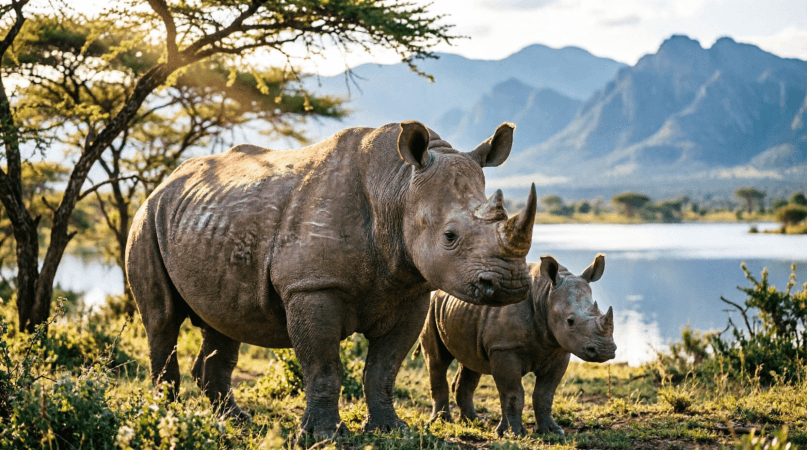
The black rhino reintroduction in Zimbabwe is a game changer!”
The main story: On 3 June 2026, black rhinos were flown back into Matusadona National Park on the shores of Lake Kariba, more than 30 years after poachers wiped them out there. It is a big conservation win. It is also proof that African wildlife does not only survive when outsiders ride in to save it.
Here is the full gist: After three decades, black rhinos return to Zimbabwe’s Matusadona
The Man Who Packed the Last Rhinos Lived to Welcome Their Grandchildren
Picture Michael Pelham in the early 1990s, long before the black rhino reintroduction in Zimbabwe this year. He is the park manager at Matusadona. He is helping load the last surviving rhinos into crates. They would be flown out of the Zambezi Valley, away from the poachers. He does not know if he is saving the species or simply watching it die.
Thirty years later, the same man watched the crates come back. He called it “an incredible closing of a circle that was 30 years in the making.”
Seventeen black rhinos are back in Matusadona for the first time in more than 30 years. They came through the black rhino reintroduction in Zimbabwe, with about 20 more expected next year. The airlift was led by the Zimbabwe Parks and Wildlife Management Authority (ZimParks), African Parks and the Matusadona team.
The animals came from Imire Rhino and Wildlife Conservancy, Matobo National Park and one undisclosed location. And the beautiful part is that these are the children and grandchildren of the rhinos that were flown out in the 1990s. As Pelham put it, the park is being rewilded with its own genetics. This is believed to be the first project of its kind in Africa.
The animals that were forced out never made it home. Their descendants just did.
What Was Actually Lost Before the Black Rhino Reintroduction in Zimbabwe
It is easy to read “rhinos are back” and move on. But the numbers should make you stop. In the 1980s, Zimbabwe’s rhino population crashed from about 10,000 animals to fewer than 1,000 as poachers killed them for their horns.
Inside Matusadona, one year of poaching in the early 1990s cut the rhino population from about 250 to just 16. Across the wider Zambezi Valley, nine years of poaching reduced black rhinos from 3,500 to about 400. The survivors were scattered, most to safer parks in Zimbabwe, and about 25 as far away as Texas and Australia.
A whole ecosystem was emptied out in roughly a decade.
So, this black rhino reintroduction in Zimbabwe brings back survivors of a disaster. Their horns were removed before transport, so poachers would have nothing to take. They will stay in purpose-built holding pens, called bomas, before being released in stages into a guarded 175-square-kilometre Intensive Protection Zone. Each animal wears a tracker that reports its position in real time, with drones watching from above.
Why the Black Rhino Reintroduction in Zimbabwe is Not a Rescue Story
Wildlife is one of the few world-class assets Africa holds that no one can move offshore. The question is whether Africans capture that value, control the story, and get the credit for the wins, rather than standing in the background of someone else’s hero shot. Matusadona is worth studying because the spine of the project is local.
ZimParks director-general Professor Edison Gandiwa called it a historic event and a proud moment for Zimbabwe. The rhinos came from Zimbabwean parks and conservancies. The orphaned calves that became today’s breeding animals were kept alive for 30 years on Zimbabwean soil, by Zimbabwean hands.
Traditional leaders from the areas around the park like Chiefs Mola, Masampakaruma, Nebiri and Negande backed the programme.
Daniel Sithole of the Matusadona Conservation Trust gave the line the whole continent should borrow. The rhinos carry the genetics of this landscape, he said, and their return belongs to Zimbabwe. Belongs to. Not “was gifted to.” That one word is the whole argument.
The Black Rhino Reintroduction in Zimbabwe is a Partnership
It would be dishonest to claim Africa did the black rhino reintroduction in Zimbabwe completely alone. It did not. In 2019, African Parks signed a 20-year deal with ZimParks to manage and rebuild Matusadona, the first park in Zimbabwe run under that model.
The airlift itself was paid for by the European Union and the Global Wildlife Fund, along with philanthropists Thomas and Sara de Swardt, with early preparation funded by the Rhino Recovery Fund.
Outside money and outside management skills are real parts of this story.
Why the Black Rhino Reintroduction in Zimbabwe Matters for African Travel
Because the recovery from the black rhino reintroduction in Zimbabwe brings visitors back. The rhinos follow the successful return of wild dogs to the park earlier this year. A park that can rebuild its big animals from almost nothing is a park worth putting on your travel list, and the money visitors spend stays closer to home when the destination is run from Harare rather than narrated from abroad.
One more number deserves to travel as far as the rhinos did. Zimbabwe recently passed 1,000 rhinos for the first time in more than 30 years, 616 black and 417 white. It took ten years to fall below that line and three decades to climb back over it. That gap is the whole moral of conservation: destruction is fast and cheap, recovery is slow and expensive, and only long, local, generational commitment closes the distance.
The Last Word on the Black Rhino Reintroduction in Zimbabwe
The rhinos in those bomas, the result of the black rhino reintroduction in Zimbabwe, are not a miracle and they are not a charity case. They are the reward for people who refused to give up on a landscape for 30 years, and who finally got to fly the grandchildren home. Africa did most of that work. The least the rest of us can do is tell the story with Africa as its author.
Welcome back.
Frequently Asked Questions (FAQs)
Q: When did the black rhino reintroduction in Zimbabwe take place?
A: The historic black rhino reintroduction in Zimbabwe took place on 3 June 2026, when 17 black rhinos were airlifted back to Matusadona National Park.
Q: Where did the rhinos for the Matusadona reintroduction come from?
A: The rhinos were sourced from Imire Rhino and Wildlife Conservancy, Matobo National Park, and an undisclosed location. Many are descendants of the original rhinos evacuated in the 1990s, meaning the park is being rewilded with its own genetics.
Q: Who led the black rhino reintroduction in Zimbabwe?
A: The complex airlift operation was led collaboratively by the Zimbabwe Parks and Wildlife Management Authority (ZimParks), African Parks, and the Matusadona Conservation Trust, alongside local traditional leaders.
Q: How many rhinos are currently in Zimbabwe?
A: Following successful conservation efforts, Zimbabwe recently passed the 1,000-rhino mark for the first time in over three decades, recording 616 black rhinos and 417 white rhinos.


