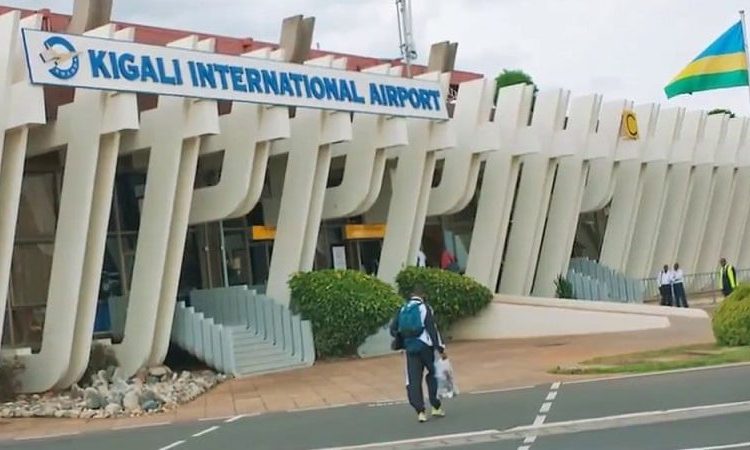
Oman’s budget carrier just announced it. We now have SalamAir Muscat to Kigali. This route says something the entire travel industry should pay attention to.
Read this full news here at TTRWeekly.
See, we have a problem with Africa’s air connectivity.
Only 1 in 5 airline routes across Africa are direct, resulting in higher costs, fewer travellers, and weaker tourism and trade links.
To fly between two African cities, say, Lagos and Kinshasha, or Freetown and Johannesburg, you will often find the fastest option routes you through London, Paris, or Dubai. And it is not because of geography, but because that is where the airline money was built, and where the connectivity was designed to flow. It goes outward to former colonial capitals instead of across the continent itself.
So when Oman’s low-cost carrier SalamAir announced this month that it is opening a direct route from (SalamAir) Muscat to Kigali, two weekly flights starting July 21 on a five-hour, fifty-five-minute A321neo, the headline sounds modest.
An Omani budget airline is adding Rwanda to its African network.
Fine. It is nothing serious. Next story.
But sit with the geography for a moment. This is a Gulf carrier looking south and east toward East Africa. It’s not a European legacy airline looking down at the continent from a hub it inherited from an empire.
What Is the SalamAir Muscat to Kigali Route?
SalamAir is not a large airline. It operates out of Muscat, serves a regional market, and competes on price. Its one-way fares on the new Kigali route start at OMR69.99, roughly USD180.
It is not Emirates. It does not carry the weight of a state aviation project. What it has is a route map that reads like a different theory of how the world connects.
The airline already flies to multiple African destinations. Kigali is described by its Chief Commercial Officer Steven Allen as a “natural addition” to a growing African network. And Allen’s language is worth lingering over. He talks about Rwanda’s “strong fundamentals across business and leisure travel,” about Kigali as a “vibrant, modern gateway,” and about opening access to East Africa’s eco-tourism belt.
That’s a commercial officer reciting a brochure, yes. But underneath the promotional language is a real observation. Rwanda has spent fifteen years building the infrastructure to receive exactly this kind of attention. They have built the Kigali Convention Centre, a national airline in RwandAir, a deliberate posture as a conference and investment destination for the continent.
Kigali did not wait to be discovered. It built the runway, then waited for someone to land on it.
Why Gulf Carriers Are Winning Africa’s Aviation Game
HerWe are not supposed to be treating this like a mere airline route announcement. The Gulf carriers like Emirates, Qatar Airways, Etihad, and now the budget end of the market with SalamAir and Air Arabia have become, without much fanfare, Africa’s most important aviation connectors. Dubai is already the de facto layover city for much of sub-Saharan Africa’s international travel.
Travellers from Nairobi, Addis Ababa, Lagos, and Dar es Salaam route through the Gulf to reach Europe, Asia, or North America. The hubs in Abu Dhabi and Doha have quietly absorbed the connective function that London Heathrow once monopolised.
Now the Gulf’s budget carriers are doing something slightly different. They are not just positioning themselves as transatlantic connectors. They are building point-to-point routes between the Gulf and secondary African cities. And these are routes that serve trade, diaspora, and tourism simultaneously. SalamAir Muscat to Kigali does not need a London stopover to make commercial sense. It makes sense because Oman and Rwanda have 30 years of diplomatic ties, and there is an Omani-East African trading relationship that predates every airline. Also, because Kigali in 2026 is the kind of city that corporate travel managers in the Gulf region are increasingly willing to put on an itinerary.
Kigali’s Strategy: Building the Runway Before the Plane Lands
Two flights a week is not a connectivity solution. It is a market test. SalamAir will fill those Tuesday and Thursday seats with a mix of business travellers, Omani tourists curious about gorilla trekking, Rwandan professionals visiting Oman, and a share of transit passengers. If the route performs, it gets daily. If it underperforms, it gets quietly cut. Airlines have announced African routes before, generated press coverage, and then retreated when the load factors didn’t hold. Air connectivity in Africa has a long graveyard of routes that launched with optimism and ended with a schedule change buried on page eight.
Rwanda is also an unusual case in the African context because it is a small landlocked country with a government that has invested aggressively in its own aviation infrastructure and tourism brand. What works for Kigali does not automatically work for Bangui or Conakry. The structural barriers to air connectivity across Africa, like regulatory hurdles under the Yamoussoukro Decision that still haven’t fully unlocked the continent’s open skies, airport infrastructure gaps, and thin business travel markets in smaller economies, don’t disappear because one Gulf carrier adds one route.
The Commercial Logic Behind Africa’s New Air Corridors
But that graveyard of failed African routes was mostly dug by carriers approaching the continent as a charity project or a flag-planting exercise. The routes failed because the airlines did not believe in the commercial case; they believed in the press release.
What reads differently about SalamAir’s move and about the Gulf carriers’ broader African expansion is that the commercial logic is not dressed up in development rhetoric. Allen does not talk about “empowering African travellers” or “bridging continents.” He talks about “high-growth markets” and “strong fundamentals.” That is the language of an airline that ran the numbers and liked what it saw.
When the numbers rather than the narrative drive the route decision, the route has a better chance of surviving its first winter schedule.
What This Means for Travellers and African Connectivity
For the traveller, whether African, Omani, or anyone else, what a Muscat-Kigali route actually opens is less romantic than the press release implies and more useful. It means a Rwandan consultant can fly direct to Muscat for a Gulf business meeting without spending a night in Dubai. Now, an Omani family curious about Rwanda’s national parks and its remarkable story of national reconstruction can book a package without a code-share headache. This also means the travel agent in Muscat who has been telling clients that East Africa is complicated to reach has one fewer excuse.
The continent has long suffered from connectivity built around the interests of others, such as European hubs, colonial-era bilateral agreements, and international carriers that treated African routes as prestige additions to their long-haul brochures. What the Gulf carriers are quietly building is something structurally different: a web of connections anchored in a part of the world that actually borders Africa, shares its time zones, and has traded with its coasts for a thousand years before the first scheduled service ever departed.
Beyond the Headlines: When Numbers Beat Narratives
SalamAir’s Muscat to Kigali announcement will not make headlines in Paris or New York. That is, in a way, the point.
The routes that matter most for Africa’s travel future probably won’t originate from the airports that have dominated global aviation for the last fifty years. They will originate from Muscat, Sharjah, Addis Ababa and airlines running the numbers on markets that European carriers wrote off as thin, difficult, or simply not worth the aircraft.
There will be two flights a week. Tuesdays and Thursdays. Departure at 09:00 from Muscat, arrival at 12:35 in Kigali.
It is a small flight. It is not a small idea.