There’s a new excitement with Senegalese all over the world over the new Senegal heritage travel or “roots” tourism.
You can learn more about the Senegal Heritage Travel on Rex Clark Adventures.
The trend is still fresh. Maybe you have seen it. They will apply for DNA testing and the envelope would arrive by mail. Inside it was a bar chart, a list of ethnic percentages, and a regional map of Africa.
For millions of people across the African diaspora, that moment they open a DNA result for the first time carries a weight that no travel brochure has ever managed to capture. It is the moment they’re finally able to answer the question of where they came from.
Senegal has noticed this trend. And unlike most African countries that notice things, Senegal has done something about it.
How DNA Testing Is Reshaping Senegal Heritage Travel
That is the idea driving Senegal’s Homecoming Programme, and it is the most structurally honest thing a government tourism office has produced in years. Instead of asking diaspora travellers to come and feel something vague in front of a historical monument, the programme asks them to bring their genetic data and get specific.
Some people get sponsored by Ancestry.com. This platform can help you analyse your DNA and if the DNA result identifies a regional ancestry within Senegal or the broader Senegambia zone, the programme matches that result to a curated itinerary. You get to visit your ancestral community, see your lineage, meet with local guides from that lineage, cultural access, and in some cases, introductions to some elders in your family who may know your great-grandparents. You will not be going as a tourist moving through Senegal, but as a person returning to a named family place.
Why Diaspora Ancestry Travel Is Surging in 2026
The question beneath the Senegal Heritage travel trend is not “why do diaspora travellers want to visit Africa?” That answer to that one question is pretty obvious. Africa is more beautiful and more profound. Duh!
The real question is why are they travelling now, and why with such urgency.
Part of it is technology. You see, consumer genomics (businesses that deal in analysing people’s genes or DNA), including companies like AncestryDNA, 23andMe, and African Ancestry, has made the process of identifying regional and ethnic origin accessible and affordable.
Traditionally, you would have had to go to a specialist laboratory to do this test. Now, you can do everything remotely from your home and the result arrives at the door for under a hundred dollars. The results are not perfect, and geneticists are quick to remind customers that ancestry percentages are probabilistic. But for many diaspora families, “probably Senegalese” is still more than they have ever had before.
The Political Reason for the Senegal Heritage Travel Trend
Another reason is political. Writing in Time Out this March, journalist Vivienne Dovi described a shift in the conversations happening in her circles. Her associates were no longer asking, “have you visited Africa?” but “when are you moving back?” She is blunt about what is driving it. She opines that an increasingly hostile political climate in the West, like the rise of far-right movements, and persistent racial discrimination, is pushing this generation to look seriously at the continent not as an ancestral curiosity but as a place to actually be.
Kiera Payne, an African American woman from Seattle who received Sierra Leonean citizenship through a heritage society, told Dovi after her naming ceremony, “I am not the same person I was before. You have a family waiting for you somewhere and you don’t know it yet.”
The Senegal Heritage Travel Marketing
Frankly, this technology has been around for years, only that the marketing finally got good. For example, we have Ghana’s Year of Return in 2019. International arrivals rose 18% that year, reaching 1.13 million visitors, according to the Global Wellness Institute. The campaign showed that diaspora tourism was not a niche product for a small audience but a mass market with purchasing power, emotional motivation, and a genuine appetite for depth. Every tourism board on the West African coast took notes that year.
How Senegal’s Data-Driven Model Differs from Other Heritage Campaigns
Ghana’s campaign was a masterpiece of timing. It built around a 400th-anniversary milestone, gave it political weight from the highest office, and created a cultural moment with genuine international reach. It worked.
But the problem is that they only made a campaign without a product. A campaign eventually expires. The anniversary passed, the headline cycle moved on, and what remained was just about what else can a diasporan traveller come here for?
Senegal Heritage Travel Sells Something
Senegal’s answer was to build backward from that question. The Senegal Homecoming Programme is not built around an event. It runs on data, specifically, on the steady, growing output of consumer DNA tests that point to Senegambia ancestry.
Every week, somewhere in the United States, the Caribbean, Brazil, or Europe, someone opens a DNA result and finds that 30%, or 15%, or 60% of their genetic ancestry traces to this Senegal or Senegambia.
According to research cited by Harvard Medical School in 2024, approximately 25% of African Americans have traceable ancestry in the Senegambia zone. That is over 11 million people in the United States alone, before accounting for diaspora communities elsewhere in the Americas and Europe.
The programme converts that raw number into a repeatable visitor. It does so through specificity. The itinerary is not telling random people to come and “experience Senegalese culture.” What they are selling is for you to “visit your home community, meet your people, observe this ceremony, because your ancestors came from here.”
You see, that personalisation is the most amazing product I have ever seen in travel and tourism. And now they give you personalised attention at that level of intimacy that cannot be replicated by just any tour package.
Beyond Gorée Island: Turning Historical Memory into Living Heritage
There is no neutral starting point for this conversation in Senegal. Gorée Island, 3.5 kilometres off the Dakar coastline and a UNESCO World Heritage Site since 1978, draws 200,000 visitors annually to stand inside the Maison des Esclaves and face the Door of No Return, the opening through which enslaved people were loaded onto ships headed west.
Historians continue to debate the volume of the trade that passed through Gorée specifically versus larger embarkation points like Saint-Louis and the Gambian coast. The debate is legitimate and worth having.
What is not debatable is what the island means to the people who visit it. The door faces the Atlantic. It is the continent’s most powerful memorial to forced departure. The Homecoming Programme’s quiet genius is that it does not let visitors stop there.

Gorée becomes the point of arrival for a journey that continues inland, into the specific Senegambian villages and lineages that a DNA result can name. The memorial site is the opening. This is the structure that no other West African tourism product has yet managed to build as clearly. I mean, there is a logical sequence from general history to your personal ancestral roots, and from the archive to the living community.
Sofia Askel, a British woman who travelled to Senegal and The Gambia earlier this year, described her experience to Time Out. She said that every conversation led to a greater discovery.
Her Airbnb host’s grandmother had known her grandfather back in England. She was welcomed home, and they told her, “You are not lost.” She now plans to return and spend more time in both countries.
Ethical Considerations in Genetic Heritage Tourism
The kind of travel of this Senegal heritage travel carries real risks, and anyone writing about it seriously has to say so.
The first risk is that your “community access” becomes a performance. When a tourism product promises visitors an introduction to elders and participation in cultural ceremonies, the community on the receiving end is doing significant emotional and logistical labour. If that labour is not compensated fairly or if the community hosts become a backdrop for a visitor’s personal journey without meaningful economic return, then the product stops being heritage tourism and starts being extraction with a different vocabulary.
Senegal’s programme attempts to address this through its community-facing infrastructure. They have networks of heritage guides hired from the communities themselves, and local hosts who are part of the itinerary rather than its scenery. Whether those structures are adequate is a question that deserves ongoing scrutiny, and we will be here to talk about it again on our show, Wake and Wander on Travel Radio Live.
The most durable version of this model is one where the community holds decision-making authority over access, and not just a share of the guide fees.
Is the DNA test Really Accurate for the Senegal Heritage Travel?
The second risk is the DNA result itself. Genetic ancestry testing is a probabilistic tool, and not a genealogical document. Results from different companies for the same person can vary significantly. Algorithms for assigning regional ancestry are improving, but they are trained on reference populations that are still underrepresented in sub-Saharan Africa relative to Europe and East Asia.
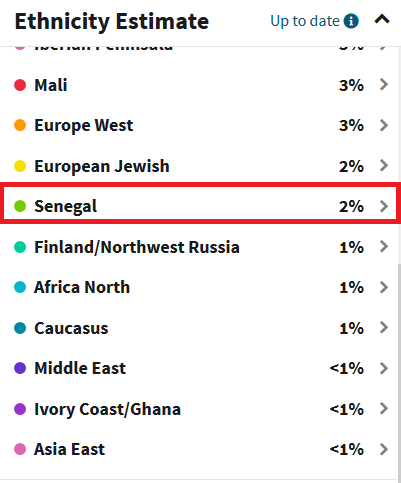
A result that says “Senegambian” could be more or less precise depending on the company, the reference panel, and the specific ethnic communities included. Visitors who arrive expecting a definitive biological homecoming may encounter a more complicated reality. Neither of these risks makes the programme wrong. I am just saying it to tell you to do it carefully.
Why Senegal Is the Most Accessible West African Heritage Destination
Senegal sits at the westernmost point of Africa. The flight from Miami to Dakar’s Blaise Diagne International Airport runs approximately seven hours. That is the shortest transatlantic crossing from any major American city to a West African heritage destination. This is part of what makes Senegal more accessible than most African countries.
The country also has institutional depth that most of its neighbours have not built. The Senegalese National Assembly dedicates 15 of its 165 parliamentary seats to diaspora representatives. The Direction de l’Assistance et de la Promotion des Sénégalais de l’Extérieur exists specifically to manage diaspora engagement as a national function, rather than a tourism promotion afterthought.
The Fund in Support of the Investment of Senegalese Abroad channels diaspora investment into national development.
Tourism currently accounts for around 7% of Senegal’s GDP, with a government target of 10% and 500,000 sector jobs by 2050. Tourism revenue in 2023 reached $589 million, already above the pre-pandemic 2019 baseline. The Homecoming Programme is not a creative campaign aimed at hitting a quarterly arrival number. It is a structural bet on a market that grows every time someone opens a DNA result and finds Senegambia.
What to Expect When Planning a Senegal Heritage Travel Journey
Senegal offers visa-free entry to US passport holders for stays up to 90 days. The ferry to Gorée Island from Dakar’s terminal takes 20 to 30 minutes and runs throughout the day. The Maison des Esclaves is open to visitors, and its digital interpretation programme has been expanding in multiple languages.
But the practical information is almost beside the point. The traveller who arrives in Dakar for Senegal heritage travel with a DNA result in their bag is not there to check a monument off a list. They are there because a test result told them about their “home“.
The question that this Senegal heritage travel puts to its visitors is harder than “where do you want to go?” It is “who do you want to find out you are?” Senegal, with this programme, has positioned itself as the destination with the clearest answer.
The Future of Cultural Reconnection and Diaspora Tourism
The travel industry has grown skilled at packaging identity. There are heritage tours and diaspora cruises and ancestry retreats that offer the feeling of connection without the friction of real encounter. Senegal’s Homecoming Programme, at its best, refuses that comfort.
It insists that the visitor go somewhere specific and meet someone specific. You have to arrive at a named village with a verifiable reason to be there. That specificity is what separates it from other heritage tourism as spectacle, and what makes it, at its best, something closer to a repair.
What would it mean to travel not for what a place offers you, but for what it holds that was taken a long time ago? And what do you carry back when you leave, other than photographs?
Flights to Dakar operate from New York JFK and Miami on Delta and other carriers. Entry for US passport holders is visa-free for up to 90 days. Heritage itineraries should be booked through operators registered with the Senegalese Ministry of Tourism who have established community relationships across the country’s six tourism zones.