


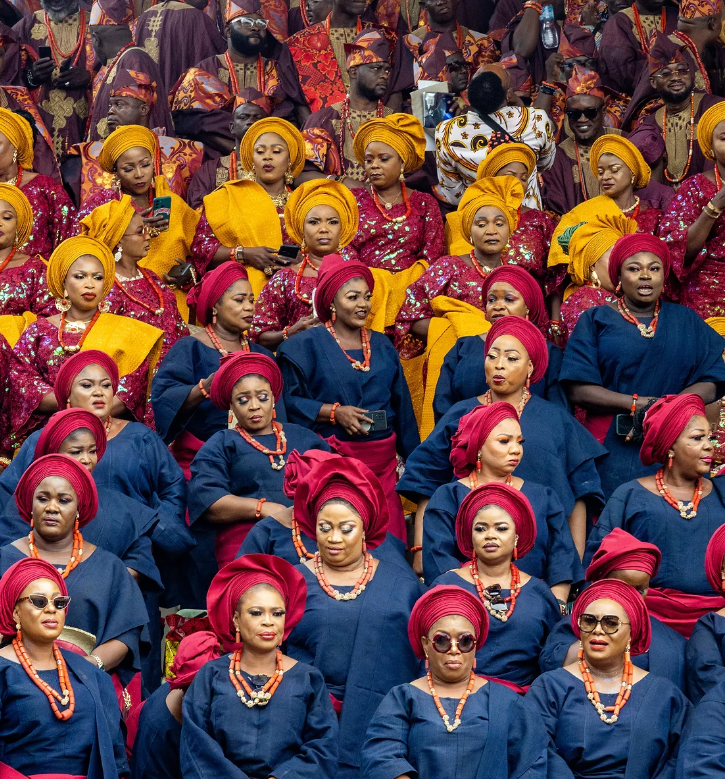
Have you seen the colourful aso ebi fabric arranged at the Ojude Oba festivals? Have you seen the horses? What about the drums? Last year, Nigerians tore up the internet with videos and photos of Ojude Oba, and it was spectacular. I don’t need to tell you that Ojude Oba is a big deal in Nigeria. Ojude Oba 2026 will be even more!
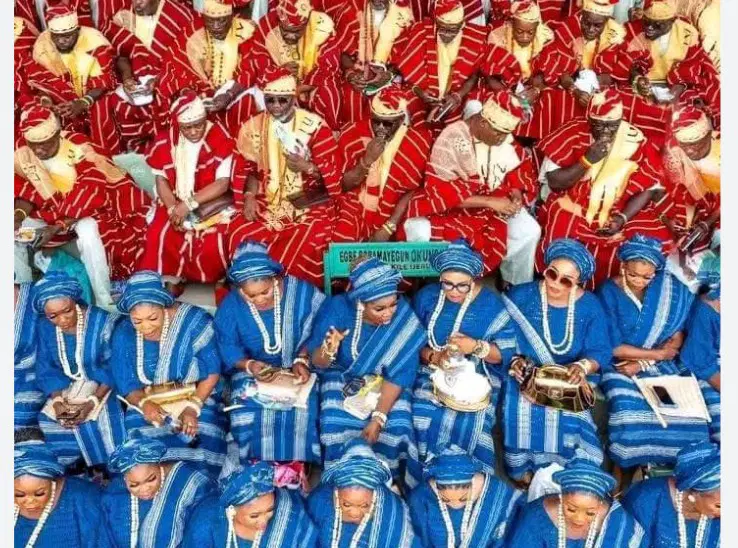
We see the agbada in impossible colours, the riders sitting up straight on elaborately adorned animals. We see the women in aso-ofi so precisely matched that a family of thirty looks like one organism moving together.
This festival celebrates kings. It began as a modest homage to a monarch by early Muslim converts in the 19th century. It has now evolved into one of Nigeria’s most vibrant displays of cultural heritage.
That is the Ojude Oba. And the Ojude Oba 2026 edition, happening on May 29 in Ijebu-Ode, Ogun State, carries more weight than any edition before it.
What Does “Ojude Oba” Actually Mean?
The Ojude Oba Festival literally means “The King’s Forecourt Festival.” It is traditionally held to pay homage to the Awujale of Ijebuland.
Its origins date back to the 19th century, when early Muslim converts gathered to express loyalty and gratitude to the king following Eid celebrations.
The name is everything you need to know about how spectacular this festival is. You are not going to a festival grounds. You are going to the forecourt of a king, a place where, historically, your presence was itself an act of loyalty. That framing still holds.
Everything at Ojude Oba 2026, from the way age-grade groups present themselves to the way riders choreograph their horses, is an act of acknowledgement. It is like the people gather to tell their king that they are still here, strong, and loyal.
Why Ojude Oba 2026 Is Different: The Legacy Edition
This year’s Ojude Oba 2026 carries a specific grief and a specific honour.
This year’s celebration, sponsored by Globacom, is themed “Celebrating the Legacy of Oba Sikiru Adetona.” It comes up at the Festival Arena, opposite the royal palace in Ijebu Ode.

The event serves as a grand salute to the monarch who passed away on July 13, 2025, following an eventful 65-year reign.
Most people alive in Ijebu-Ode today have never known a different Awujale (King). Since his ascension to the throne in 1960, he has led with vision, wisdom, and an unwavering commitment to preserving Ijebu culture.
Under his reign, the festival transformed from a local Islamic observance to a globally recognised cultural event. His efforts to institutionalise the Regberegbe system, modernise the palace infrastructure, and promote Ijebu unity have had a lasting impact.
When he died, some people called for the festival to be cancelled. However, the organisers revealed that the late monarch had explicitly instructed that the cultural celebration must not be suspended under any circumstances, even if it is during a royal transition period.
Festival coordinator Prof. Fassy Yusuf dismissed speculation that the celebration might be cancelled following the monarch’s death, noting that Oba Adetona had, before his passing, made it clear that Ojude Oba should continue as an uninterrupted cultural tradition regardless of any interregnum.
The organisers also stressed that Ojude Oba is deeply rooted in the history and unity of the Ijebu people and should not be tied to the presence of a single monarch.
Hence, the Ojude Oba 2026 edition will be both a celebration and a salute.
What to Expect at Ojude Oba 2026?
Let’s see some of the most beautiful features of this colourful royal event:
The Regberegbe
One of the most distinctive features of the Ojude Oba 2026 Festival is the Regberegbe age-grade groups.
It simply means people born within the same three-year period will come to play a central role in the festival. They symbolise the structured social organisation within the Ijebu society. Each age group has its own name, attire, and unique style. They often compete for the title of the best-dressed group while showcasing their unity and pride.
This is the part that blows off the internet. They appear in coordinated outfits, often made from lace, damask, adire, or brocade, and sometimes matching down to the shoes and jewellery.
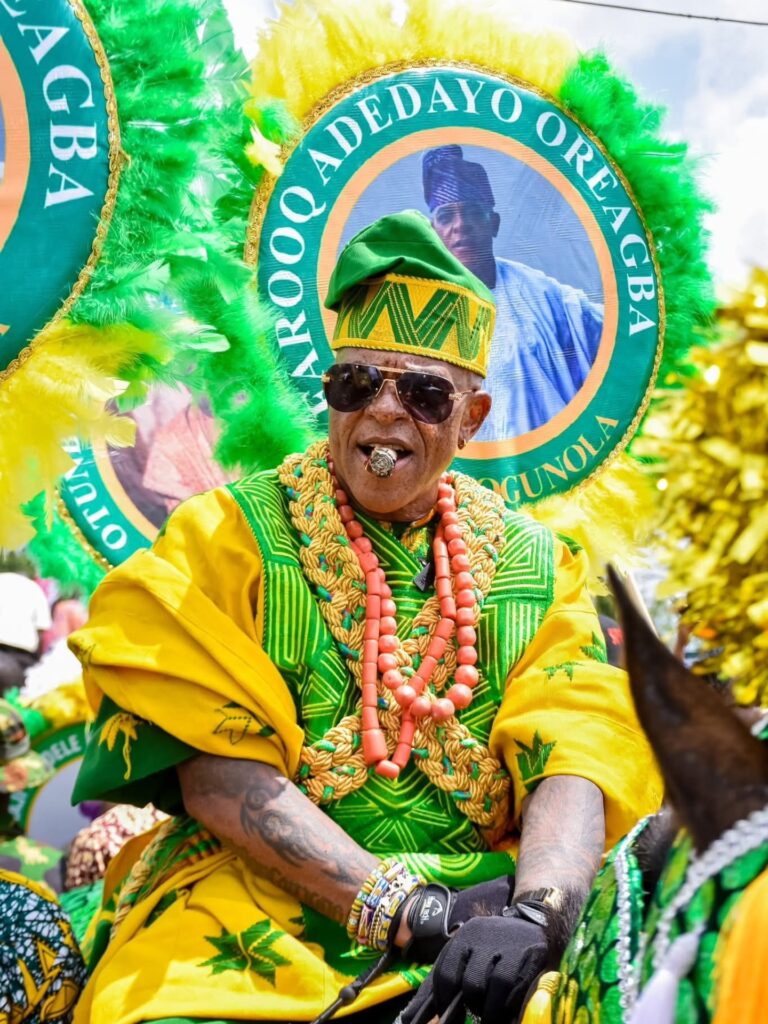
“It evens out the economic disparity between the members,” says Farooq Oregba.
The uniform is not just aesthetic. It is deliberately egalitarian.
Each group dons strikingly coordinated attire and takes turns to salute the Awujale, showcase their community projects and achievements, and demonstrate unity, wealth, and creativity.
The Horse Parades at Ojude Oba
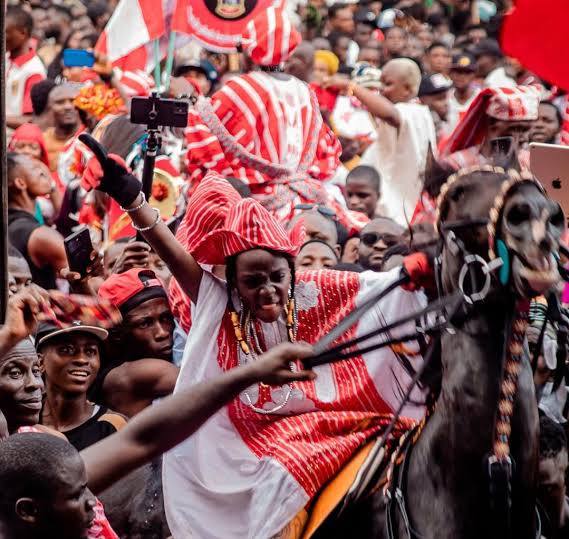
The origin of the horse-riding tradition at Ojude Oba 2026 is deeply rooted in history. It is believed to have started with the warriors of the ancient Ijebu kingdom, who would parade their horses in honour of their ruler, the Awujale of Ijebuland. Over the years, this practice has evolved into a friendly competition among different groups, each vying for the title of the best horse rider.
The aristocratic Baloguns, descendants of Ijebu warlords, arrive on horseback in regalia reminiscent of ancient warriors. Their parades, often choreographed to drums and praise chants, embody the martial history of the Ijebu people.
The horses themselves are dressed. Embroidered saddle cloths and beaded bridles. A rider’s horse often mirrors his own fabric so that horse and human appear as one coordinated statement. If you only see one thing at Ojude Oba 2026, see this.
Traditional Music and Dance
Traditional Yoruba musical forms, especially drumming rhythms and call-and-response singing, accompany each procession. Large talking drums (called dundun) and bata drums beat out lively polyrhythms as dancers from the age groups perform folkloric steps.
Women in the Regberegbe groups often dance Ebile agbara (powerful dances in place) while men might perform sure (fierce warrior-like motions) or wave elaborate metal fans.
Fuji music floats in from the surrounding streets. Praise singers walk alongside groups, calling out family names and histories.
Fashion and Style at Ojude Oba
Fashion is still one of the major attractions of the Ojude Oba 2026 Festival. Months before the event, families, cultural groups, and fashion designers start preparing personalised outfits and traditional attire for the celebration.

Social media has turned Ojude Oba 2026 into one of West Africa’s most photographed events. The styling is deliberate, considered, and competitive in the best way. People who grew up in Ijebu-Ode now fly back from London, Houston, and Toronto specifically for this day. The festival has evolved into a globally recognised cultural institution that now attracts visitors, creatives, entrepreneurs, investors, and media attention from around the world.
Ojude Oba 2026 Date and Location
Ojude Oba Festival 2026 will take place on Friday, May 29, 2026, immediately after Eid al-Adha, maintaining its deep-rooted connection to Islamic traditions and Yoruba heritage.
Where: Festival Arena, opposite the Awujale’s Palace, Ijebu-Ode, Ogun State, Nigeria.
Ijebu-Ode is roughly 90 kilometres from Lagos. That is about two hours by road under normal conditions. During Ojude Oba 2026, traffic into town is severe. So plan accordingly.
How to Get to Ojude Oba 2026 and Where to Stay
The roads into Ijebu-Ode become heavily congested from the night before. Ijebu Ode becomes extremely busy during the festival period, with traffic congestion and accommodation shortages becoming common challenges.
Most attendees coming from Lagos take the Sagamu-Ore Expressway or the Ijebu-Ode road from the Sagamu interchange. Leave Lagos before 5 AM on festival day if you want to arrive without spending the morning in traffic.
For accommodation, book as early as possible. Look for accommodations near the festival grounds. You’ll find a mix of guesthouses and budget lodgings that cater to the festival crowd. Mid-range and upscale travellers often base themselves in Sagamu or even Lagos and drive in early, as this gives you access to better hotel options while keeping the commute manageable.
What to Wear to Ojude Oba 2026
You will feel underdressed if you show up in casual clothes. Ojude Oba is one of the best-dressed events in Nigeria. If you are Ijebu or Yoruba, coordinate with your family group well in advance. If you are a visitor, wear something intentional like an agbada, buba and sokoto, or a well-tailored aso-ofi if you can get it made in time.
Comfortable yet stylish clothing, early arrival, and proper planning for transportation are essential. It is a full-day event under the sun. Wear breathable fabric. Bring water.
Why Ojude Oba Festival Matters Beyond the Photographs
There’s a temptation, when a festival goes viral, to reduce it to its most photogenic moments.
But for FCMB Group and organisations that have long supported this festival, Ojude Oba 2026 represents the reawakening of cultural confidence across Africa. It is a broader shift among Africans at home and in the diaspora who are reconnecting with indigenous identity, heritage and community in ways that feel modern, aspirational and globally relevant.
There is growing advocacy for Ojude Oba’s recognition by UNESCO as part of Nigeria’s intangible cultural heritage. Such a status would bring global attention and stimulate investments in infrastructure and preservation.
What Ojude Oba shows, year after year, is that cultural memory doesn’t require a museum.
The Ojude Oba 2026 edition will mourn Oba Adetona. It will also prove the point he spent 65 years making, that the culture belongs to all of Ijebuland, not to any one ruler. The festival continues because he built something bigger than himself.
That’s worth the drive from Lagos.
Frequently Asked Questions
Here are answers to some questions you might have about the Ojude Oba festival
When and where is Ojude Oba 2026 held?
Ojude Oba 2026 takes place on Friday, May 29, 2026, at the Festival Arena opposite the Awujale’s Palace in Ijebu-Ode, Ogun State, Nigeria. The festival is held two days after Eid al-Adha, maintaining its deep connection to Islamic traditions and Yoruba heritage.
Can tourists attend Ojude Oba 2026?
Yes! Tourists are warmly welcomed at Ojude Oba 2026. The festival is a public celebration open to all. However, visitors are encouraged to dress respectfully in traditional attire, observe sacred moments quietly, and consider hiring a local guide to navigate the cultural nuances and maximise the experience.
Is Ojude Oba 2026 safe for international visitors?
Yes, Ojude Oba is generally safe for international visitors. Ijebu-Ode is known for its hospitality, and the festival atmosphere is joyful and communal. Standard travel precautions apply: keep valuables secure, stay aware in crowds, use registered transportation, and consider travelling with a local contact or guide. The event draws thousands of diaspora Nigerians returning home, adding to the welcoming environment.
Why is there horse riding at Ojude Oba?
The horse-riding tradition at Ojude Oba honours the martial heritage of the Ijebu kingdom. Historically, warriors would parade their horses before the Awujale as a display of loyalty and strength. Today, the Baloguns (descendants of warlords) continue this tradition with elaborately adorned horses and choreographed processions, creating one of the festival’s most visually stunning elements.
What is the Regberegbe system?
The Regberegbe is the age-grade system central to Ojude Oba. Groups consist of people born within the same three-year period, each with unique names, attire, and presentation styles. The Regberegbe showcases community organisation, healthy competition, and intergenerational unity. Their coordinated appearances, often matching down to shoes and jewellery, symbolise equality and collective pride.
How do I get to Ijebu-Ode for Ojude Oba 2026?
From Lagos, take the Sagamu–Ore Expressway or the Ijebu-Ode road via Sagamu interchange (~90km). Public options include buses from Lagos motor parks or ride-hailing apps. For comfort, many visitors book private transport. If staying overnight, reserve accommodation months in advance or find a base in Sagamu/Lagos and commute early.
Can I photograph or film at Ojude Oba 2026?
Photography is generally welcomed, especially of the Regberegbe processions, fashion, and horse parades. However, always ask permission before photographing individuals, sacred rituals, or palace interiors. Some moments may be restricted out of respect. When in doubt, follow your guide’s lead or observe what locals are doing.


One of the biggest traditional festivals in Nigeria
For reals! Did you attend? How was it?