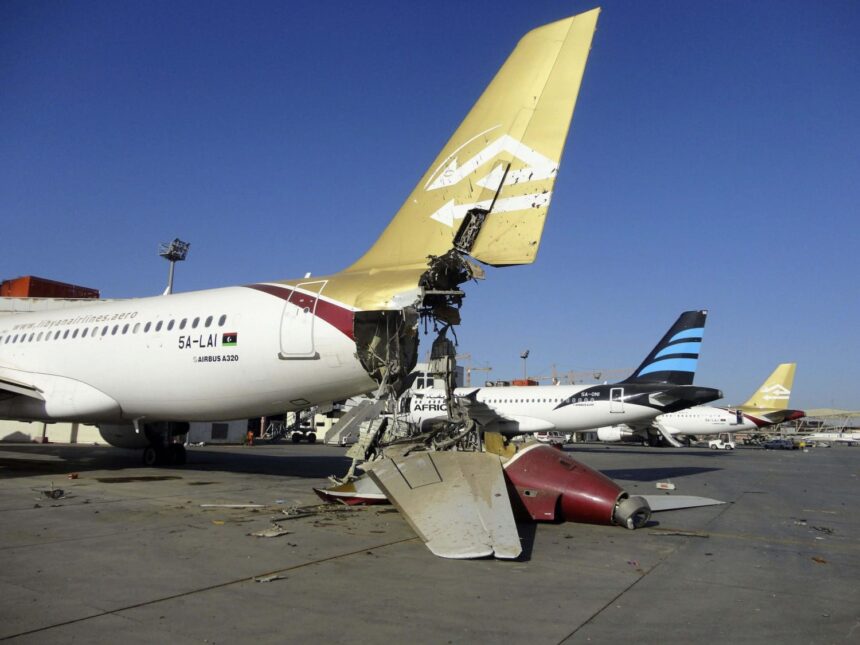
Libyan Airlines has launched a tender to sell war-damaged aircraft stranded at Tripoli International Airport.
The sale of war-damaged aircraft sale comes as Libya moves to clear the remnants of years of conflict from its aviation infrastructure.
Consequently, the tender marks a painful but necessary step in Libya’s broader effort to rebuild its airline sector in 2026.
A technical committee of aviation engineers conducted an extensive audit and concluded that the aircraft are beyond repair.
Stranded for years and exposed to the elements, the airframes have suffered severe corrosion and rust, while engines and interior fittings have been either destroyed or entirely stripped.
The Libyan Airlines war-damaged aircraft sale will proceed on an “as-is” basis, with strict requirements for any potential buyers.
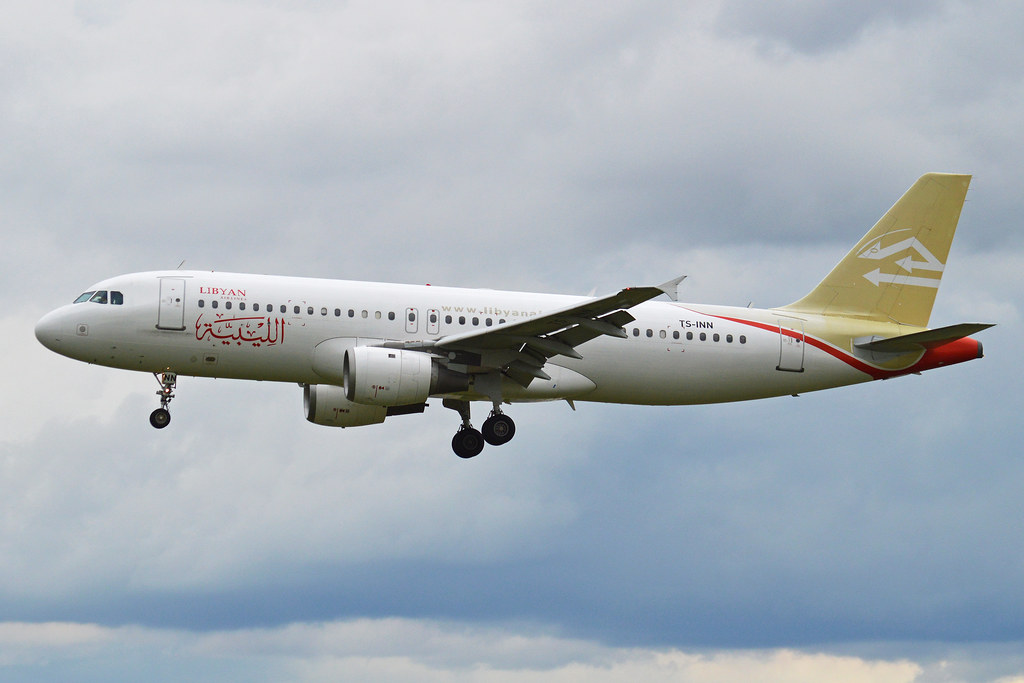
Therefore, bidders must demonstrate technical and logistical competence before submitting any offer.
Information
Bidders must adhere to international dismantling standards while ensuring environmental protection and the safety of surrounding airport infrastructure.
Read Also: Global Ranking of Green Passports in 2025
Moreover, the Libyan Airlines war-damaged aircraft sale requires buyers to manage the physical removal of wreckage from the active airport environment.
Similarly, both Libyan Airlines and sister carrier Afriqiyah Airways currently operate just two aircraft each, an A320 and an A330, with neither airline possessing the financial resources to acquire new jets.
The sale therefore clears space and liabilities rather than generating significant revenue.
The Libyan Airlines war-damaged aircraft sale sits within a sweeping national aviation restructuring programme.
Libya’s Broader Aviation Revival
Libya is launching a new national carrier — Libyan United Airlines — as part of a government strategy to consolidate aviation assets under a national aviation holding company.
Newly appointed CEO Ziad Farhoud said the road map is clear.
“Our vision is to establish Libyan United Airlines as Libya’s premier airline, offering not just flights, but a curated travel experience designed with the passenger in mind.”
Meanwhile, all Libyan airlines remain on the European Union’s banned carriers list, severely limiting international connectivity for the country’s aviation sector.