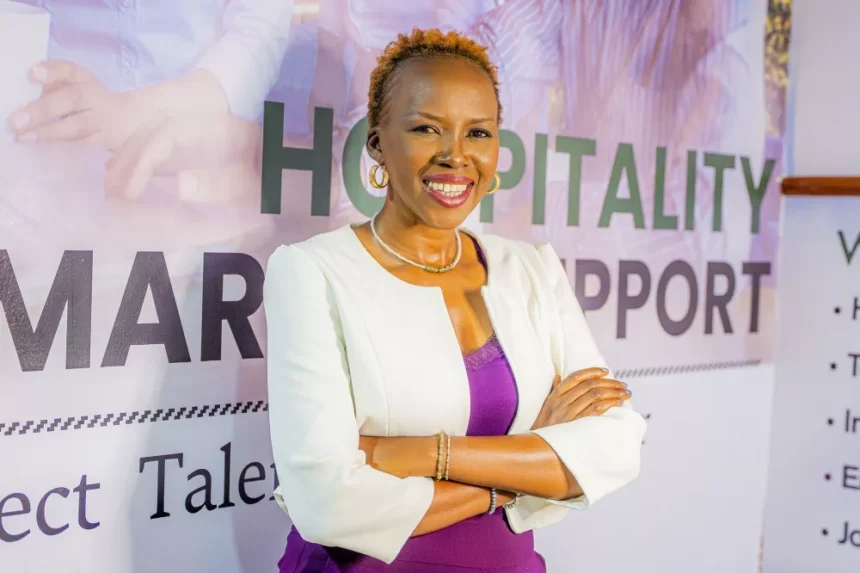
Former Hilton trainer Emma Lestideau is transforming Rwanda hospitality standards through her initiative Terre d’Afrique.
Her hospitality training targets three critical gaps: youth mentoring, women’s economic empowerment, and diaspora relocation support.
Consequently, her return to Kigali after more than 30 years abroad is reshaping how Rwanda’s service sector prepares for global tourism growth in 2026.
Lestideau left Rwanda in 1997, settled in France, and built an international career before joining Hilton as a trainer, a role that took her across multiple countries.
However, Rwanda remained central to her identity throughout her years abroad.
She told The New Times that her tourism dream started early in life.
“My journey in hospitality and tourism was personal. I did not come for the career. I came for my contribution. As a proud Rwandan woman, I grew up witnessing Rwanda rebuilding itself with dignity. I felt compelled to come back and contribute to its development.”
Emma Lestideau Rwanda hospitality training began the moment she returned home to Kicukiro District with her family.
What Emma Lestideau’s Rwanda Hospitality Training Covers
Lestideau noticed a recurring problem while working with Vatel Rwanda.

Graduates had degrees and certificates but lacked the soft skills needed to deliver quality service.
“Graduates had degrees and certificates, but when it came to delivering quality service, something was missing. Many young people don’t even know the skills they have. They think only school knowledge matters. But your personality, your conduct and your communication also matter.”
Read Also: Rare Stories and Myths of African Sacred Sites That Will Blow Your Mind
Therefore, Emma Lestideau Rwanda hospitality training focuses on confidence, professionalism, problem-solving, and workplace culture not just academic qualifications.
Vision
Lestideau is currently writing a book on traditional Rwandan cooking, documenting recipes from mothers and grandmothers while encouraging chefs to develop authentic Rwandan gastronomy.
“Visitors don’t come here to eat what they eat at home. They come to discover what we cook. How do we turn our beans, bananas and traditional dishes into something proudly Rwandan and well-presented? We must bring hospitality and tourism to the top level not just as service providers, but as creators of unforgettable experiences.”
To diaspora Rwandans hesitant to return, she offered simple but powerful advice:
“You are not coming to replace anyone. You are coming to contribute. Even a small contribution can have a big impact.”