Malawians going to America now needs two international trips before they ever board a flight to the United States. From 1 August 2026, the US Embassy in Lilongwe stops processing routine US visa services in Malawi, and every Malawian applicant must book, pay, and interview in Nairobi, Kenya. It is the latest chapter in a story we have tracked closely at TravelRadio.live: while African nations open their borders to each other, Western visa walls around African travellers keep getting higher.
What is the US Doing?
The United States has suspended routine US visa services in Malawi and 24 other African posts, effective 1 August 2026, consolidating all applications into roughly 20 regional hubs. Malawians must now travel to Nairobi for US visa interviews, adding airfare, accommodation, and days of lost income to a process that already costs $185 before a single form is approved.
TL;DR: US Visa Services in Malawi Shift to Nairobi
- From 1 August 2026, the US Embassy in Lilongwe no longer processes routine non-immigrant or immigrant visas; Malawians apply through Nairobi, Kenya.
- Malawi is one of 25 African posts losing routine visa services under a US State Department realignment into about 20 regional hubs. Abuja is on the list too; Lagos remains a hub.
- The change lands after Washington cancelled roughly $230 million in development programmes for Malawi and formally terminated the $350 million MCC Compact II in late 2025.
- Existing valid US visas are not affected, and the affected embassies remain open for other services.
- Applicants who already paid the visa (MRV) fee at an affected post had to book an appointment by 31 July 2026 or forfeit the fee.
What Does the Suspension of US Visa Services in Malawi Mean?
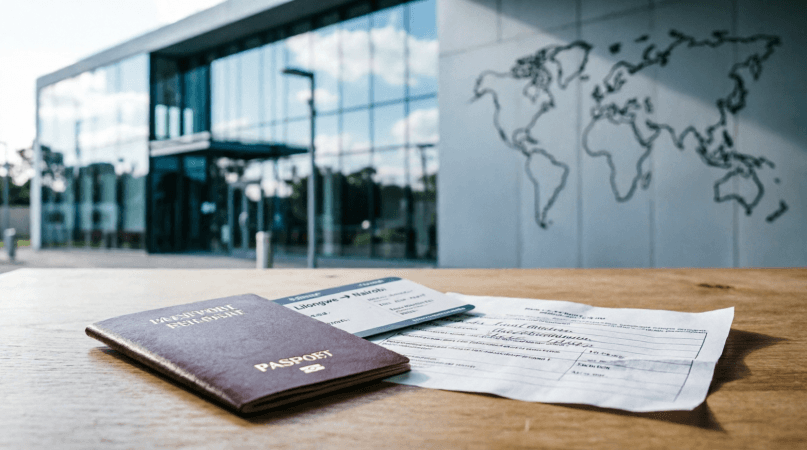
The US State Department announced that routine US visa services in Malawi end at its Lilongwe embassy on 1 August 2026, with Malawian applications redirected to the US Embassy in Nairobi. Applicants must schedule appointments, pay visa fees, and attend interviews at their designated hub rather than at home.
The State Department frames the move as a continent-wide “realignment” designed to standardise screening and vetting and to concentrate consular resources. The official notice, published on travel.state.gov in July 2026, lists Lilongwe among 25 posts losing routine services and confirms that existing visa restrictions, visa bond requirements, and immigrant visa pauses stay in force on top of the new arrangement.
The embassy in Lilongwe is not closing. It will continue offering limited consular services, including support for American citizens. What disappears is the thing most Malawians actually queue for: the ability to apply for a US visa without leaving their country.
Which African Countries Are Losing US Visa Services?
Twenty-five US diplomatic posts across Africa stop processing routine visas from 1 August 2026, and their applicants are reassigned to regional hubs. The affected posts are Antananarivo, Abuja, Asmara, Bamako, Banjul, Brazzaville, Bujumbura, Conakry, Cotonou, Durban, Freetown, Gaborone, Harare, Juba, Libreville, Lilongwe, Lusaka, Maputo, Maseru, Mbabane, N’Djamena, Niamey, Nouakchott, Ouagadougou, and Windhoek.
Routine visa services continue at roughly 20 designated hubs: Lagos, Abidjan, Accra, Addis Ababa, Cape Town, Dakar, Dar es Salaam, Djibouti, Johannesburg, Kampala, Kigali, Kinshasa, Lomé, Luanda, Malabo, Monrovia, Nairobi, Port Louis, Praia, and Yaoundé.
| Where you live | Where you now apply | What that means in practice |
|---|---|---|
| Malawi (Lilongwe) | Nairobi, Kenya | International flight, hotel stay, possible return trip for document collection |
| Nigeria (Abuja region) | Lagos, Nigeria | Domestic travel to Lagos; no consular alternative in the capital |
| Zambia (Lusaka) | Regional hub per State Dept assignment | Cross-border travel for interviews |
| Zimbabwe (Harare) | Regional hub per State Dept assignment | Cross-border travel for interviews |
| Botswana, Lesotho, Eswatini, Namibia | South African hubs (Johannesburg/Cape Town) | Cross-border travel; Durban itself also loses services |
US visa application routes for selected African countries from 1 August 2026. Confirm your assigned hub on travel.state.gov before booking anything.
In written terms: in 2026, the number of US posts in Africa offering routine visa services falls from nearly 50 to about 20, meaning applicants in 25 countries must now cross a border, or half a country, to sit a visa interview.
For Nigerian readers, the detail that matters is that Abuja loses routine visa services but Lagos keeps them. Nigerians are not being sent abroad, but everyone in the north and centre of the country now funnels through one city that already carries some of the longest interview backlogs on the continent.
What are the Costs of Accessing US Visa Services in Malawi via Nairobi?
The honest answer is that nobody can give a Malawian applicant a fixed figure for US visa services in Malawi, because the new cost stack has too many variables, and that uncertainty is itself part of the burden. What used to be a trip across Lilongwe is now an international journey with at least five separate cost lines.
- Return airfare on the Lilongwe–Nairobi corridor, served by carriers including Kenya Airways and Malawi Airlines.
- Accommodation and meals in Nairobi, since interview dates rarely align neatly with same-day flights.
- The $185 visa application fee, unchanged, plus any additional fees that apply to specific categories.
- Lost income or study time, often several days per trip.
- A possible second trip if a passport must be collected, documents are requested, or an interview is rescheduled.
Layer this on top of what Malawians already face. Malawi sits on the US visa bond pilot list, under which consular officers can require refundable deposits of $5,000 to $15,000 before issuing a tourist visa, and on the partial restrictions list under Presidential Proclamation 10998. The State Department’s own notice confirms those measures remain in place. A Malawian applicant can therefore be asked to fly to another country, post a five-figure bond, and still be refused.
The only good thing about this sudden arrangement is that Kenya’s open-entry policy for African nationals means Malawians do not need a visa to enter Kenya for the trip itself. The irony of that arrangement writes its own editorial. The country demanding the journey is the one with the closed door; the African neighbour absorbing the traffic asks for nothing.
Why Did the US Suspended Visa Services in Malawi and Africa?
The State Department’s stated reasons for restructuring US visa services in Malawi are security screening, consistency, and cost, but the timing tells Malawians a wider story about where they rank in American priorities. The realignment notice speaks of “rigorous visa screening and vetting” and aligning resources with “America’s national interests.” Nothing in the official language is about Malawi specifically.
Malawians can be forgiven for reading it differently. In 2025, Washington directed a freeze and review of foreign assistance that gutted Malawian programmes in health, governance, and economic development, with reported losses of around $230 million. In November 2025, the Millennium Challenge Corporation formally terminated Malawi’s $350 million Transport and Land Compact, a deal signed in 2022 to rebuild key road corridors, with the compact’s end date set at 18 December 2025.
Foreign Affairs Minister George Chaponda has pushed back publicly, warning that the visa relocation hits students, medical patients, and business travellers hardest, and calling for a relationship built on mutual respect rather than ceremonial goodwill. Speaking at US National Day celebrations in Lilongwe, he said the two countries should be able to address difficult issues with “grace and mutual respect.”
Whether each individual decision is administrative or political almost stops mattering at this point. Aid cuts, a cancelled infrastructure compact, a visa bond requirement, a partial travel restriction, and now the loss of local visa processing all point the same direction. Malawi is experiencing what much of the continent is experiencing in concentrated form: a US relationship being managed down.
Next Steps for Applicants Seeking US Visa Services in Malawi
Applicants with plans to visit the United States should verify their hub assignment, protect any fees already paid, and budget for Nairobi as part of the total cost of applying for US visa services in Malawi. Here is the practical sequence.
- Check travel.state.gov and the US Embassy Lilongwe website for your official hub assignment and category-specific instructions. Do not rely on social media summaries; this policy has already spawned misinformation.
- If you paid an MRV fee before the transition, note that the State Department required appointments to be booked by 31 July 2026 to preserve the fee. If you missed that window, confirm your fee status before paying again.
- Book interviews before flights. Secure your Nairobi appointment first, then build travel around it, with at least one buffer day.
- Prepare for the bond question. Malawi remains on the visa bond pilot list, so B-1/B-2 applicants should understand the bond mechanics before the interview, not during it.
- Keep every receipt. If policy shifts again, or refunds become available, documentation is your only leverage.
Travel agencies in Lilongwe and Blantyre are already adapting, and applicants should expect to see bundled “visa trip” packages combining flights, airport transfers, and accommodation near the Nairobi embassy. Used carefully, these can reduce cost and stress. Vet any provider hard: a policy change like this is prime hunting ground for immigration fraud, a pattern we have documented across the continent in our reporting on visa scams targeting African applicants.
Broader Impact on African Travel and US Visa Services
The consolidation confirms that access to US visa services in Malawi and other African nations is becoming a regional privilege rather than a national service, and African travellers and travel businesses need to plan for that reality. A visa interview is no longer something 25 countries’ citizens can do at home. It is something they travel for, and travel itself is now part of the vetting.
There is an economic layer worth naming without celebrating. Nairobi’s hotels, Kenyan ground handlers, and carriers on the Lilongwe–Nairobi route will see new demand, and agencies with strong Nairobi partnerships can genuinely help applicants. But African travel businesses profiting from the friction Washington created is not the same as African travellers being better off. The money Malawians spend reaching Nairobi is money that used to stay in Malawi, or never needed spending at all.
The deeper pattern is the one this publication keeps returning to. In the same years that Kenya scrapped entry requirements for African nationals and the African Union pushed visa liberalisation across the continent, the United States has stacked entry bans, partial restrictions, visa bonds, an immigrant visa freeze, and now a consular withdrawal from 25 capitals. Africans are making it easier to move around Africa. Washington is making it harder to leave.
For Malawians, the advice is unsentimental: know the rules, protect your money, and make the Nairobi trip count. For the rest of us, the lesson is to keep receipts on the pattern, because it is a pattern, and to keep building the intra-African alternatives that make any single embassy’s decision matter a little less.
Frequently Asked Questions About US Visa Services in Malawi
Can Malawians still apply for US visas after 1 August 2026?
Yes. Malawians can still apply for all standard US visa categories, but appointments, fee payments, and interviews take place at the US Embassy in Nairobi, Kenya, not in Lilongwe.
Is the US Embassy in Lilongwe closing?
No. The embassy remains open and continues providing limited consular services, including American citizen services. Only routine visa processing has been suspended.
Do Malawians need a visa to enter Kenya for their US visa interview?
No. Kenya allows African nationals, including Malawians, to enter without a visa under its open-entry policy, though travellers should confirm current entry conditions before flying.
Does the change affect Malawians who already hold valid US visas?
No. Valid, unexpired US visas remain usable. The realignment only affects new applications and pending cases requiring interviews after 1 August 2026.
Which country’s applicants were sent where under the new system?
The State Department assigned each of the 25 affected posts to one of about 20 regional hubs. Malawians go to Nairobi; Abuja-region Nigerians go to Lagos; several Southern African countries route through Johannesburg or Cape Town. Applicants should confirm their exact assignment on travel.state.gov.
Is the Nairobi requirement connected to the US visa bond program?
They are separate policies that stack. The visa bond pilot, which can require deposits of $5,000 to $15,000 from B-1/B-2 applicants from listed countries including Malawi, remains in force alongside the hub requirement.
Sources: US Department of State – Realignment of U.S. Visa Services in Africa to Regional Hubs | Nation Online (Malawi) – US shifts Malawi visa processing to Nairobi | Nation Online – US formally terminates Malawi’s 2nd MCC compact | Nyasa Times – Malawi visa blow as US shifts embassy services to Nairobi | travelnews.africa – US Suspends Routine Visa Services in Malawi