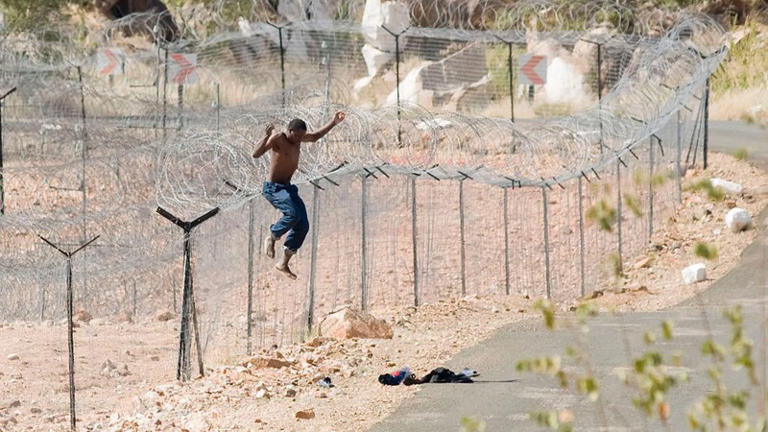
A Border Management Authority agent detains a migrant who tried to enter South Africa without proper identification papers at the Beitbridge crossing.Photographer: Marco Longari/AFP/Getty Images
SHARE
11 views
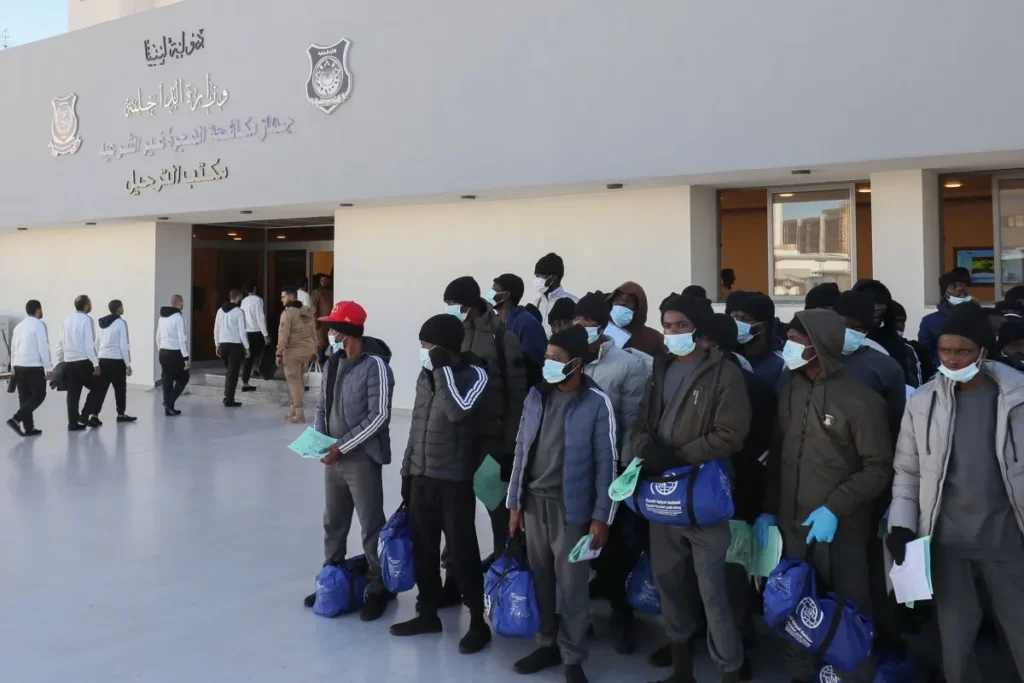
South Africa’s immigration system is entering a tougher phase, with authorities deporting 109,344 undocumented migrants over the past two financial years in one of the country’s most aggressive enforcement drives to date.
The figures, released by the Department of Home Affairs, highlight a sharp escalation in immigration enforcement under a nationwide campaign known as “Operation New Broom.”
For Nigeria passport visa migration news in 2026, this development is one to watch closely. South Africa remains a key destination for West African migrants both skilled and informal—making policy shifts in Pretoria directly relevant across the region.
Surge
According to official data, deportations rose significantly over the review period.
Authorities removed 39,672 undocumented migrants in the 2023/24 financial year.
That figure jumped by 30% to 51,560 in 2024/25, before increasing again by 12% to 57,784 in 2025/26.
South African police have been mounting roadblocks and searching places where they suspect illegal immigrants are living or working. Photograph: Phill Magakoe/AFP/Getty Images
In total, deportations climbed by 46% to reach 109,344 by March 31, 2026.
Officials say the surge reflects improved enforcement capacity and a renewed focus on immigration compliance.
At the heart of the crackdown is Operation New Broom—a technology-driven enforcement strategy designed to identify, arrest, and deport undocumented migrants.
The programme combines traditional law enforcement with modern tools such as:
Biometric verification systems
Drone surveillance
Body-worn cameras
Digital immigration tracking
Authorities argue that these measures are improving efficiency while strengthening border control and internal enforcement.
Home Affairs Minister Leon Schreiber said the results show the government is “reaping the fruits” of reforms aimed at tackling illegal migration.
He also issued a blunt warning: migrants without legal status should leave voluntarily or risk deportation and long-term bans from re-entering South Africa.
Message to Migrants
The crackdown sends a clear signal across the continent.
For Nigerians and other West Africans, South Africa has long been a major migration destination, offering opportunities in business, services, and skilled professions.
But the current policy direction suggests a shift toward stricter enforcement and reduced tolerance for irregular migration.
At the same time, authorities are investing in modernisation.
The planned rollout of an Electronic Travel Authorisation (ETA) system will capture biometric data for all incoming travellers, strengthening monitoring and compliance.
Balancing Enforcement
While enforcement is tightening, South Africa is also working to modernise its broader immigration system.
Officials say the focus is not only on deportations but also on deterrence and efficiency—ensuring that legal migration pathways function more effectively.
This dual approach mirrors global trends, where countries are simultaneously:
Cracking down on undocumented migration
Expanding structured, skills-based entry routes
What It Means
For Nigerian travellers, the implications are immediate.
Stricter enforcement means:
Greater scrutiny at borders
Higher risks for undocumented stays
Increased importance of valid visas and permits
At the same time, improved digital systems could make legal travel smoother—if fully implemented.
Bigger Picture
South Africa’s immigration crackdown reflects a broader recalibration of migration policy—not just in Africa, but globally.
Governments are no longer just managing migration flows. They are actively reshaping them.
For now, one thing is certain: access to South Africa is becoming more structured, more controlled, and far less forgiving for those outside the legal system.
For West African migrants, especially Nigerians, the era of informal entry is closing fast—and a new, rules-driven migration landscape is taking its place.