


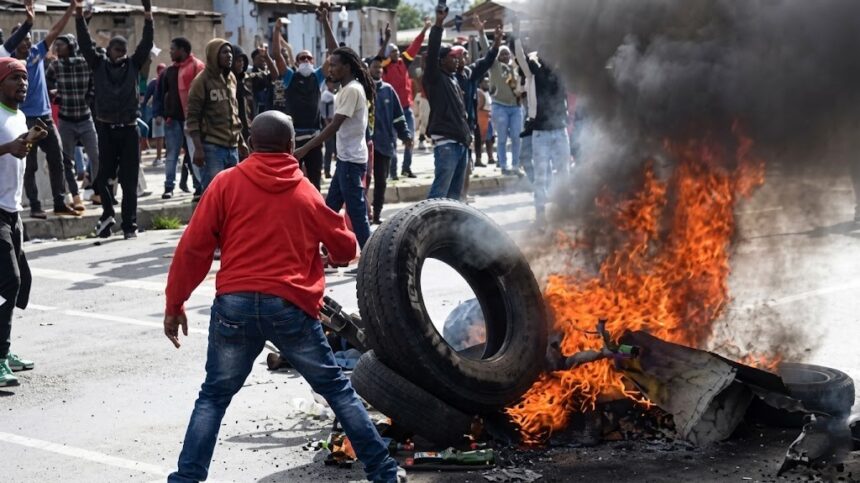
South Africa calls itself the ‘Rainbow Nation,’ a country built on the promise that difference could coexist. Yet every few years, that promise fractures and they start seeing differences, and foreign-born residents become the target. The question isn’t just why it happens, but why it keeps happening here.
“Over 2.9 million foreign nationals live in South Africa according to Stats SA. But in reality, some South Africans only see them as ‘job stealers’ and ‘burdens.’ This editorial argues that the real cost of xenophobia isn’t economic, or about jobs, but about what it does to the idea of a shared African future.”
Look at this news story for example, three hundred Ghanaians are ordered to be evacuated from South Africa last week. It is not because of a war breaking out, or a natural disaster, but from a country that was once a symbol of pan-African triumph. They had registered their names with the Ghana High Commission in Pretoria, quietly, the way people do when they are afraid and trying not to show it. Kenya, Malawi, Zimbabwe, Lesotho, and Nigeria all have issued warnings, telling their citizens to stay indoors, in another African country. This is something we expect from racists.
And South Africa’s presidential spokesman, Vincent Magwenya, called it “pockets of protest.”
What Xenophobia in South Africa Actually Is
So, let us get some definitions right.
Xenophobia is the systematic, often violent, dehumanisation of people on the basis that they were born in the wrong country.
In South Africa, the targets are overwhelmingly and surprisingly Black African migrants like Zimbabweans, Nigerians, Somalis, and Ghanaians. They refer to these (their African brothers) with the slur makwerekwere, a word designed to strip a person of their humanity before you strip them of their livelihood, or their life.
The term xenophobia itself comes from Greek, xenos (stranger) and phobos (fear).
But what plays out in Johannesburg townships is not fear. It is anger that is misdirected and weaponised. Fear hides but this one is used to burn up people’s shops and beats people in the street in broad daylight. This is the xenophobia in South Africa.
Where Xenophobia in South Africa Was Built
To understand why this keeps happening, you have to go back before 1994, and further back still to the time of the Apartheid.
Apartheid, meaning separateness, was a time where whites in South Africa segregated the Blacks. It even divided Black people from each other. During this period, there were laws that restricted internal movement. “Homelands” were manufactured to fragment identity along ethnic lines. The regime’s logic was that if Black South Africans were suspicious of each other, if Zulu and Xhosa and Sotho could be set against each other, they would have less bandwidth to be set against the state.
“This-Against-That” Mentality for Xenophobia in South Africa
Apartheid, as one scholar put it, was a system built on divide-and-rule whose end game was to instill mistrust, hatred, and hostility within Black communities themselves.
That architecture didn’t collapse when Nelson Mandela walked out of Victor Verster Prison. It went underground, into the marrow of a society that never had a real reckoning with it.
And during those decades of apartheid, African nations held South Africa up. They housed the exiles, trained the cadres, and gave blood and treasure to a liberation struggle that was understood to be continental. Mozambique, Zimbabwe, Zambia, Nigeria and Ghana all paid for South Africa’s freedom with their own political risk and economic sacrifice.
The targets of today’s attacks are the children and grandchildren of those same nations.
Why Xenophobia in South Africa Keeps Happening
South Africa carries a 30% unemployment rate into every morning. Its townships, the same ones apartheid built to contain Black labour, still hold most of that pain. The ANC’s thirty years in power have not closed the gap that apartheid widened.
Services are still patchy and opportunity is thin. Now that brings frustration, I get it. The only issue is that these people cannot look inwards to fix their problem, instead, what they tell themselves loudly and repeatedly is that it’s the foreigners.
This is something that has no economic logic. Migrants running spaza shops or taxi routes are not the cause of South Africa’s inequality. They did not write the legislation that kept Black South Africans out of the economy for fifty years. But since they were looking for scapegoats, it is not about being guilty, a scapegoat is just whoever is visible and vulnerable.
Academics who study this call it “misplaced anger.” Our co-founder Charity calls it “the psychosis of whiteness running so deep that Black South Africans cannot help but act as modern-day plantation house servants, enforcing hierarchy even among themselves, and keeping the field hands in line while the house burns.” The system, she argues, is running exactly as designed.
It is an uncomfortable thing to say. It is also difficult to argue against when you watch a Mozambican man get burned in an informal settlement and his attackers look like his brothers, and the government that is supposed to protect him calls it a “pocket of protest.” This pattern of xenophobia in South Africa persists despite how the entire African continent shows their condemnation.
What Xenophobia in South Africa Costs Africa
Let us stop arguing from the point of economics for a minute. South Africa is the continent’s most industrialised economy. It is also a destination that millions of Africans, skilled professionals, traders, and students, choose precisely because of the diversity it promises. Every wave of xenophobic violence chips away at that promise and at the credibility of African integration itself.
The African Continental Free Trade Area, the grand ambition of a single African market, requires the free movement of people, ideas, and goods. You cannot build that while Nigerian traders are having their stock thrown into the street in Durban, or while Ghana is spending diplomatic capital and state money evacuating citizens from a neighbouring country’s mobs.
The damage ripples.
Tourists from across the continent are starting to reconsider. Investors are measuring political risk and the countries that make up Africa’s great potential find themselves, again, at each other’s throats, to the benefit of no one in the room except those watching from outside it.
Migration Policy vs. Xenophobia in South Africa
Yes, illegal immigration is a real policy challenge. South Africa’s borders are porous and its immigration system is overwhelmed. Those are facts. A government has a legitimate interest in managing migration.
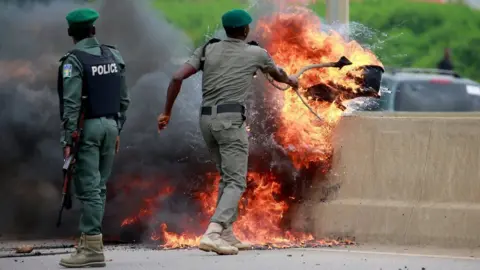
But there is a canyon between managing migration and watching citizens burn shops, and standing at the edge of that canyon without doing anything. South Africa’s ANC government has consistently condemned the violence while simultaneously stoking the political conditions that produce it, signaling to voters that foreigners are part of the problem, then expressing horror when the streets take that message to its conclusion.
Julius Malema said it plainly on May Day this year that “Unskilled men, with no skill whatsoever, say somebody took their jobs.” You cannot, he argued, blame the most vulnerable people in your country for the failures of its leadership and then call yourself a democrat.
What Xenophobia in South Africa Destroys in the Perpetrator
The problem here is that xenophobia doesn’t just damage its victims, it also degrades the people who enact it.
A society that teaches its citizens to direct their rage outward, at the Zimbabwean, the Nigerian, or the Somali, is a society that has been robbed of the ability to demand accountability upward. Every shop that burns is heat that doesn’t reach the parliament. Every foreigner chased out is one fewer witness to what South Africa’s leaders have failed to do for their own people.
The psychological cost is quieter but just as real. To dehumanise someone, you first have to suppress something in yourself. These are communities that have survived apartheid, and that understand dispossession in their bones,. They are now enacting the same dispossession on people who share that history with them.
The Question Xenophobia in South Africa Leaves Us With
Three hundred Ghanaians have their names on a list. They are waiting for their government to remove them from another African country because other Africans are attacking them.
Somewhere in Pretoria, a government spokesperson is explaining that this is not xenophobia.
And somewhere in the distance, the vision of a united Africa that Nkrumah dreamed and Mandela was supposed to embody, is watching. It is waiting to see if we mean it, or if we only meant it when we needed each other.
What kind of traveller do you want to be in this story? And what kind of continent?


