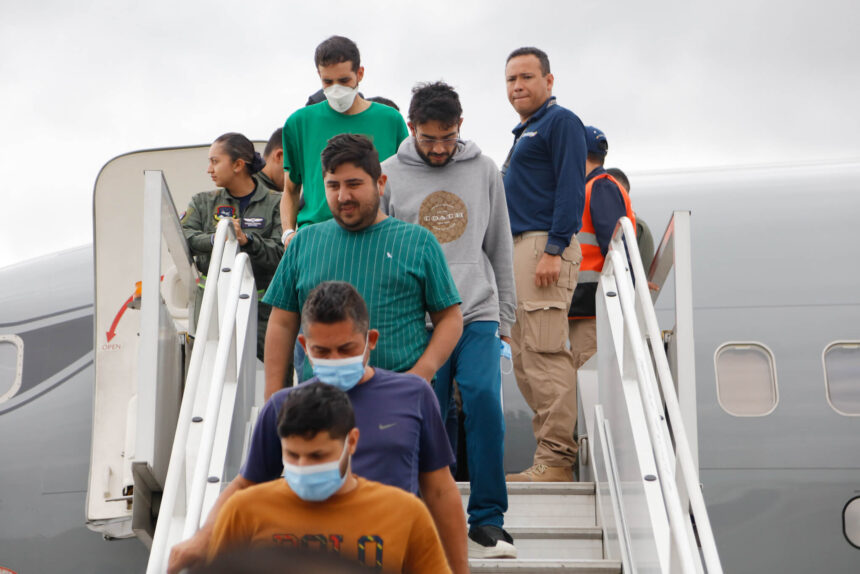
A group of Colombian migrants has been left stranded in Democratic Republic of the Congo after being deported from the United States under a controversial third country immigration arrangement, raising fresh concerns about global migration policies.
The deportees, numbering about 15 Latin American migrants, were flown from the United States to Central Africa in a move that has sparked international debate.
Many of them had fled violence, extortion, or threats in Colombia and had ongoing legal protections that prevented their return home.
Jorge Cubillos described the moment he learned of his destination as shocking, saying he never imagined arriving in Africa under such circumstances.
Legal and Humanitarian Concerns
Several deportees reportedly held legal protections in the United States, including safeguards under international conventions that limit forced return to dangerous environments.
Despite this, they were relocated to Congo, a country facing its own security and humanitarian challenges.
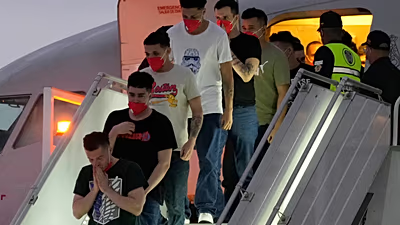
During transit, migrants described harsh conditions, including restraints and limited communication, raising concerns among rights advocates.
READ ALSO: U.S mulls moving 1100 Afghan refugees to DR Congo
Temporary Stay in Kinshasa
The migrants are currently housed in a hotel in Kinshasa, receiving assistance from the International Organization for Migration.
Officials have indicated that temporary visas may be issued, but most deportees are seeking repatriation to their home countries.
Gustavo Petro has directed authorities to arrange their return, calling for immediate action to bring Colombian nationals back
The deportations are part of a wider US policy involving agreements with several countries to accept migrants who cannot be returned to their origin nations.
Analysts say this reflects increasing pressure on immigration systems and a shift toward unconventional solutions.
Global Impact
The situation highlights the growing complexity of migration management, where:
- Legal protections
- National policies
- International agreements
are increasingly colliding.
For African countries, it also raises new questions about their role in global migration frameworks.
The case of Colombians stranded in Congo is more than a single incident.
It is a glimpse into a changing migration system.
One where geography is no longer predictable and where policy decisions can reshape human journeys overnight.
The development highlights the growing importance of passport power and flexible migration options.
Countries are increasingly competing for talent and diaspora connections through more inclusive policies.