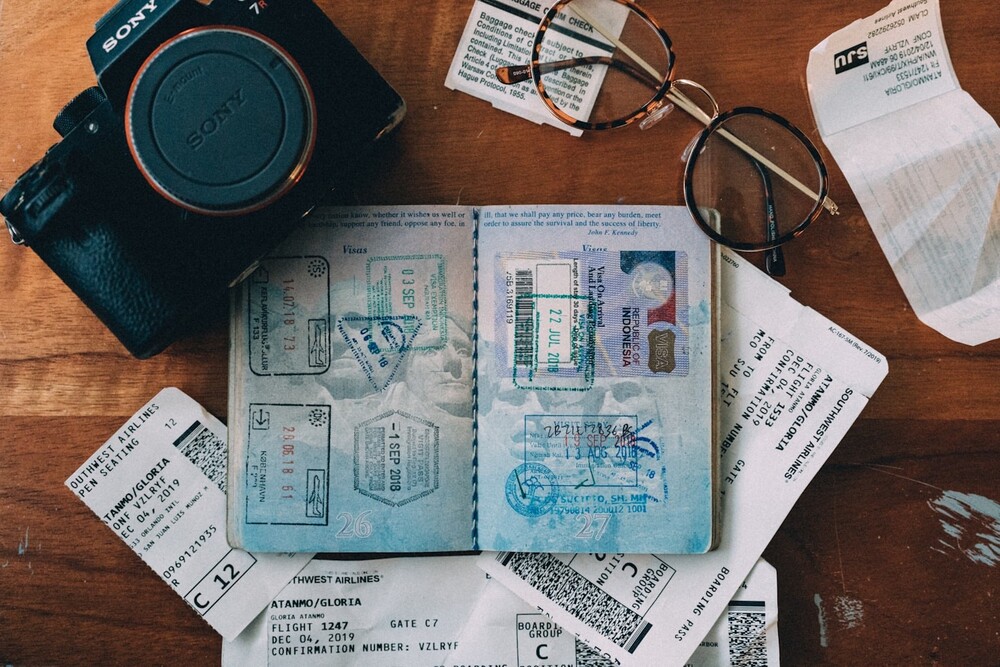
I have stood at a check-in counter with every document in order, and watched the agent’s face do that thing. You know that slow, deliberate look up from the screen where they pause before they speak. Most times, it is about your one-way ticket. If you have travelled internationally on an African passport, you probably have experienced it too.
Before you enter the airport and have them treat you rudely, you must understand the underlying rule about onward travel. The rule exists for valid reasons, and they have nothing to do with singling out African travellers or racism.
This article will help you understand the rule. Are you ready?
The Hidden Risks of Flying with a One-Way Ticket
Airlines are not just checking your documents because they want to waste your time. They actually carry direct legal liability for every passenger they put on a plane.
According to IATA guidelines, if a passenger lands at their destination and is refused entry by immigration, the airline that flew them there is responsible for transporting them back. Think about it. If you were sent back at the airport of your destination country, would you be happy to pay for another ticket back? Especially as it is the law that they must transport you, whether you pay or not. So that means the airline may face significant financial penalties in the process.
This is the reason airlines around the world routinely verify that passengers have documentation that reduces the risk of a denied entry at the other end.
Understanding Airline Liability and IATA Guidelines
Let’s take Spain, for example. If you were travelling to Spain, the rule constrains you too. Spain is a part of the Schengen Area. And the Schengen Area, as a bloc, requires you as a non-EU visitor to prove two things at immigration. (1) You must demonstrate that you have sufficient funds, and (2) that you have onward or return travel out of the Schengen area before your permitted stay expires.
This applies to every country outside of Europe. That means every African country passport holder, as well as citizens of many other countries, regardless of which airline they flew in on. The check-in agent’s concern about your return travel is therefore not random.
They are trying to protect the carrier from a denied-entry situation. If anything happens because they did not check well, they will be at financial loss.
Why Airlines Fail to Communicate Boarding Requirements
Let me be clear, airlines have an obligation to communicate their boarding requirements before you pay for a ticket. If there is a condition attached to a one-way booking, whether it is about your residency status, your visa type, or your proof of onward travel. They are supposed to put that information on the booking page.
It is frustrating to pay for a ticket and only learn about the conditions at the airport counter. Many of us have felt that frustration, and it is a genuine failure of communication that airlines need to fix.
How to Use the Timatic Database to Your Advantage
When you book a one-way ticket for an international flight as a non-EU passport holder travelling to Schengen, your airline’s website should be showing the documentation you will need at check-in.
Most major carriers rely on a database called Timatic. It is run by IATA to determine exactly what each passenger nationality needs to board a specific route. Yes, that information exists and these airlines have it. The question is whether they display it prominently during booking or leave it buried in conditions of carriage that nobody reads.
Schengen Travel Checklist: Essential Documents for One-Way Bookings
What to carry every time you fly to Schengen on a one-way ticket:
- Your return or onward ticket, printed or on your phone that clearly shows your name, date, and a retrievable booking reference (PNR). Make it the first document you produce, not the last.
- Proof that the onward flight is confirmed, not just booked. When you provide a ticket reservation with a booking code that can be verified on the airline’s website, they will not worry you.
- Your Schengen visa documentation, including the visa validity dates relative to your intended stay and departure date.
- Hotel bookings or a documented accommodation plan for the duration of your stay.
- If asked about the return airline, know that IATA-compliant onward travel is not carrier-specific. Your return can be on any airline. If staff insist otherwise, ask for the policy in writing and escalate calmly.
If an agent claims that you must book a return with their airline specifically, it is a sales tactic. The rule is to have a return ticket. It doesn’t matter which airline. Ask them to show you the specific “Conditions of Carriage” that mandate a single-carrier return.
Navigating Travel Documentation as a Non-EU Passport Holder
I have heard so many hurtful stories, and I have seen too many travellers learn it the expensive way. See, the burden of knowing these rules falls disproportionately on us.
Passport privilege is real, and I am not going to lie. Travellers from certain countries board planes to Europe without a second thought about onward ticket checks, residency proofs, or documentation hierarchies.
Residents are not required to show onward travel because they are “going home”. But for the rest of us, that are visitors, the airline is legally obligated to ensure you have a way out of the Schengen zone to avoid being fined by European authorities.
That is not fair. But that is the reality. So in the meantime, what I will advice is that you spend more time on Travel Radio Live.
Okay, fine. Try and learn the Timatic rules for your passport and destination before you book. Don’t book and let a rude bias immigration staff tell you over the counter.
Carry your onward travel confirmation the way you carry your passport. Hold it visibly, accessibly, and ready to produce the moment anyone looks at you across a counter. And when something goes wrong, document it, name it, and report it through the channels that hold airlines accountable.
The goal is not to accept bad treatment. The goal is to never give a check-in agent a reason to delay you. You will stay fully prepared to push back firmly and calmly when the problem is theirs and not yours.