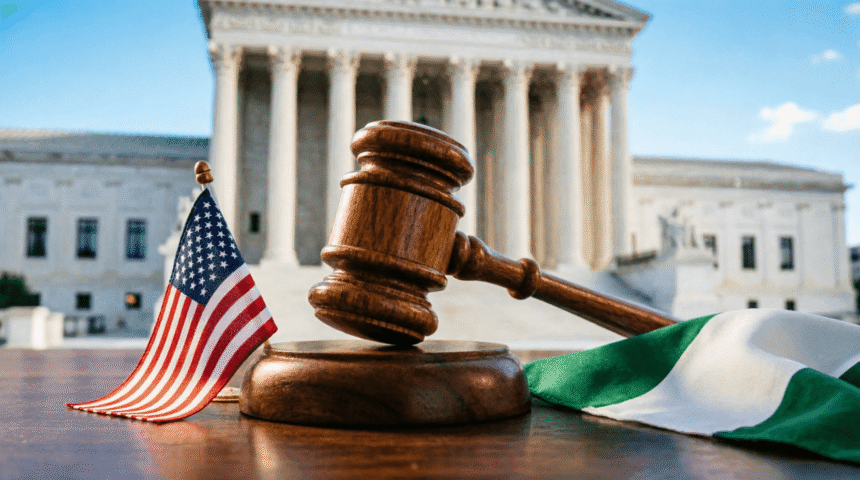
Many of us go to the US to give birth so that our babies can be automatic US citizens, right? If you’re due in a few months and already thinking about a US visa interview, this is good news. President Trump wanted to stop us from claiming US birthright citizenship, but the Supreme Court of the US (SCOTUS) is making it stand exactly as it always has.
On June 30, 2026, the US Supreme Court ruled 6-3 that children born on US soil are citizens at birth. This struck down Donald Trump’s 2025 executive order. However, getting a US visa while pregnant does not get any easier.
TL;DR About US Birthright Citizenship
- The Supreme Court ruled 6-3 on June 30, 2026 that the 14th Amendment guarantees US birthright citizenship to almost anyone born on US soil, regardless of their parents’ immigration status, in a case called Trump v. Barbara.
- This is a different case from 2025’s Trump v. CASA, which only limited how federal courts issue injunctions and never touched the citizenship question itself.
- Nigeria is estimated to rank fourth globally in birth tourism to the US, and Nigerian travellers already face visa scrutiny that this ruling does nothing to remove.
- Trump says he’ll push Congress to legislate around the loss. Because the ruling is constitutional, undoing it would actually take a constitutional amendment.
What the Supreme Court Decided About US Birthright Citizenship
The Supreme Court held that children born in the US to parents who are in the country unlawfully or on a temporary visa are citizens at birth under the 14th Amendment, cementing US birthright citizenship. Chief Justice John Roberts wrote the majority opinion in Trump v. Barbara, joined by Justices Sotomayor, Kagan, Barrett, and Jackson. Justice Kavanaugh agreed the executive order should fall, but on the grounds that it violated federal statute rather than the Constitution itself, which is why the case lands as 6-3 even though only five justices reached the constitutional question directly. Justices Thomas, Alito, and Gorsuch dissented.
Roberts leaned on United States v. Wong Kim Ark, the 1898 case that first settled this question for a child born in California to Chinese immigrant parents. His opinion framed citizenship as “the right to have rights,” extended by the 14th Amendment’s framers to every person born on American soil.
Did the Supreme Court Already Rule on US Birthright Citizenship in 2025?
Not quite, and this is where most of the confusion online about US birthright citizenship is coming from. Trump signed Executive Order 14160 on January 20, 2025, his first day back in office, aiming to deny citizenship to children born to non-citizen parents. Lower courts blocked it almost immediately, and those cases became Trump v. CASA. In that ruling, decided June 27, 2025, the Supreme Court limited how broadly a single district court’s injunction can reach, but it never ruled on whether the executive order itself was constitutional. The same day that decision came down, the ACLU filed a new case, Barbara v. Trump, specifically to get the actual citizenship question in front of a court. That’s the case that just resolved.
Why the US Birthright Citizenship Ruling Matters for Nigerian Families
Nigerian families have more riding on US birthright citizenship than most, because Nigeria isn’t a footnote in the US birth tourism conversation. The Centre for Immigration Studies estimates that roughly 33,000 Nigerian women travel to the US to give birth every year. This ranks Nigeria fourth globally behind China, Taiwan, and South Korea. However, it’s not as if the State Department officially tracks birth tourism. In fact, the administration’s own solicitor general admitted at oral argument in April that “no one knows for sure” how common the practice actually is.
What’s confirmed is that this ruling protects any child who makes it to US soil, regardless of their parents’ visa status. Nevertheless, the results for the visa interview for the mother did not change.
Does the US Birthright Citizenship Ruling Make Getting a US Visa Easier?
No. The US Mission to Nigeria has already publicly warned that it will deny visas to applicants it believes are travelling primarily to give birth in the US. This is under a State Department rule that has been in place since 2020. Nothing in this ruling changes that policy, and nothing requires it to.
If anything, the ruling may even make it harder for pregnant women to get visas. Mark Krikorian of the Centre for Immigration Studies called Trump’s loss “almost a gift to the president.” He argued that it strengthens the case for faster deportations before people can have citizen children, and floated the idea of adding a pregnancy question to tourist visa applications. That’s one advocate’s read, not confirmed policy, but it signals where pressure is likely headed next, not where it’s easing.
For a sense of what this looks like on the ground, a 2025 study of Nigerian women who travelled to the US or Canada to give birth found their visa application experiences were mixed at best. The travel itself carried risk and stress, and being visibly pregnant didn’t guarantee good treatment at the port of entry.
| Question | Answer |
|---|---|
| Is a baby born in the US to Nigerian parents a citizen, regardless of the parents’ status? | Yes, confirmed by this ruling |
| Is it easier to get a US tourist visa while pregnant now? | No, unchanged |
| Has the US Mission to Nigeria’s birth-tourism screening changed? | No, it predates this ruling and continues |
| Can Trump undo this ruling through Congress? | Not through ordinary legislation. It would take a constitutional amendment |
What Nigerian Families Should Expect After the US Birthright Citizenship Ruling
The legal uncertainty around US birthright citizenship is over. If your child is born on US soil, they are American regardless of your visa status, full stop.
What hasn’t changed is the visa process itself. If you’re applying for a US visa while pregnant, expect the scrutiny that applicants have already faced for years. In fact, expect more of it as the administration looks for other ways to respond to this loss. For anything specific to your own situation, talk to a licensed immigration attorney rather than relying on this article, or any other, for individualised advice.
This ruling is also only about birthright citizenship. It says nothing about the wider question of who can get into the US at all right now, and that picture looks very different depending on your passport. Nearly three in four African countries currently face some form of US travel or visa restriction, from outright entry bans to five-figure visa bonds.
See our post on which African countries face US travel restrictions in 2026 –>
We’ve mapped out exactly where every African country stands in a separate guide.
Frequently Asked Questions About US Birthright Citizenship
Is my baby a US citizen if born in the US, even if I’m undocumented or on a tourist visa?
Yes. Under the Supreme Court’s June 30, 2026 ruling in Trump v. Barbara, children born on US soil are citizens at birth under the 14th Amendment regardless of their parents’ immigration status, securing US birthright citizenship.
What was Trump’s executive order trying to do?
Executive Order 14160, signed January 20, 2025, tried to deny automatic citizenship to children born in the US to parents who were undocumented or on temporary visas. Courts blocked it before it ever took effect.
Is this the same as the Supreme Court’s 2025 ruling?
No. The 2025 case, Trump v. CASA, only addressed how broadly a single court’s injunction can apply. It didn’t decide whether the executive order against US birthright citizenship was constitutional. Trump v. Barbara is the case that answered that question.
Does this ruling make it easier to get a US tourist visa while pregnant?
No. Visa scrutiny for applicants suspected of birth tourism, including the US Mission to Nigeria’s standing warnings, predates this ruling and is unaffected by it.
Can Congress still end birthright citizenship?
Not through ordinary legislation. Because the ruling on US birthright citizenship is grounded in the Constitution, undoing it would require a constitutional amendment: a two-thirds vote in both chambers of Congress plus approval from three-quarters of state legislatures.
How common is birth tourism from Nigeria to the US?
Estimates suggest Nigeria ranks fourth globally, with roughly 33,000 Nigerian women travelling to the US annually to give birth, according to the Centre for Immigration Studies. The US government does not officially track this figure, so treat it as an estimate rather than confirmed data.