Have you heard of or been a victim of hotel scam calls? Many people have travelled abroad, and all they enjoyed after a night at the hotel was the loss of their entire savings!
In this blog, I will show you exactly how the scam works, why it is so hard to spot in the moment, and the one simple rule that will keep your bank account safe every time you travel.
Affiliate disclosure: Some links in this post are affiliate links. If you book or buy through them, we may earn a small commission at no extra cost to you. The safety advice below is not affected.
How Hotel Scam Calls Work
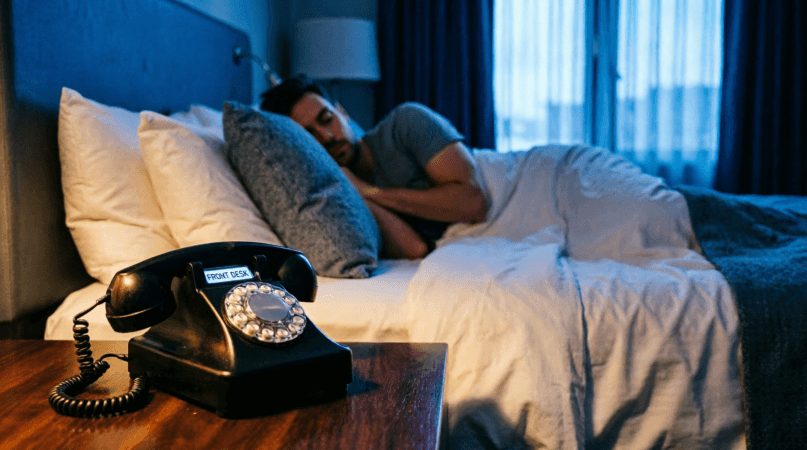
It is 2:07 AM. You have been asleep for about three hours after a long flight and day. That’s when your room phone rings.
You fumble for it half-asleep. A calm, polite voice says: “Good morning, sorry to disturb you, this is reception. Our system had a glitch during night audit, and your card on file was declined for the incidentals hold. I’m so sorry for the inconvenience. If you can just read the card number to me, I can sort it right now so you don’t have to come downstairs.”
Because you’re groggy, you just checked the phone, and you see “FRONT DESK” or extension 0. Also, the person sounds professional, a little harried, and genuinely apologetic. They know you just checked in. In fact, you can recognise the voice.
So you read out your ATM card number, the expiry and the CVV on the back. They thank you, apologise again, and hang up. You roll over and go back to sleep.
By morning, you start receiving different debit alerts.
This is one of the oldest, simplest and most effective travel scams, still running in hotels around the world, from budget lodges in Ikeja to five-star resorts in Dubai and London. It works because of when it happens and how it sounds. By the time you realise what went wrong, the money is gone.
How Does it Work?
It is shockingly simple. There’s no hacking or fake uniforms, just a phone and a good script.
Step 1: The outside call.
The scammer phones the hotel’s main line and asks to be connected to a room, guessing numbers like “Room 314, please.” Some hotels connect anyone who asks. And for some, it’s because the scammer had called more than twenty times that night. A newer format uses caller ID spoofing to ring your mobile directly, faking the hotel’s number. That one hits even during the day.
Step 2: The caller ID trick.
Why do you see Hotel Reception on the screen as the caller? When a call is transferred internally, the room phone displays the front desk extension. That is how most hotel phones work. So the call genuinely appears to come from reception. Your screen is not lying. The system is being used exactly as designed in these hotel scam calls.
Step 3: The script.
The caller opens with an apology, mentions a specific-sounding problem (like night audit, system update, card declined for incidentals) and sounds tired, like a real night worker. If you hesitate, they offer to “just confirm” the card and claim they can see the last four digits. They cannot. You are giving them the whole thing for the first time.
Step 4: The convenience close.
They’ll make it sound like they’re doing you a favour by saying, “You don’t need to come all the way down. Just read it to me, and I’ll sort it. Sorry again for waking you.” At 2 AM, reading 16 digits sounds much easier than getting dressed and finding the lift. That is the whole trick behind hotel scam calls.
Step 5: The damage.
Within hours, sometimes minutes, your details are used or sold on. By the time the real desk tells you everything is fine at checkout, the fraud has already happened.
Weird-looking card entries are not always fraud. We have written about Visa Provisioning Service charges and MDES / Masterpass verification holds, both harmless security checks. But a scammer with your full number, expiry and CVV can do real damage fast.
Why the Hotel Phone Scam Is So Convincing
Plenty of scams are obvious if you are awake and paying attention. This one, involving hotel scam calls, is built to hit you when you are not.
The timing.
The middle of the night is not random. Because your guard is down, and you’re tired, you don’t want to think or argue. You just want to go back to bed.
The caller ID illusion.
When the room phone says FRONT DESK, you believe it. Most people never even consider the display could be misleading. That is the scam’s most powerful weapon.
The polite-apology script.
People expect scammers to sound pushy or aggressive. A real front-desk scam caller sounds bored, polite and slightly embarrassed to be ringing. They apologise multiple times. They rush through the bits they know will annoy you. That is exactly how a tired night receptionist sounds.
The premise is plausible.
Hotels really do authorise cards on arrival and keep them on file for incidentals, as we explained in our hotel incidentals deposit guide. Authorisations do fail sometimes. So the story passes the first smell test, which is all a scammer needs to execute hotel scam calls.
You are trained to trust hotel staff.
As a guest, you are conditioned to do what the front desk says. You don’t want to be the difficult guest arguing at 2 AM. Scammers exploit that.
Are Hotel Scam Calls Active Right Now?
This is not an urban legend. The US Federal Trade Commission and the Better Business Bureau have both issued public warnings about front-desk impersonation calls and hotel scam calls in 2024 and 2025. Barclays and several UK banks have flagged the same pattern to British travellers. Consumer sites in South Africa, Kenya and Nigeria have documented it at hotels in Johannesburg, Nairobi and Lagos.
It does not care how expensive or low-rated the hotel is. It has hit budget airport motels and five-star chains. Expensive hotels are sometimes easier targets because guests assume a luxury property could not have this kind of gap.
There is a similar one that comes in the form of a text to your mobile claiming to be the front desk, asking you to click a link to “re-verify your payment method.” The link goes to a fake page that steals your card.
If you book through a third party, stick to platforms with real fraud support. Expedia, Agoda, Trip.com and Hotels.com all have customer-service lines you can call if something feels off at check-in. Read recent reviews before you book, especially ones mentioning odd calls; TripAdvisor is useful for that.
How Can You Protect Yourself From Hotel Scam Calls?
You don’t need a cybersecurity qualification to beat this scam. You need one rule to stop hotel scam calls.
Never give your card details to anyone you are not seeing physically. No exceptions. No matter how polite they are, no matter what the caller ID says, no matter how late it is.
Never give your card details to anyone you are not seeing physically. No exceptions. No matter how polite they are, no matter what the caller ID says, no matter how late it is.
That is it. A real hotel does not need your card over the phone. If you have read our post about hotel incidentals deposit, you will see that hotels already have access to your card, and if there’s a problem, they will ask you to come down.
Rules You Must Follow
To protect yourself from scams when you’re lodged in any hotel, follow these rules
Hang up and call them back yourself.
If anyone calls you claiming to be the front desk, put the phone down, wait a moment, and dial the front desk number yourself. The number is usually on your key card sleeve. That will connect you to the real front desk. Ask if they just called your room. They will most likely say no.
Walk down in the morning.
Any real billing problem can wait until you are dressed and in the lobby. It is not a life or death matter. Genuine staff will tell you to come down when you are ready, not beg you to read card numbers in the dark.
Urgency at 2 AM is itself the red flag.
Scammers rush you so you won’t stop and think. If the caller is pushing hard and saying your booking will be cancelled unless you act now, that is not how real staff talk.
Never say your room number out loud in public.
No matter what, whether on the phone or with someone, never say your room number out loud in public. Especially at the bar, restaurant, or lobby. Someone nearby can overhear and use it to get their call transferred to your room later.
Watch out for fake Wi-Fi login pages.
Sometimes, you may see a free WiFi connection and want to use it. It may open a login page and ask you to input your card details. Get out of that page immediately. Real hotel Wi-Fi almost never asks for your card. If a login page wants your CVV, close it and call the desk.
Keep your bank reachable while travelling.
You need working data to call your bank fast if something goes wrong. Skip expensive roaming from your Nigerian line and grab a travel eSIM before you fly. Airalo, Saily, Yesim, Drimsim and Nomad cover major African, European and Middle Eastern routes. We compared them in our guide to the best eSIMs for Africa travel.
What If You Already Fell for a Hotel Scam Call?
If you are reading this the morning after a call like that and your stomach has just dropped, don’t panic. Do these four things in order.
1. Call your card issuer immediately.
The number is on the back of the card. Tell them you may have given your details to a scammer. They can freeze the card, block pending charges, and issue a replacement, often while you are still on the phone. Do this before anything else.
2. Dispute unauthorised charges.
With the card frozen, go through recent transactions line by line. Start disputing any charge you don’t recognise. Under most card schemes, including Mastercard and Visa, you are not liable for fraud reported quickly.
3. Tell the hotel.
Go down to the real front desk and ask for the duty manager. They can warn other guests, review phone logs for the night and help document what happened for your bank.
4. Report it.
If your bank is in Nigeria, report to your bank’s fraud unit and, for significant losses, the EFCC or police. If in the US, file with the FTC; in the UK, with Action Fraud. Reporting helps track patterns even if your individual loss is small.
Don’t waste time trying to call the scammer back. The number will be dead or won’t accept incoming calls. Once they have the card details, they move fast, and that phone is done.
Final Word on Avoiding Hotel Scam Calls
I know how convincing that call sounds. The phone says FRONT DESK. The voice is polite. You are tired. But none of those things proves the person on the line works for the hotel.
The real front desk already has your card from check-in. If there’s a problem, they will leave a message at reception or ask you to come down. They will never ask you to read out a full card number, expiry date and CVV over the phone at 2 AM.
So if the room phone rings in the night and someone on the other end wants your card, hang up. Wait a minute. Dial 0 yourself. That 30 seconds of effort is all it takes to keep your account intact.
If this helped, send it to one friend who travels a lot. Most people who fall for this aren’t stupid. They are just tired.
Frequently Asked Questions About Hotel Scam Calls
Can a scammer really make my room phone show “FRONT DESK”?
Yes. Any call transferred through the hotel’s internal system shows the front desk extension. Scammers do this by calling the main line and asking to be transferred to your room. Your phone is not hacked.
What if the hotel genuinely needs a new card in the night?
They don’t. Any billing issue can wait until morning. Even if a night auditor spotted a problem, their training is to leave a note for the morning shift or slip a message under your door, not demand card details over the phone at 2 AM.
I gave the card number but not the CVV. Am I safe?
Safer, but not fully. Some online merchants don’t require a CVV, and a card number plus expiry is enough for certain types of fraud. Call your bank anyway and ask them to monitor or replace the card.
Can this happen on my mobile?
Yes, and that version is growing. Scammers use caller ID spoofing to make your mobile show the hotel’s real number, then run the same script. The rule is the same: never give card details on an inbound call. Hang up and call the hotel back on a number you look up yourself.
Should I use a credit card or debit card at hotels?
Use a credit card where possible. A stolen debit card gives a scammer direct access to the money in your current account, and getting it back can take weeks. Credit cards have stronger fraud protection and faster chargeback rights. If you only have a debit card, keep a low balance in the linked account during travel and set instant transaction alerts.
Do hotels reimburse you if you fall for a hotel scam call?
Generally, no. Because you willingly gave your card details to the caller, the hotel is not legally liable for the fraudulent charges. Your bank or credit card provider is your best line of defence for disputing the transactions.