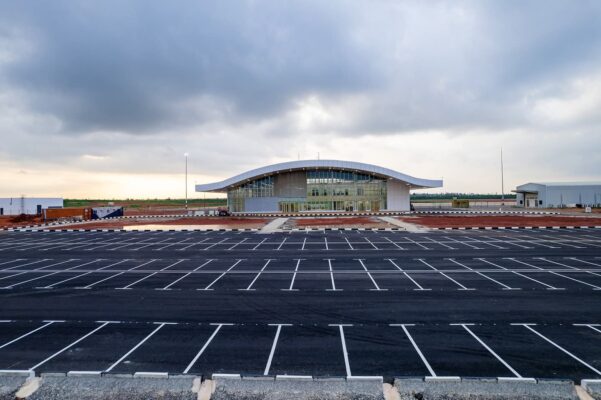
Nigeria’s President Bola Ahmed Tinubu is set to commission the Gateway International Airport in Ogun State, a landmark infrastructure project positioned to unlock new economic corridors in Nigeria’s Southwest.
Located in Iperu-Remo, the airport is one of the flagship initiatives of the administration of Dapo Abiodun, designed as both a passenger and agro-cargo hub to support trade, logistics, and industrial growth.
The Gateway International Airport is widely regarded as one of Nigeria’s most ambitious state-led aviation projects, with an estimated value of about $800 million.
Built with a 4-kilometre runway, one of the longest in West Africa, the airport is capable of handling wide-body aircraft, positioning it as a major cargo gateway for exports.
READ ALSO: Gateway International Airport to receive first cargo flight from Europe
Its strategic location near the Lagos-Ibadan Expressway allows it to serve as an alternative to Lagos’ congested aviation system while linking industrial clusters to global markets.
Jobs and Economic Ripple Effects
Beyond aviation, the project is structured as a broader economic engine.
- Over 5,000 jobs have already been created during development
- Up to 25,000 direct and indirect jobs are projected across logistics, aviation, and services
- The airport is expected to drive investment into agro-processing, trade, and real estate
The long-term vision is an airport-led economic zone (aerotropolis) that attracts industries and boosts non-oil exports.
Cargo-Led Growth Strategy
Unlike traditional airports, Gateway International Airport is built with a strong focus on agro-cargo exports.
The facility is expected to:
- Enable faster export of agricultural produce
- Reduce logistics delays
- Improve Nigeria’s competitiveness in global markets
Officials say the airport will support direct cargo flights to Europe and other international destinations, cutting export timelines significantly.
Governor Dapo Abiodun has consistently framed the airport as a transformational project for Ogun State’s economy.
In a statement shared ahead of the commissioning, he highlighted its strategic importance:
“This is a major milestone in our journey to position Ogun as a leading logistics and industrial hub.”
He also emphasised that the project reflects the state’s long-term development vision, linking infrastructure with economic growth and global competitiveness.
Strategic Timing and National Significance
The commissioning by President Tinubu underscores the federal government’s support for subnational infrastructure initiatives aimed at driving economic expansion.
Despite other engagements prompting adjustments to the president’s travel schedule, the airport remains a central highlight of his visit.
The Bigger Economic Play
The Gateway International Airport is not just an aviation facility; it is a strategic economic asset.
It aims to:
- Boost non-oil exports
- Strengthen supply chains
- Attract foreign direct investment
- Decongest Lagos aviation traffic
With its scale, location, and cargo focus, the airport could reshape how goods and people move across Nigeria’s commercial heartland.
Gateway International Airport is expected to attract an $800 million investment. that will create up to 25,000 jobs while serving as a new logistics gateway for Nigeria.
When Tinubu commissions Gateway International Airport, it won’t just be a ribbon-cutting; it will mark the launch of a new economic frontier.