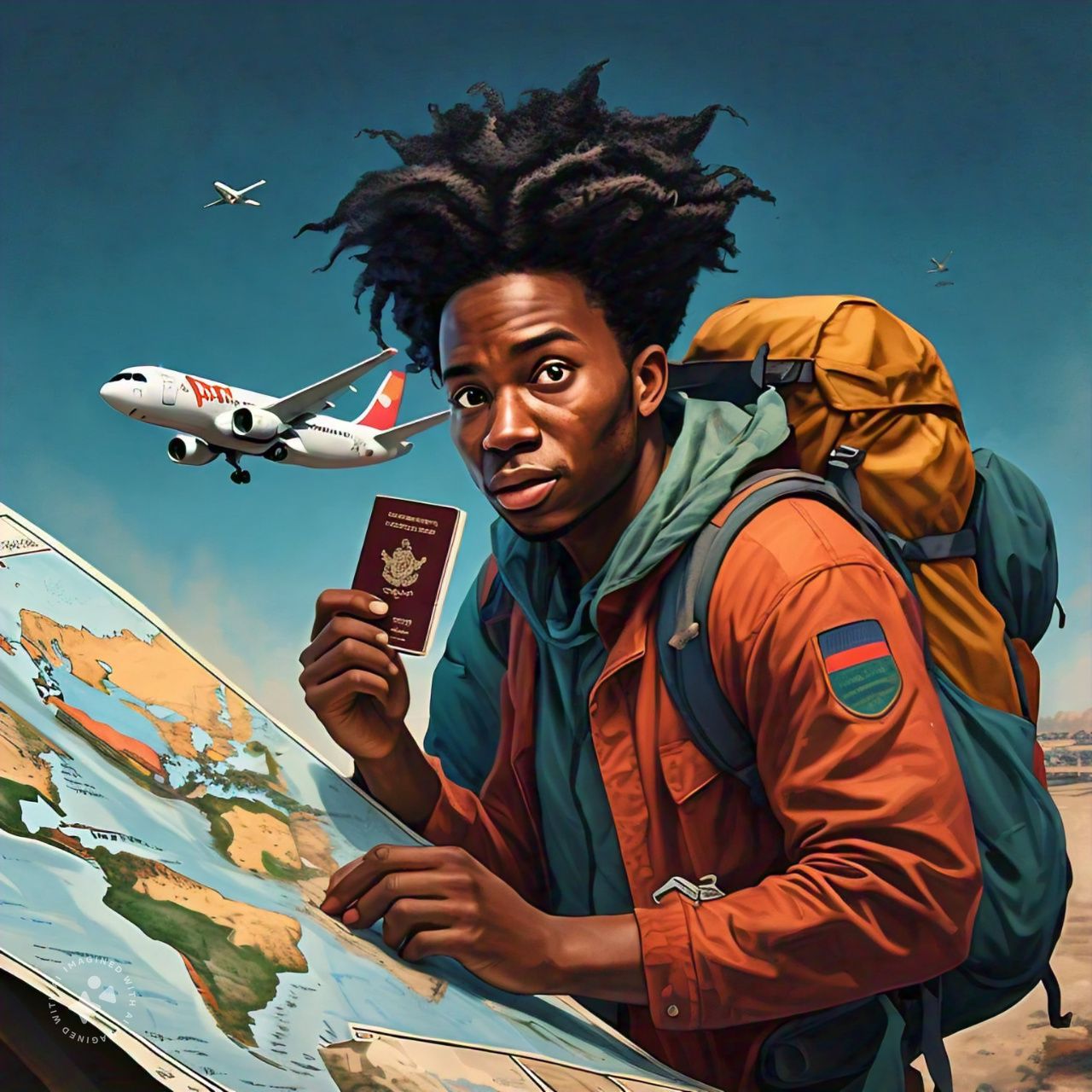
As Black Travelers we’ve been faced with our fair share of obstacles on the road but none seems more frustrating than the limitations imposed by my third-tier passport. While it looks so easy for some travelers to breeze through borders with ease, those of us with passports from less influential nations face different reality.
Ikechi Uko a travel expert and influencer, in his recent interview with TravelRadio on Black Travel Podcast gave a glimpse of the what being a third-tier passport holder subjects you to, he said in the interview, how a friend of his went to apply for a visa with a Nigerian Passport and got denied almost immediately, he applied with his United Kingdom Passport and got the visa, it was a funny one really, but it highlight the constant struggles of what third-tier passport holders face.
What is a third-tier passport?
.
Passports are always ranked according to their visa-free travel privileges. First-tier passports holders (e.g., Japanese, American) are offered seamless access to various countries, while second-tier passports holders (e.g., European, Canadian) still enjoy significant freedom. Whilst Third-tier passports holders (e.g., Nigerian, Indian), however, are often met with scrutiny and restriction.
Challenges of Traveling with a Third-tier Passport
Being a third-tier passport holder can be a significant hindrance to international travel. While some travelers enjoy the Luxury of a visa-free access to numerous countries, third-tier passport holders face a myriad of challenges that can make exploring the world a difficult task. From rigid visa requirements and lengthy application processes to restricted travel options and heightened scrutiny at borders, the obstacles are numerous. In this section, we’ll delve into the specific challenges that third-tier passport holders encounter, and explore the implications of these barriers on Black travelers ability to travel freely and connect with the world.
- Visa hurdles: Securing visas can be a lengthy, costly process, with no guarantee of approval.
- Limited access: Some countries impose strict regulations or outright bans on third-tier passport holders.
- Increased scrutiny: Border officials often subject third-tier passport holders to additional questioning and screening.
- Higher costs: Visa fees, travel insurance, and flight costs can be prohibitively expensive.
The Impact on Black Travelers
The constraints of a third-tier passport can be particularly pronounced for Black travelers, who already face a unique set of challenges when exploring the world. From racial profiling and discrimination to limited representation and visibility, Black travelers must always navigate a complex web of obstacles that can make international travel a frustrating and tiring experience.
The added burden of a third-tier passport can worsen these challenges, further limiting access to destinations, opportunities, and connections. In this section, we’ll examine the intersection of passport privilege and racial identity, and explore how the limitations of a third-tier passport can impact the travel experiences and aspirations of Black individuals.
- Restricted exploration: Third-tier passport holders may be unable to visit certain countries or regions, limiting their cultural exchange and understanding.
- Economic barriers: The financial burden of visa applications and travel costs can prevent Black travelers from exploring the world.
- Perpetuating inequality: The tiered passport system reinforces global power imbalances, with Black nations often relegated to the lower tiers.
Strategies For Navigating The System
While the constraints of a third-tier passport can be difficult, Black travelers are not without agency. Through strategic planning and leveraging resources, it’s possible to lessen the limitations imposed by a third-tier passport. From meticulous planning and research to community support and adaptability, there are numerous ways to navigate the complex landscape of international travel.
In this section, we’ll explore practical tips and tactics for Black travelers to overcome the obstacles of a third-tier passport, ensuring that even the most restrictive travel regulations cannot hinder the desire to explore and connect with the world.
- Research and planning: Understand visa requirements and travel restrictions before embarking on a journey.
- Visa assistance services: Consider using professional services to aid in the visa application process.
- Travel insurance: Invest in insurance that covers unexpected visa denials or travel disruptions.
- Community support: Connect with fellow third-tier passport holders to share knowledge and resources.
Ufuoma’s Triumphant Story
As I held my Nigerian passport, I couldn’t help but feel a sense of limitation. The visa restrictions seemed daunting, but I was determined to make the most of it. I decided to turn lemons into lemonades – or in this case, visa restrictions into travel opportunities!
First, I focused on getting the right visas. I knew that having a United States visa would open doors to not just America but also other countries like Puerto Rico, Belize, and Costa Rica. I applied and got it! It was a game-changer. I also obtained a Schengen visa, which granted me access to 26 European countries without extra visas. I explored 10 countries with that one visa – what a thrill!
Next, I researched visa-free destinations. With my Nigerian passport, I could visit around 40 countries without a visa. I had my eyes on Barbados, Dominican Republic, Maldives, Seychelles, Kenya, and Mauritius. I made a mental note to plan a trip to these places soon.
But planning ahead was crucial. I couldn’t just wing it with a “restrictive” passport. I had to research, plan, and apply for visas well in advance. I learned to check visa requirements and apply at least three months before my trip to avoid disappointments.
Of course, visa applications were still a hurdle. But I learned some valuable tips along the way. I made sure to have complete documentation, and a letter of invitation from a family member helped my application. I also built up my travel history by visiting visa-free destinations, which made my applications more credible. And, I ensured I had sufficient funds in my account to demonstrate my ability to care for myself abroad.
With these strategies, I turned my “weak” passport into a travel asset. I explored new destinations, learned about different cultures, and made unforgettable memories. My passport may have limitations, but my determination and creativity knew no bounds. So, if you’re a fellow Nigerian passport holder or have a “restrictive” passport, don’t let visa restrictions hold you back. Make your own lemonades and see the world!
OTHER BLOG: Access and Accessibility: Breaking Down Barriers to Black Travel in Africa
Traveling with a third-tier passport presents unique challenges, but it’s not impossible. By understanding the system and taking advantage of strategies, Black travelers can continue to explore and connect with the world. However, it’s crucial to also acknowledge the inherent inequalities in the passport tier system and work towards a more inclusive and equitable global travel framework.