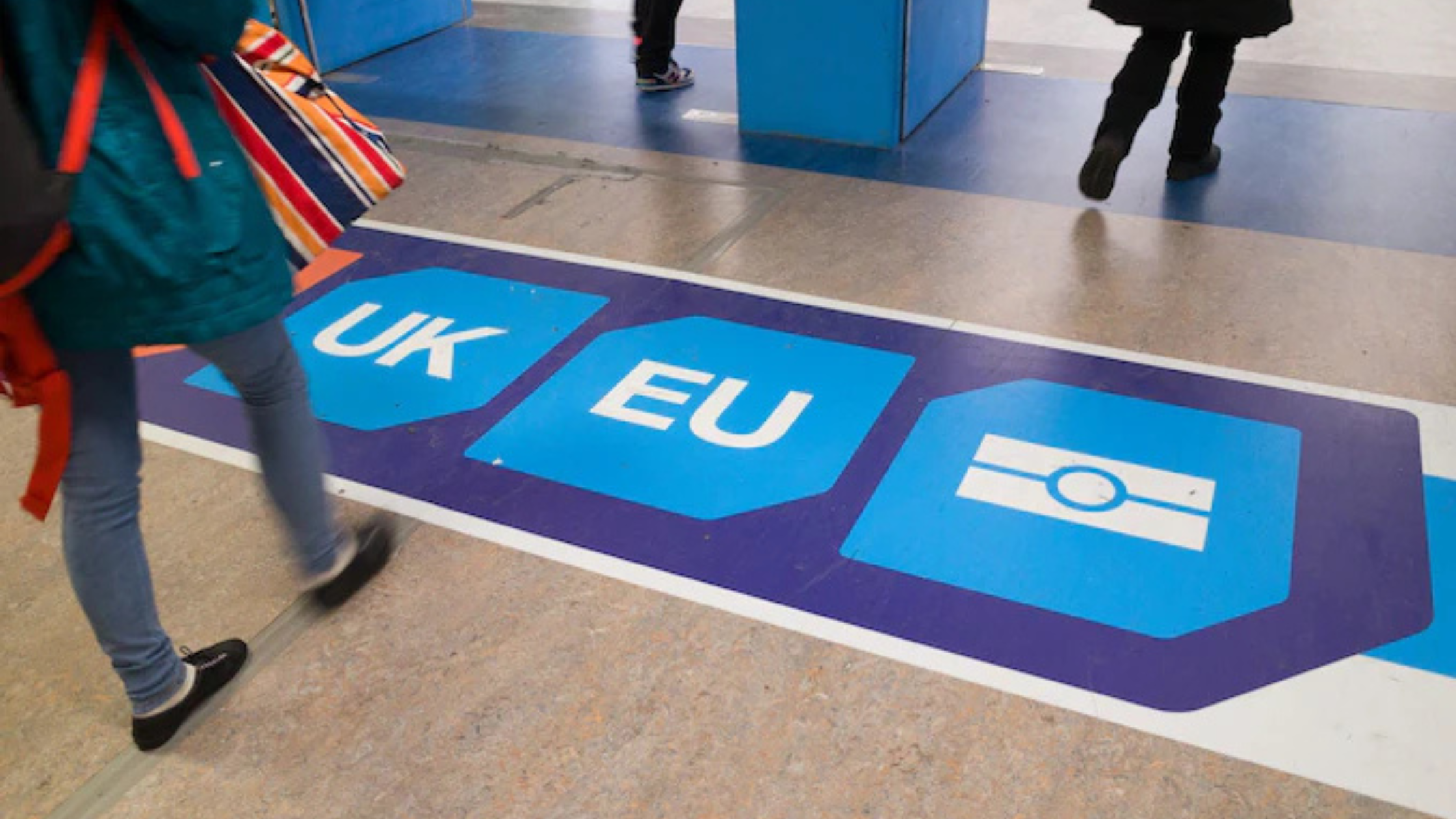
A new post-Brexit agreement between the UK and the European Union has sparked headlines with promises that British passport holders will soon be able to use electronic gates (e-gates) at EU airports currently reserved for EU and EEA citizens allowing faster and smoother entry.
But there’s a catch: the new travel convenience won’t begin before October 2025, and full implementation could stretch into 2026. For many travelers, particularly Black and African diaspora communities who already face heightened scrutiny at borders, this delay represents not just administrative friction, but a deeper, more discriminatory experience baked into post-Brexit travel protocols.
Following the 2016 Brexit vote, British citizens became
“visa-exempt third-country nationals”
in the eyes of EU border officials. This placed UK travelers alongside nationals from Venezuela and Australia into slower queues, often facing manual passport checks, stamping, and questioning about travel intent, financial support, and return plans.
In contrast, EU nationals have continued to benefit from e-gate privileges when entering the UK. The asymmetry highlights the unevenness of post-Brexit mobility and has contributed to tensions and complaints from British travelers.
This latest agreement, part of Prime Minister Keir Starmer’s broader EU “reset” policy, suggests that British travelers will finally be able to use EU e-gates but only after the EU’s new Entry/Exit System (EES) is in place. That system has already faced multiple delays, with its latest rollout scheduled for October 2025, and a phased implementation stretching well into spring 2026.
This timeline crushes hopes for a queue-free summer for UK tourists in Europe particularly during peak 2025 travel months.
For Black British citizens and members of the African diaspora, the issue is more layered than just queues. Reports and lived experiences consistently show that Black travelers disproportionately face extra scrutiny, secondary checks, and even denial of entry across European borders.
The extended delay in e-gate access risks compounding those racialized experiences. As long as manual checks and “wet stamping” remain the norm, travelers of color remain exposed to discretionary questioning and profiling. This system places undue psychological and emotional burden on those simply seeking to explore, visit family, or conduct business abroad.
Moreover, the vague wording of the agreement that e-gate access will be permitted “where appropriate” leaves room for member states to implement uneven or exclusionary policies. It raises questions about how uniformly Black travelers will experience the new e-gate system across different countries, particularly in places like France, Italy, or Eastern Europe, where discriminatory border practices have been reported.
Tourism and Cultural Exchange: A Two-Speed System
Travel agents, tourism operators, and cultural exchange advocates have expressed concern that inconsistent access to mobility across the EU could harm travel confidence. For British African travelers eager to reconnect with ancestral lands or participate in cross-border festivals, exhibitions, or business forums, mobility is key.
“Queues and scrutiny don’t just slow travel they send a message,”
said one UK-based tour operator specializing in Afro-European heritage travel. “Our clients feel that they’re being punished for their identity and their passport.”
The current policy void leaves many feeling like second-class tourists treated less favorably than Europeans, and certainly not equitably.
The formal language in the deal claims there are “no legal barriers” to e-gate use for UK nationals after the EES is operational. However, implementation still depends heavily on technical infrastructure, political will, and individual country policies.
The Association of British Travel Agents (ABTA) confirmed that “the agreement won’t impact this summer” and that travelers should expect continued passport stamping for the foreseeable future.
While UK officials, including Starmer, have pitched the deal as a symbol of renewed cooperation, critics argue it glosses over the real-life inconvenience, racial inequities, and bureaucratic friction still embedded in the system.
Travel Policy Fatigue and the Need for Clearer Protections
For Black travelers, mobility isn’t just about convenience it’s about freedom and dignity. Post-Brexit travel policies continue to place the burden of compliance on the traveler, with little regard for the emotional toll or discriminatory realities they face.
With the EU EES delayed, and e-gate access not yet guaranteed across all member states, the UK and EU must work toward policies that are fair, consistent, and inclusive. This includes actively monitoring for racial profiling, offering clear travel guidelines, and ensuring equitable access regardless of nationality or background.
While the promise of e-gate access for British passport holders seems like progress, it is, in reality, a slow-moving fix to a problem caused by Brexit—and exacerbated by systemic inequities.
Until the EU EES is fully implemented and tested—and until each country follows through on this agreement—Black and African travelers in particular will continue to navigate not only long queues but unequal treatment at borders.
For now, British holidaymakers and business travelers alike will need to remain patient—and vigilant—as promises made are slowly turned into policies practiced.