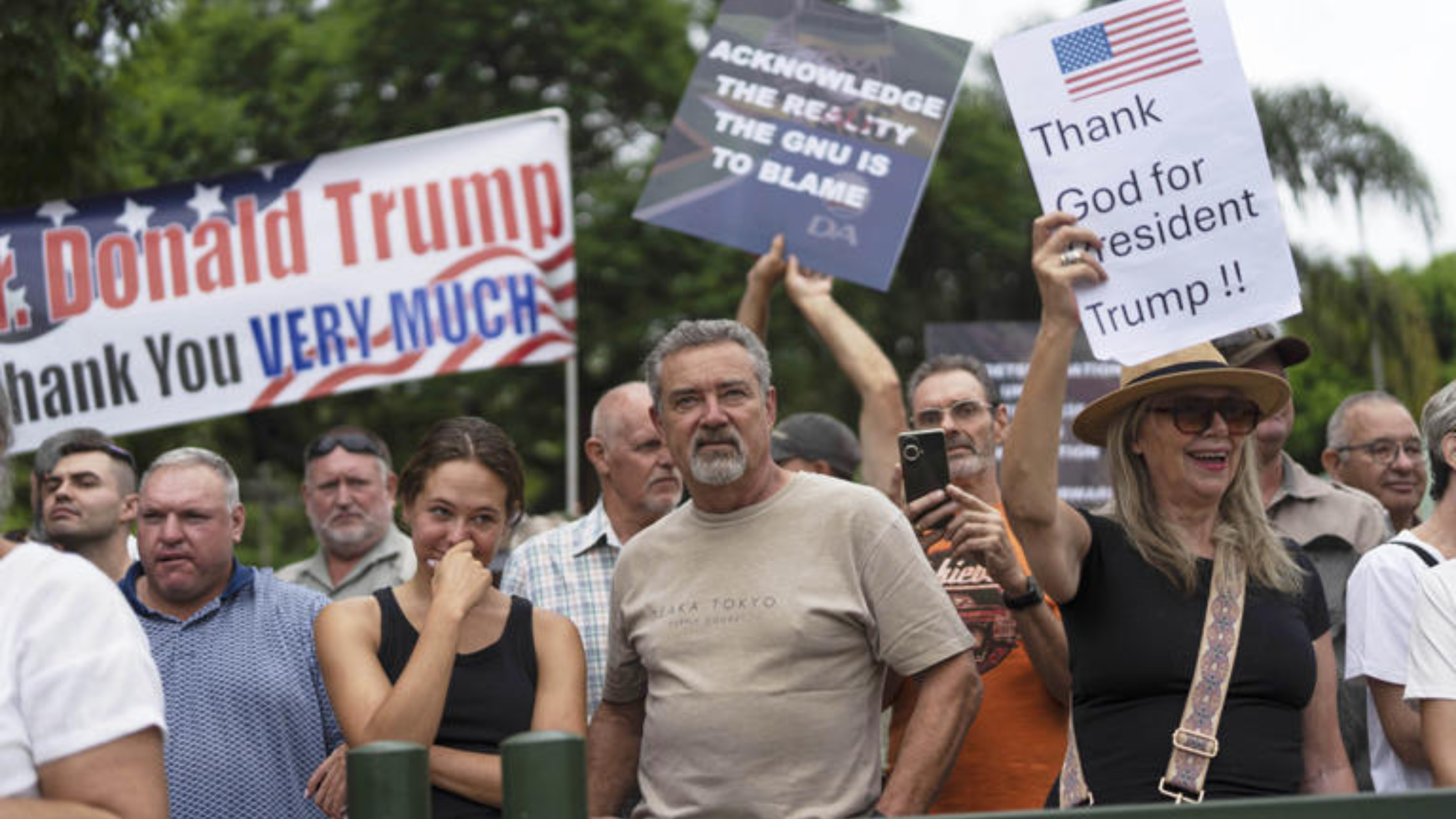
The departure of 49 white South Africans to the United States under a Trump-era refugee program has sparked global debate — not just about race, but also about how migration policies can reshape international travel, tourism perceptions, and cultural narratives.
On Sunday, a US-funded charter flight quietly lifted off from Johannesburg’s OR Tambo International Airport, bound for Dulles Airport near Washington, D.C., before continuing to Texas. Aboard were Afrikaners, a white minority group descending from Dutch, German, and French settlers — the same group that historically led South Africa’s apartheid regime.
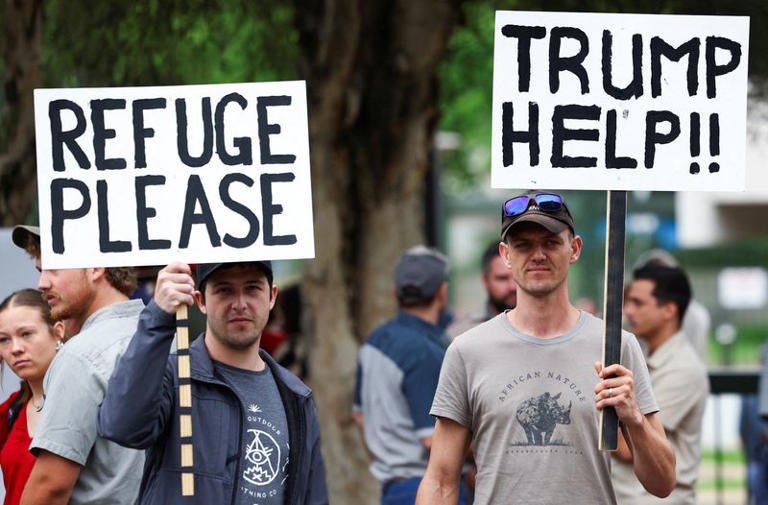
This flight marks the first phase of a controversial refugee resettlement plan initiated by former US President Donald Trump. Despite facing legal and diplomatic pushback, the plan fast-tracked white South Africans for refugee status based on claims of “race-based persecution” under South Africa’s Black-led government.
Read More: Trump Signs Migrant Law, As Crackdown Begins
A New Narrative in Refugee Politics
While refugees from war-torn nations like Sudan, Afghanistan, and Ethiopia endure years of vetting, the Afrikaner group’s expedited relocation has raised serious questions. Why prioritize a group still owning 78% of South Africa’s private farmland and possessing 20 times the wealth of Black South Africans?
Critics, including South Africa’s own government, dismiss Trump’s claims of persecution as politically motivated and rooted in misinformation. The controversial land expropriation law, intended to correct historical injustices of apartheid-era dispossession, has been mischaracterized as a “land grab” against whites, despite no farms being seized.
This selective humanitarianism highlights how global systems often favor privileged groups while sidelining genuine crises impacting Black and African communities. The disparity isn’t just about race — it’s about whose stories are believed and whose struggles are prioritized on the world stage.
The Tourism and Cultural Impact
South Africa’s tourism identity is inextricably linked to its multicultural legacy. Its “Rainbow Nation” image attracts millions annually. However, international headlines suggesting racial persecution of whites threaten to distort this narrative, potentially deterring travelers who rely on nuanced portrayals of South Africa’s societal dynamics.
For Black and African diaspora travelers, this framing reinforces longstanding biases. Policies like Trump’s refugee program propagate a dangerous message: that when privileged minorities cry “persecution,” the global North listens — even as systemic issues affecting Black Africans are downplayed or ignored.
The result? A warped global perception of South Africa that risks diminishing its appeal as a vibrant, inclusive travel destination. For a tourism industry still recovering from pandemic-era losses, such narratives are not just politically harmful — they’re economically damaging.
Global Mobility and Policy Implications
The Afrikaner relocation also signals troubling shifts in how refugee and migration policies intersect with global mobility. By carving out exceptions based on racial and political sympathies, such policies undermine the integrity of international refugee systems meant to protect the most vulnerable.
For African nations, especially those in the Global South, it underscores a recurring theme: unequal treatment in international mobility. While Black African travelers face tightening visa restrictions, surveillance, and bureaucratic hurdles, white migrants benefit from accelerated pathways.
This double standard is not new. From travel bans on predominantly Black and Muslim countries to restrictive European visa policies targeting African nations, the systemic barriers to mobility are well-documented. Trump’s Afrikaner refugee plan merely exposes — and exacerbates — these inequities.
Cultural Exchange at Risk
Travel isn’t just about movement; it’s about cultural exchange, economic upliftment, and people-to-people diplomacy. Initiatives that prioritize one racial group’s migration over others fracture the spirit of global connectivity.
For South Africa’s Black population and wider African diaspora, the relocation of Afrikaners under a dubious refugee claim feels like a historical reversal — a reminder of colonial-era migration where power and privilege dictated who could move freely.
If unchecked, such policies could normalize racially-biased migration frameworks, eroding trust in global systems designed to foster inclusivity and mutual respect.
The Broader African Traveler Experience
At its core, this story reflects a broader pattern of misrepresentation and systemic discrimination that Black and African travelers face globally. From disproportionate visa denials to negative stereotyping in Western media, the challenges are both structural and perceptual.
The Afrikaner relocation reinforces how global policies often perpetuate the marginalization of African voices. It also raises urgent questions for African tourism boards, policymakers, and travelers: How do we reclaim the narrative? How do we ensure that Africa’s diverse realities are portrayed with honesty and respect?
For travel media platforms like Travel Radio Live, the answer lies in amplifying authentic stories that reflect the lived experiences of African and Black travelers — stories that challenge misrepresentation, advocate for mobility justice, and celebrate cultural exchange.
Looking Ahead: Implications for the Travel Industry
As the Trump-era refugee program unfolds, the travel and tourism sectors must grapple with its broader consequences. Will this policy embolden other nations to adopt racially-biased migration practices? Will it affect how travelers perceive South Africa and, by extension, the African continent?
For African travelers, this is a pivotal moment. The fight for equitable mobility, fair representation, and inclusive travel narratives continues. And it’s through platforms like ours that these stories will be told — with authenticity, credibility, and a commitment to justice.