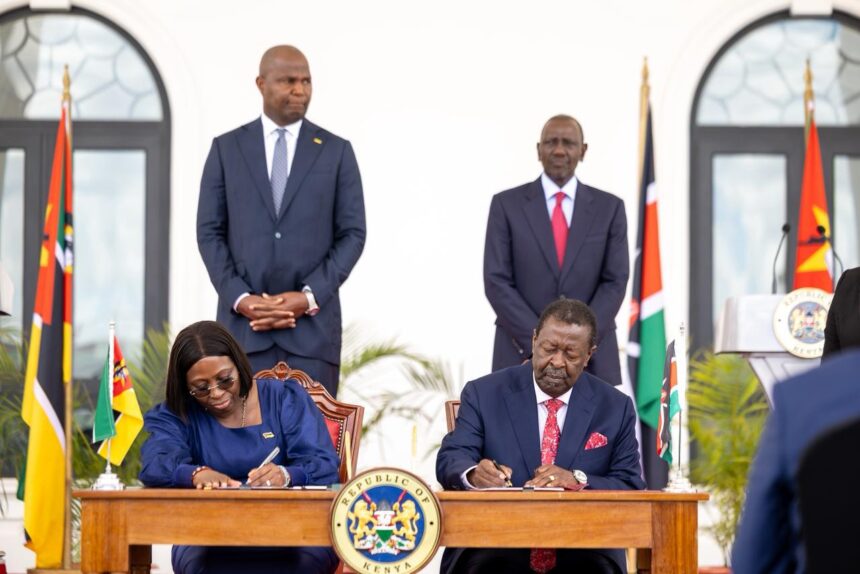
Mozambique and Kenya are intensifying efforts to establish direct flights between Maputo and Nairobi, a move aimed at strengthening trade, tourism, and regional integration across East and Southern Africa.
The renewed push follows high-level diplomatic engagements in Nairobi, where Mozambique’s president, Daniel Chapo, emphasised the urgent need to improve air connectivity between the two countries.
Direct Flights
According to President Chapo, direct Maputo-Nairobi flights are critical for boosting business activities and deepening bilateral relations.
READ ALSO: Uganda Signs $3B Deal for Malaba-Kampala Railway
He described the route as essential for facilitating trade, easing travel for investors, and enhancing tourism flows between Mozambique and Kenya.
Currently, limited or inconsistent direct connections between the two cities have made travel less efficient, forcing many passengers to rely on connecting flights despite the relatively short travel time of under four hours.
Regional Trade, Economic Growth
The proposed direct Maputo-Nairobi flights are expected to unlock new economic opportunities by improving the movement of goods, services, and people.
Stronger air connectivity will also support private sector collaboration, reduce trade barriers, and promote cross-border investments.
Kenyan officials have also highlighted the importance of operationalising joint trade frameworks and strengthening business forums to complement the improved air links between the two countries.
Tourism, Business Travel
Beyond trade, the new route is expected to significantly boost tourism and business travel.
Nairobi, widely regarded as a key aviation hub in East Africa, offers access to global markets, while Maputo serves as a strategic gateway to Southern Africa.
Direct connectivity between the two cities will reduce travel times, improve convenience, and attract more travellers seeking business and leisure opportunities.
Regional Integration
The push for direct Maputo-Nairobi flights reflects a broader strategy to enhance regional integration within Africa.
Increasingly, stakeholders view improved air connectivity as a crucial catalyst for economic development, empowering countries to compete more effectively in global markets.
With both governments showing strong commitment, the proposed route could mark a major step forward in strengthening Africa’s aviation network and economic cooperation.