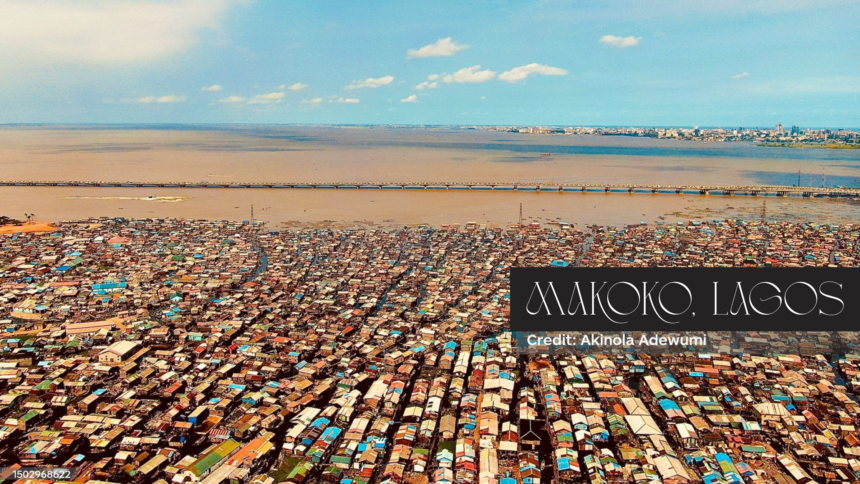
Perched precariously on stilts over the murky Lagos Lagoon, Makoko stands as a testament to human endurance, home to an estimated 85,000 to 400,000 residents in what locals call the “Venice of Africa.”
Yet, as bulldozers rumbled through parts of the floating slum just this week amid ongoing demolitions, a stark irony unfolds: Nigeria, Africa’s most populous nation, squanders a golden tourism opportunity. While global hotspots like Mumbai’s Dharavi and Cape Town’s townships rake in millions from ethical slum tours, Lagos treats Makoko as an eyesore rather than an economic engine.
Experts warn that this neglect forfeits revenue, jobs, and social uplift for a community vital to the city’s seafood supply.
Makoko: Untapped Gem of Lagos Lagoon
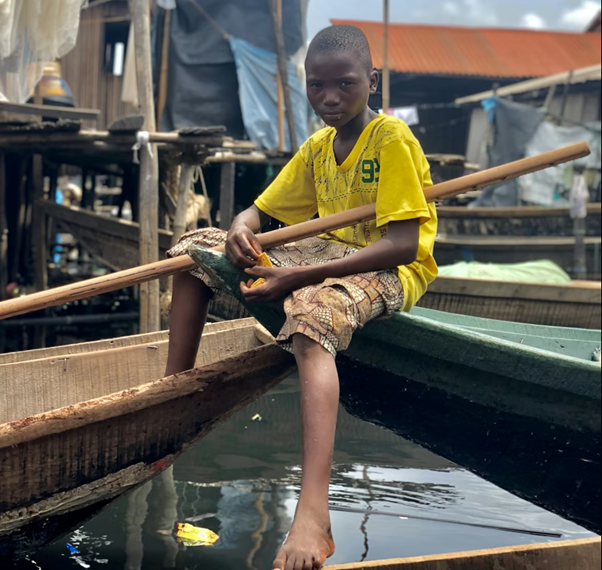
Informal boat tours already ferry curious visitors through Makoko’s labyrinthine waterways, where fishermen cast nets amid stilted homes and children paddle canoes to school.
World’s largest travel guidance platform, Tripadvisor, reviews rave about the raw authenticity, “an utterly special experience”, with locals charging as little as N4,000 to N6,000 ($2.50-$4) per hour-long ride, bypassing pricey operators. Dubbed the world’s largest floating slum, its Egun-dominated population – migrants from Benin Republic and Badagry – sustains Lagos markets with croakers, prawns, and snapper sold at bustling waterfront spots. Government disdain peaked in 2012 with a 72-hour eviction notice, labeling structures a “security threat” to Lagos’s megacity ambitions. A 2013 resident-led regeneration plan, crafted with non-govermental organisations like Social and Economic Rights Action Center (SERAC) and urban consultants, pitched eco-tourism: floating markets, renewable-powered bed and breakfast, birdwatching wetlands, and cultural demonstrations. Submitted to the Ministry of Physical Planning, it gathered dust. Recent mapping projects highlight socio-economic needs, yet fresh demolitions signal persistent hostility.
Experts say tourism could flip the script, channeling fees into sanitation and tenure security without displacement.
Recent Post: 30 Absconded Nigerian Tourists in Qatar Raise Fresh Concerns Over Travel Abuse
Economic Outlook: Millions Within Reach
TRAVEL RADIO LIVE reports that slum tourism thrives elsewhere, offering a blueprint Nigeria ignores. Mumbai’s Dharavi, Asia’s largest slum, draws 18,000 to 50,000 visitors yearly through Reality Tours ($10-20/ticket), funneling 80per cent of $150,000-l to $300,000 proceeds to education and health for 1 million residents, a slice of the area’s $655 million annual economy.
Also, Cape Town’s townships host 800,000 tourists through 40 to 50 operators, generating millions in guide wages, crafts, and eateries. Rio’s Rocinha favela welcomes 50,000, funding community centers. Globally, more than 1 million joined tours by 2014, hinting at $10 to $50 million revenue at modest spends. Makoko’s proximity to Lagos’s 20 million residents and international airport positions it for explosive growth. Pilot 50,000 visitors annually – feasible via social media buzz and partnerships at $20/tour: $1 million direct revenue. Scale to 200,000 with regulated operators mandating 70 per cent local reinvestment, hitting $4 million, plus $2 to 5 million in hotel stays, taxis, and dining multipliers. Employ 500 to 1,000 as guides and canoe hands at $2,000/year average, lifting incomes from sub-$1,000 amid 60 per cent poverty. A 5per cent tourism tax nets Lagos $50,000-$200,000 for infrastructure, cheaper than eviction logistics.
This diversifies Nigeria’s oil-reliant GDP, aligning with Vision 2050’s service push. Pre-COVID, Lagos hosted 2 million visitors; post-pandemic recovery amplifies potential. Informal tours already profit locals directly, per visitor accounts, but regulation could triple impacts without exploitation.
Social Development: Empowerment Over Exploitation
Ethical slum tourism transforms stigma into pride. In Kibera, Nairobi, tours donate 50per cent to water projects, reducing open defecation. Soweto’s post-apartheid model funds HIV clinics and museums, employing youth and curbing crime 20- to 30per cent. Dharavi educates 2,000 kids; Rocinha cuts violence via guide jobs. Makoko could mirror: visitor fees build floating schools, solar stilts against floods, and health clinics, addressing woes ignored for decades. Community control is key. Caps at 20 visitors/day, consent rules, and co-designed narratives – Egun folklore, fishing demos, ensure dignity.
The 2013 plan integrated skills training and waste management, fostering self-reliance. Recent digital mapping spotlights needs, potentially swaying officials toward upgrades over razings. Socially, it humanizes Makoko, pressuring investment in a supplier of Lagos’s staple protein.
Global Lessons for Nigeria’s Gain
India regulates Dharavi with profit shares, branding ethically. South Africa’s R1 billion ($60 million) Soweto industry licenses operators. Brazil’s favela.com trains 5,000 guides. Kenya’s Kibera proves small-scale works. Nigeria, with 70 per cent urban slum dwellers, lacks frameworks despite peers’ success. Lagos could license 20 Makoko firms, audit reinvestments, and cluster with Ajegunle or Mile 12 for $5-10 million yearly.
As 2026 demolitions escalate, activists urge Governor Babajide Sanwo-Olu to dust off the 2013 blueprint. Public-private pilots like Heineken’s nearby floating bar, test viability. Influencers already tout Makoko as a “hidden gem”; formalize it. Inertia breeds disease and crime; tourism sparks renewal. Nigeria risks repeating 2012’s backlash. Embrace Makoko as Africa’s Venice: revenue-rich, resilient, reimagined. Global precedents beckon – paddle toward prosperity, or watch potential sink.
CSOs condemn forced eviction of Makoko residents
Meanwhile, the Justice Empowerment Initiative (JEI) and the Nigerian Slum/Informal Settlement Federation (NSISF) and other civil society organisations, have criticised the Lagos State government over the ongoing evictions in the Makoko, Oko Agbon and Sogunro communities of Lagos Mainland Local Council, warning that as many as 80,000 residents could be affected.
In a joint statement, the groups alleged that the forced removals have rendered thousands homeless without any resettlement plan, in breach of existing court orders as well as Nigerian and international laws.
They noted that residents had complied with the initial phase of the demolition exercise carried out in December 2025, which involved clearing a 30-metre setback from the high-tension power line running between the waterfront settlements and the Third Mainland Bridge.
According to the statement, community leaders had assured residents that the Lagos State government would provide compensation to those impacted by the first phase of the exercise.
The civil society organisations further stated that cooperation with the government was based on assurances that the remaining parts of the communities would be protected. They added that a house-numbering exercise conducted by Makoko youths, with support from JEI and NSISF between 2020 and 2021, showed that Makoko’s population exceeded 80,000.
The organisations stated that the forced ejection is as heartless as any, taking place during the festive season and during the worst economic crisis Nigeria has seen in decades.
According to the statement, many have been displaced, forced to sleep in other people’s homes and in open canoes.
The forced eviction was branded the worst since the military era. Some of the civil society organisations that jointly issued the statement include the Centre for Children’s Health, Education, Orientation and Hope (CEE-HOPE), Global Rights, and Lagos Urban Development Initiative (LUDI).
They condemned the forced evictions, urging Lagos State government and the Federal Government to put a stop to these demolitions.