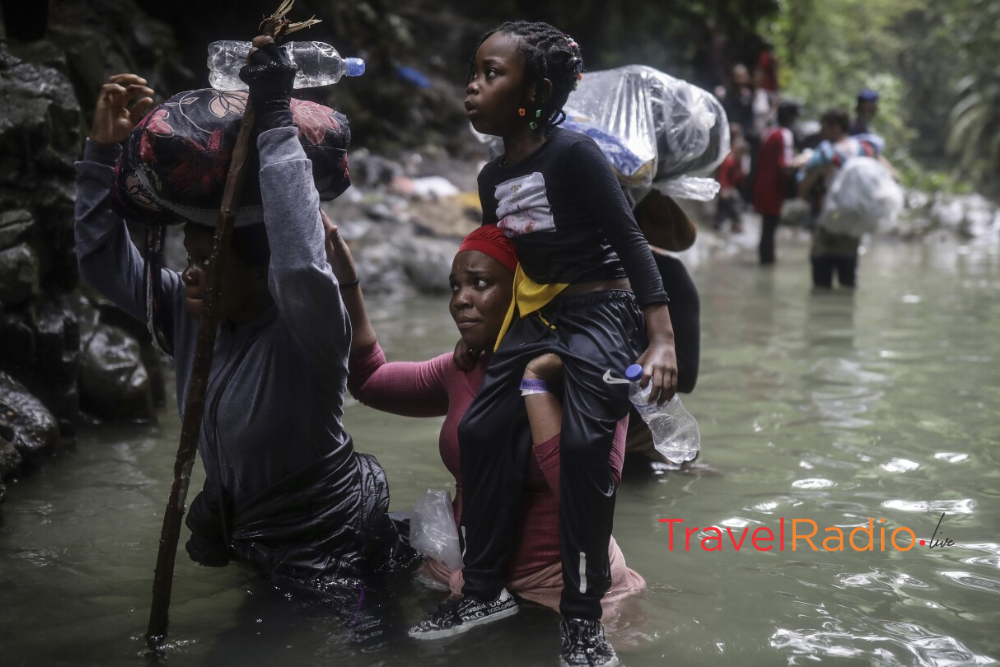
Migrants navigating the Darién Gap now face closed borders, abandoned promises, and dangerous limbo as U.S. pressure reshapes regional migration routes.
For the thousands of African and Caribbean migrants who have relied on this passage in hopes of reaching safety in North America, the landscape has shifted overnight.
This change is not just local. It’s the result of a ripple effect triggered by U.S. political pressure on Latin American nations to do more to stop migrants far before they reach U.S. soil. Panama, long a gateway country, has now become a place of limbo. Migrants from countries like Venezuela, Angola, Haiti, Cameroon, and Nigeria are finding themselves stuck, without resources, without information, and increasingly without options.
The Biden administration’s earlier rollout of the CBP One app provided a structured, though limited, opportunity for migrants to apply for legal entry into the United States. It allowed them to schedule appointments and reduce reliance on dangerous crossings. But that app has now been shelved, part of a broader rollback of humanitarian entry points that began under former President Trump and appears to be quietly continuing under mounting political pressure. With that channel now closed, and physical borders tightening, many who made the treacherous journey north are discovering that the promised paths no longer exist.
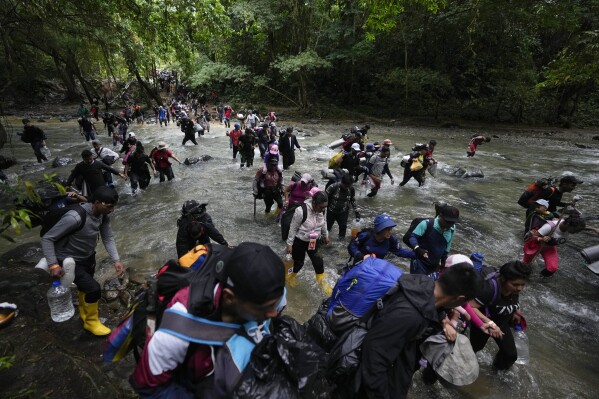
For Black migrants, the consequences of these changes are uniquely acute. Many have already navigated intercontinental routes marked by racial profiling, limited access to legal protections, and the constant threat of violence. In the Darién Gap—a thick, lawless stretch of jungle riddled with smugglers and criminal groups—African travelers often faced the worst of it. Their visibility, lack of local language fluency, and the near-total absence of institutional support made them prime targets for robbery, extortion, and abuse. Now, those risks are compounded by stagnation. Being stranded in Panama doesn’t just mean waiting; it means surviving in camps with limited medical services, scarce food, and deep uncertainty.
Humanitarian organizations and grassroots advocates are sounding the alarm. Several have reported that the reduction in safe migration channels is pushing desperate people into even more dangerous terrain—or into the hands of traffickers and exploiters. Children have gone missing. Women face increased risks of sexual violence. Families are being separated. And because so many of these stories involve migrants from Africa or of African descent, the silence surrounding their suffering feels particularly deafening.
“There’s a racialized geography of movement at play here,”
says Jamal N’Guessan, a migration analyst with a focus on Afro-descendant populations in the Americas.
“When we talk about migration policy, we have to ask: Whose movement is being restricted the most? Whose lives are being treated as expendable?”
For N’Guessan and others, the answer is clear: Black migrants, particularly those from the Global South, are facing an increasingly militarized and racialized migration regime.
Meanwhile, the political conversation in the U.S. remains stuck in cycles of fear-mongering and enforcement. Republican lawmakers call for more walls and deportations, while Democrats struggle to maintain humanitarian commitments under a rising tide of public backlash. In this climate, policy changes—like the CBP One cancellation—are being made with little transparency and even less accountability.
Read More: U.S. Backing of Lobito Corridor Could Reshape Travel and Trade for Africa
Back in Panama, migrants continue to arrive. Many have sold everything to make the journey. They carry the weight of civil wars, failed economies, political persecution, and climate collapse. They are engineers, students, mothers, musicians—people who believed the promise of the international asylum system and are now learning how fragile it can be.
As enforcement spreads south, regional routes once used by African migrants are becoming more treacherous or vanishing entirely. Routes through Nicaragua, Honduras, and Guatemala are now saturated with checkpoints and heightened surveillance. There are reports of bribes demanded, documents confiscated, and people turned around with little explanation. And still, they come.
Because when the choice is between dying in a failed state and risking it all in a jungle or desert, many choose to risk it all.
There are few easy answers. Governments across the Americas are struggling with limited resources, rising xenophobia, and the logistical burden of hosting large transient populations. But what’s often missing in the policy discussions is the human cost—the specific, lived experience of Black migrants whose journeys are shaped not just by where they’re coming from, but by how they’re seen along the way.
Migration is not just a movement of bodies; it is a movement of dreams, of grief, of legacy. When nations block paths and silence stories, it is not just borders that are being enforced—it is the erasure of humanity. And for Black migrants stuck in Panama, the erasure feels as real as the jungle that surrounds them.
As the world watches, and too often looks away, one question hangs in the air like the thick humidity of the Gap itself: If every route is closed, where do the displaced go next?