


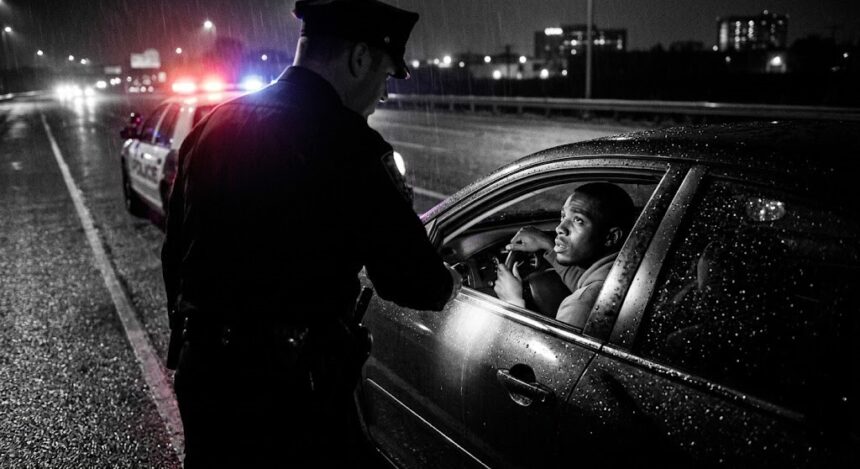
It’s funny that as a black person, whether you are in Africa or the West, you have probably encountered corrupt traffic police. You have met uniformed officers who use their power to stop, delay, or threaten motorists to extract money or bully them. This is the top 10 most dangerous police encounters in the world.
It happens on the side of the road, in daylight, in uniform, with weapons present. And in the worst cases, it is a managed revenue system, where junior officers pay a cut upwards to the commanders who post them to the most lucrative checkpoints.
TL;DR – Most Dangerous Police Encounters
- This ranking covers two forms of the same abuse: (1) financial extraction at checkpoints, and (2) identity-based targeting by uniformed officers.
- Nigeria ranks #1 globally for highway financial extortion. At least five uniformed agencies extracted ₦21.8 billion from South-East motorists in just two months in 2024–2025.
- Kenya’s traffic police collect an estimated Sh3 billion (≈ $23 million USD) in bribes every month, confirmed by Kenya’s own anti-corruption commission.
- In the UK, Black people are stopped and searched at 3.7 times the rate of white people nationally, and up to 48 times more likely in some London boroughs.
- In the US, analysis of nearly 100 million traffic stops found persistent racial bias. Black drivers are stopped more often, searched on lower evidence, and are more likely to have force used against them.
- The common thread across all ten entries is that uniformed authority is being used to extract something, whether money, compliance, or punishment, from people based on who they are rather than what they have done.
Why This Ranking Covers Both Corruption and Discrimination in Dangerous Police Encounters
For Black people, police checkpoints don’t give the same “wholesome” experience as White people have. The crazy thing is that it doesn’t even matter if you are in your country or somewhere else. For example, the Nigerian police can stop your Uber for no reason and start searching you. This will be strange to you because he has the same skin colour as you.
The case is different and dehumanising when you are in a White-dominant country like the US, UK, or Russia, where the police just find you a suspect just because you are black.
Tiers of Dangerous Police Encounters
This ranking has two tiers:
Tier 1 — Financial Extraction
These are countries where uniformed officers run documented bribery operations on highways and at checkpoints. We ranked by evidence weight, including commission audits, published bribe figures, and peer-reviewed research.
Tier 2 — Identity-Based State Violence
These are countries where the documented danger to African travellers is racial profiling, discriminatory stops, and presumption of guilt based on appearance or passport. We ranked these by statistical disparity and documented severity.
The point is that we know that the internet, movies and other forums may make some things louder and over exaggerate some issues. This is why this post is based solely on thorough research.
Moreover, both tiers belong on the same list. The experience of being targeted by a uniformed officer who has already decided you owe them something is the same regardless of which country you are in.
TIER 1: Financial Extraction — The Most Dangerous Police Encounters for Your Wallet
Now, let us look at countries where the Police will use any means, including force, intimidation, coaxing, or even planting of evidence to extract money from you.
#1. Nigeria: Five Agencies in One Highway, No Accountability
If you are a Nigerian, this will not surprise you. But for you, a traveller going to Nigeria, you have to learn.
Naturally, there are laws in Nigeria and there are different agencies for each side. However, Nigerian highways have all the agencies on the same side.
Agencies involved: Nigeria Police Force (NPF), Nigerian Army, FRSC, NSCDC, NDLEA, Customs
Worst corridors: Onitsha–Enugu (32 checkpoints in 105 km), Lagos–Onitsha (60+ checkpoints documented by the Senate), Abuja–South-East corridor
Key figure: ₦21.8 billion extorted from South-East motorists in December 2024–January 2025 alone (Intersociety, 2025)
Nigeria does not just have corrupt highway police, but almost everything on the highway is corrupt. Nigeria is the site of some of the most dangerous police encounters for motorists.
The Nigerian Police Force is ranked the worst police department globally by the World Internal Security and Police Index (WISPI). But on the roads, what makes Nigeria distinctive is that you are not dealing with a single agency. You are dealing with the full stack. At least five separate uniformed bodies are simultaneously operating extraction systems on the same expressways.
For instance, between Onitsha and Enugu, which is just 105 kilometres, travellers face 32 documented checkpoints manned by the Nigerian Army, Police, FRSC, and NDLEA! Civil society group FENRAD estimates that nearly 200 checkpoints across the South-East extract approximately ₦1.3 trillion from citizens annually.
The Issue
Let me paint you a picture. You move a couple of kilometres, and you meet officers. Now, you either pay them cash for nothing, or they may choose to waste your time as they ask for unnecessary documents and items. Then, when you survive one, you move another 2 kilometres, and you are at another checkpoint to start all over again.
The crazy part is that the money flows upward. Officers reportedly lobby to be posted to the most lucrative highway positions and remit a cut to the senior officer who posted them there.
It is even worse in Lagos. On the Badagry–Seme route (just 15 miles), federal orders capping checkpoints at four were simply ignored. Reporters counted 21 stops by early 2025. From Mile 2 to Apapa, over 50 illegal roadblocks choke a single corridor.
Enforcement is also spatially coded. The poor neighbourhoods and working-class transit routes carry the heaviest checkpoint loads, while wealthy districts move freely.
Now, the problem is that if they identify you as a foreigners or a diaspora returnee, you are automatically a high-value ticket. The IGP has issued checkpoint bans multiple times, but we are still here.
→ Full deep-dive: Nigeria Highway Police Checkpoints: How to Survive on Nigeria Roads
#2. Kenya: Sh3 Billion a Month in Bribe
Kenya is a bit lax. They only have issues with their police department. But even as they are loud about the corruption, it doesn’t seem to be reduced.
Agency involved: Kenya Traffic Police (under National Police Service)
Worst corridors: Nairobi–Western Kenya highway, Mombasa Road, Kericho–Nakuru Road, Migori–Kisii highway
Key figure: Sh3 billion (≈ $23 million USD) collected in traffic bribes every month (EACC, 2025)
Kenya’s corruption can be measured. And the number is unusual in global rankings of dangerous police encounters because the Kenyan government’s own Ethics and Anti-Corruption Commission (EACC) published it.
An audit from February to June 2025 found the traffic department to be the most compromised unit in the entire National Police Service.
On February 14, 2025, EACC operatives arrested three officers who collected Sh48,250 in bribes in just two hours in Nairobi. Working backwards at a 10-hour shift across an estimated 1,000+ officers nationwide, the EACC CEO calculated a monthly minimum of Sh3 billion. The actual figure, he noted, is higher.
The Issue
Traffic officers collect “protection fees” from matatu SACCOs (pubic buses) and boda boda (tricycle) riders under directives from their seniors. Some officers fabricate charges against operators who refuse to pay. The EACC recommended the entire unit be disbanded and replaced. They are still here since then.
A national survey found that Kenyan traffic police carry the highest bribe encounter rate of any institution in the country. In fact, between 2022 and 2024, 42.9% of Kenyans experienced police misconduct, with 41.5% of those abuses occurring specifically on roads and highways.
This means just driving in Kenya can bring you face to face with traffic police who may conjure new fees for you to pay.
→ Full deep-dive: Kenya Highway Police: What Every Traveller Needs to Know
#3. Russia: The Most Corrupt Government Body in the Most Corrupt Major Economy
I’ll be honest, I have not really ever driven in Russia before. However, online research shows that meeting one of Russia traffic officers might be one of the most dangerous police encounters for your wallet.
Agency involved: GIBDD (State Traffic Safety Inspectorate)
Worst corridors: Regional highways across Southern Russia; intercity routes throughout rural regions
Key figure: Over 50% of motorists who interact with traffic police report being asked for a bribe (Kremlin’s own working group on transparency)
Russia’s GIBDD is consistently rated the single most corrupt government body in Russia. Thus, creating highly dangerous police encounters for drivers in a country that already scores 27/100 on Transparency International’s CPI. A peer-reviewed ScienceDirect study found that the constantly growing fines make paying a bribe like normal for motorists. A vicious circle emerges: corruption becomes self-sustainable.
The Issue
The corruption runs upward. In 2021, investigators raided the Stavropol residence of Colonel Alexei Safonov. He was the head of regional traffic police. They found a gold-fitted mansion funded by a multi-million ruble bribery scheme.
More than 35 officers from the same department were apprehended. A separate big-data study found statistical fingerprints of corruption in luxury licence plate allocations. Premium plates were concentrated among expensive vehicles at rates impossible to explain without systemic graft.
→ Full deep-dive: Russia’s GIBDD: Inside the World’s Most Institutionalised Traffic Police Corruption
#4. Mexico: Where the Cartel and the Checkpoint Merge
I was shocked when my driver told me about how he had to avoid certain areas because of the police in Mexico.
Agency involved: Federal and state traffic police, Municipal police
Worst corridors: US–Mexico border crossings, routes into Morelos and Guerrero states, tourist zones in Quintana Roo
Key figure: Mexico scored 27/100 on Transparency International’s CPI 2025 — a seven-point decline since 2012
Mexico’s highway corruption operates on two tracks simultaneously, creating uniquely dangerous police encounters. My driver told me about what they call mordida (the bite: a bribe or kickback). That is when officers invent traffic violations (some, you’ve never heard of) and offer you a choice between a roadside payment or hours at a station. In areas where they see you as a rich foreigner, you pay more.
The second corruption style is structural. Many law enforcement agencies in Mexico are infiltrated by organised crime. Officers at some checkpoints are not looking for personal bribes. They are operating under cartel direction and extracting tolls on behalf of criminal organisations that control specific road corridors.
For a black person travelling through Mexico or crossing the US–Mexico border, the risk is extortion and the likelihood of landing in trouble with gangs. Point is, your skin colour or whatever they think may shape how officers treat you.
#5. Zimbabwe: 92% Public Perception, the Highest Bribery Rate of Any Sector
In Zimbabwe, the people don’t even have any iota of respect for their police. They believe they can be easily bought. Hence, you can get away with almost anything on the road in Zimbabwe.
Agency involved: Zimbabwe Republic Police (ZRP) traffic unit
Worst corridors: Harare routes (Mutare Road), Bulawayo corridor, rural intercity roads
Key figure: 92% of Zimbabweans see the police as extremely corrupt (Transparency International)
Zimbabwe holds the highest public perception figure of any country for dangerous police encounters and police corruption. 92% of citizens describe the police as extremely corrupt. The police in Zimbabwe carry the highest bribery frequency above every other sector in the country.
On the roads, officers stop vehicles, identify minor or fabricated violations, and wait for the driver to open a negotiation.
In November 2024, two ZRP officers were arrested after being caught on video collecting bribes from commuter omnibus drivers on Mutare Road in Harare.
We would blame Zimbabwe’s economy for this one. Although there may not be too many cases of violence, use of force or other animalistic means, meeting the police here counts as one of the most dangerous police encounters for your wallet.
#6. Democratic Republic of Congo
Congo has the same problem as Zimbabwe.
Agency involved: Police de Circulation Routière (PCR) and mixed military-police checkpoints
Worst corridors: Bukavu routes, Kinshasa ring roads, intercity highways in the East
Key figure: DRC ranked 166th out of 180 countries on Transparency International’s CPI 2024
The DRC represents the most extreme end of dangerous police encounters and highway extortion.
Research from Bukavu found that both traffic police officers and taxi drivers understood checkpoint bribery as a “normal expression of solidarity and a sine qua non condition for survival”. Hence, drivers don’t argue. They know that the state pays the officers irregularly or not at all. The checkpoint is the whole economy.
This makes the DRC harder to navigate than any Tier 1 entry above it. So, there is no fixed amount, process to appeal, and no institutional structure holding individual officers accountable. Therefore, if you plan to travel through DRC roads, do thorough security planning beyond document preparation.
#7. Bolivia: Worst Rule of Law in Latin America
Agency involved: Bolivian National Police (Policía Boliviana), transit branch
Worst corridors: Altiplano highway routes, La Paz–Cochabamba corridor, border crossings
Key figure: 141st out of 142 countries on the World Justice Project’s Rule of Law Index 2024, the worst in Latin America
The World Justice Project’s 2024 Rule of Law Index placed Bolivia 141st out of 142 nations, specifically measuring corruption, bribery, and embezzlement across police and military forces. Bolivia scores 0.23 out of 1 overall below Venezuela, Haiti, and Cambodia.
On highways, bribery is pervasive, contributing to a high rate of dangerous police encounters. Drug trafficking makes the problem worse. Cartels have connections with police at all levels. This means some highway checkpoints act more like meeting points for criminals than actual law enforcement posts. Because police are paid low wages, supervision is weak, and bribery is widespread, it is predictable that officers will demand money at these stops. This system is also very hard to fight against.
So, always look the other way when you see something illegal going on, unless it is targeting you.
TIER 2: Identity-Based State Violence — Dangerous Police Encounters Based on Who You Are
Now that we have finished talking about countries where the police are after your money, let us look at the police that may be after your life.
These entries include countries where they don’t necessarily accept or request bribes outright. However, they can just assume that because of how you look, you are guilty. They can also target you and there is nothing you can do about it.
If we are honest, the Nigerian Police deserve a spot in this list too. That is because they sometimes target people based on looks. However, the ultimate goal for their harassment and targeting is usually bribery. The higher or worse the crime they can pin on you, the bigger the amount you will be willing to pay as a bribe.
#8. The United Kingdom
Agency involved: Metropolitan Police and regional forces across England and Wales
Worst areas: London (particularly affluent boroughs), stop-and-search hotspots across England and Wales
Key figure
Black people are 3.7 times more likely to be stopped and searched than white people. And up to 48 times more likely in some London boroughs (King’s College London, 2023 Met Police data)
A TravelRadio team member experienced one of these dangerous police encounters directly.
One night in Wood Green, North London, she was the only Black person around when a fight broke out among a group of men. The police were called. One officer showed up without seeing what happened. He had already decided she was at fault. He was aggressive, sure of himself, and wouldn’t listen to reason. What saved her from being wrongly arrested was a second officer, a Black African man, who took charge. She later said, “If that other Black officer hadn’t been there, I would have been locked up before anyone even got to hear my side.”
Her experience is just one of many. In fact, research shows that in the year ending March 2025, police in England and Wales conducted 528,582 stop and searches. The stop and search rate for Black people was 22.4 per 1,000 compared to 6 per 1,000 for white people.
The Issue
Analysis of 152,000 Metropolitan Police stop records from 2023 found that the stated reasons for searches were often less specific when applied to Black people. Meaning officers were stopping Black people on weaker grounds than white people. In London’s most affluent boroughs, Black people were 48 times more likely to be stopped than white people in East Sheen, 40 times in Dulwich Village, and 38 times in Hampstead Town.
Of all stop and searches, 69% result in no further action. For Black people, 83% of searches find nothing. The targeting is not producing results, they are just looking for evidence to back their racist bias. And contact with a UK officer who has already decided your guilt, in the way the Wood Green officer had, is not a minor inconvenience.
A 2026 Amnesty International report found that at least 33 police forces, including the Metropolitan Police, West Midlands, and Essex, use predictive policing systems, described as being “built with discriminatory data” that “supercharge racism.”
In West Midlands in 2024, Black or Black British people were stopped and searched at 10.3 per 1,000, against 2.3 per 1,000 for white people. In Essex, Black people were on average three times more likely to be stopped, and in some areas six to seven times more likely.
The UK’s financial corruption scores are low. The danger to African travellers is not a bribe request, but an officer who will make a decision about you before you have said a word. And his decision will be treated as credible by the system around him.
#9. United States
Agency involved: Municipal and state police forces across all 50 states
Worst areas: Chicago, California, New York, Southern states
Key figure: Black drivers stopped more often, searched on lower evidence, and were more likely to have force used against them (Stanford, Nature Human Behaviour, 2020)
The US data on racial profiling in traffic stops is the most extensively documented of any country on this list of dangerous police encounters. This is because the US has the most developed civil rights disclosure infrastructure.
A Stanford University analysis of nearly 100 million traffic stops found that Black drivers were less likely to be stopped after sunset, when the “veil of darkness” makes race harder to determine. This suggests that race is actively driving stop decisions during daylight. Black and Hispanic drivers were searched on lower evidence than white drivers, even though white drivers were more likely to have contraband.
Contraband was found in 36% of searches of white drivers, compared to 32% for Black drivers and 26% for Latinos.
In Chicago in 2024, more than 44% of all drivers stopped were Black, against 14.8% white in a city where Black residents make up roughly 30% of the population. Just 4.5% of those stops led to any arrest. A gun was recovered in 0.75% of stops.
The stated purpose for these searches is not being served. The research from the Fines and Fees Justice Center confirmed across 24 agencies that police are more likely to use force if the driver is Black, in nearly all types of traffic stops.
For African travellers in the US, particularly those driving rental cars, this means that the encounter that feels unexplainable is not random. It is part of a documented, persistent pattern that no amount of individual deference reliably neutralises.
#10. West African Border Crossings: The African Passport Problem
This is always shocking to many African passport holders. Police in many other African countries will harrass you.
Agencies involved: Border and immigration police across multiple West African states
Worst corridors: Cross-border routes between Guinea, Guinea-Bissau, Senegal, and neighbouring states; any border where a Nigerian passport is presented by a solo traveller
Key figure: Nigerian passport holders face documented discrimination at border crossings across Africa, Europe, and beyond
This problem isn’t about one country, but about a wider regional pattern. A member of the TravelRadio team crossed a West African border on her London to Lagos trip overland (between Guinea and a neighbouring country). She was the only foreigner in her group, using a Nigerian passport. The border guard’s reaction was one of excitement and growing agitation. He called a superior and was trying to grab her physically. He didn’t even ask for money. The passport itself was the issue.
She said: “I knew it wasn’t me, it wasn’t about me, it was about the passport. Holding a Nigerian passport sometimes means you’re automatically seen as guilty, as if you’ve done something wrong before you even show up.”
The Issue
The Nigerian passport is one of the most heavily checked documents in the world. Over the decades, it’s become linked to fraud, trafficking, and crime. Things that most of its 200+ million holders have nothing to do with. But border guards across West Africa, at European entry points, and at US pre-clearance don’t always separate the person from the paper. The document arrives first, and sometimes that’s all that matters.
Senegal is nearby. There, traffic police bribery is common. Drivers often pay small fines to avoid bigger trouble, and corruption helps move illegal goods across borders. Australia’s travel advice even warns that officials may try to extort money from foreigners at airports and checkpoints.
But Senegal isn’t as risky as the places described above. Its danger is moderate and depends on the situation. We include this border story because Nigerian passport discrimination at West African crossings is a real, ongoing, and underreported threat, one that affects African travellers in ways that corruption rankings simply don’t capture.
Honourable Mentions of Most Dangerous Police Encounters
Ivory Coast: Security checkpoints documented by Transparency International as explicit extortion points. The West African checkpoint culture is regional; Côte d’Ivoire is among its most consistent practitioners on cross-border routes.
India: State border crossings on the Golden Quadrilateral function as structured extraction points. A 2,500 km Vijayawada–Kolkata journey was documented, consuming 20 hours at state borders alone from organised delay as a bribe mechanism.
South Africa: 39 traffic officers arrested in a single week in Mpumalanga and Limpopo in September 2024. Active enforcement distinguishes it from the top entries, but the scale of what was uncovered confirms the system had been running unchallenged for years.
What These Two Systems of Dangerous Police Encounters Have in Common
The stories about officers demanding money and the stories about officers targeting people because of their identity might seem like two different problems. But they’re not.
In both cases, a uniformed officer picks someone out, makes a judgment based on something other than actual wrongdoing, and uses power to take something. With the first type, they take cash. The second, they take obedience, dignity, or force the person to go through a costly, unfair legal process.
For both cases, the officer’s actions are backed by a system that won’t punish them. Why? Because in the first type, the money gets shared up the chain of command. In the second, racial bias is so widespread that no single officer can be blamed—so no one ever is.
And in both cases, the person on the receiving end—unless they’re extremely lucky, well-connected, or able to stay very calm while terrified—has almost no way to fight back in the moment.
As our team member said, discrimination is more insidious than corruption. But they go together. If they’re out to get you, they’re out to get you.
Frequently Asked Questions About Dangerous Police Encounters
Which country has the most corrupt highway police in the world?
Nigeria ranks first for highway financial extortion, resulting in some of the most dangerous police encounters for motorists. The World Internal Security and Police Index (WISPI) ranks the Nigerian Police Force worst globally, and on the roads, at least five uniformed agencies simultaneously operate extraction systems on the same corridors. Civil society estimates place South-East Nigeria’s checkpoint extortion at approximately ₦1.3 trillion annually.
Why are the UK and US on a list about corrupt police?
Because corruption and racial discrimination are the same system running different software, leading to dangerous police encounters for Black people in both countries. In both countries, Black people are stopped, searched, and subjected to police force at rates that cannot be explained by anything other than who they are. The UK’s official data shows Black people are stopped 3.7 times more often than white people nationally. In the US, analysis of nearly 100 million traffic stops found Black drivers are searched on lower evidence and more likely to have force used against them. Neither country has a checkpoint bribery problem. Both have a documented problem of uniformed authority being weaponised based on identity.
Is it safe for Nigerians to travel through West Africa with a Nigerian passport?
Yes, but with awareness. The Nigerian passport carries institutional suspicion at many border crossings that has nothing to do with the individual holder. Travelling in groups, having all documents in perfect order, and understanding that a border guard’s reaction may be about the document rather than you personally are all part of managing the encounter.
Which African country has the worst traffic police corruption?
Nigeria ranks first in Africa by institutional index. Kenya ranks second on the continent, with its own EACC estimating Sh3 billion in monthly bribe collection by traffic police. Zimbabwe holds the highest public perception score, 92% of Zimbabweans describe their police as extremely corrupt.
How do I protect myself from police targeting when travelling internationally?
The answer differs by tier to help you avoid dangerous police encounters. For financial extraction countries: carry valid documents, travel during daylight, engage politely without volunteering more than required, and know exactly what officers can and cannot legally demand. For identity-based targeting countries: document everything you can, travel with someone if possible, know the local complaint mechanism before you need it, and understand that calm non-confrontation is the most reliable tool because the encounter’s outcome is often decided by the officer before you speak.


