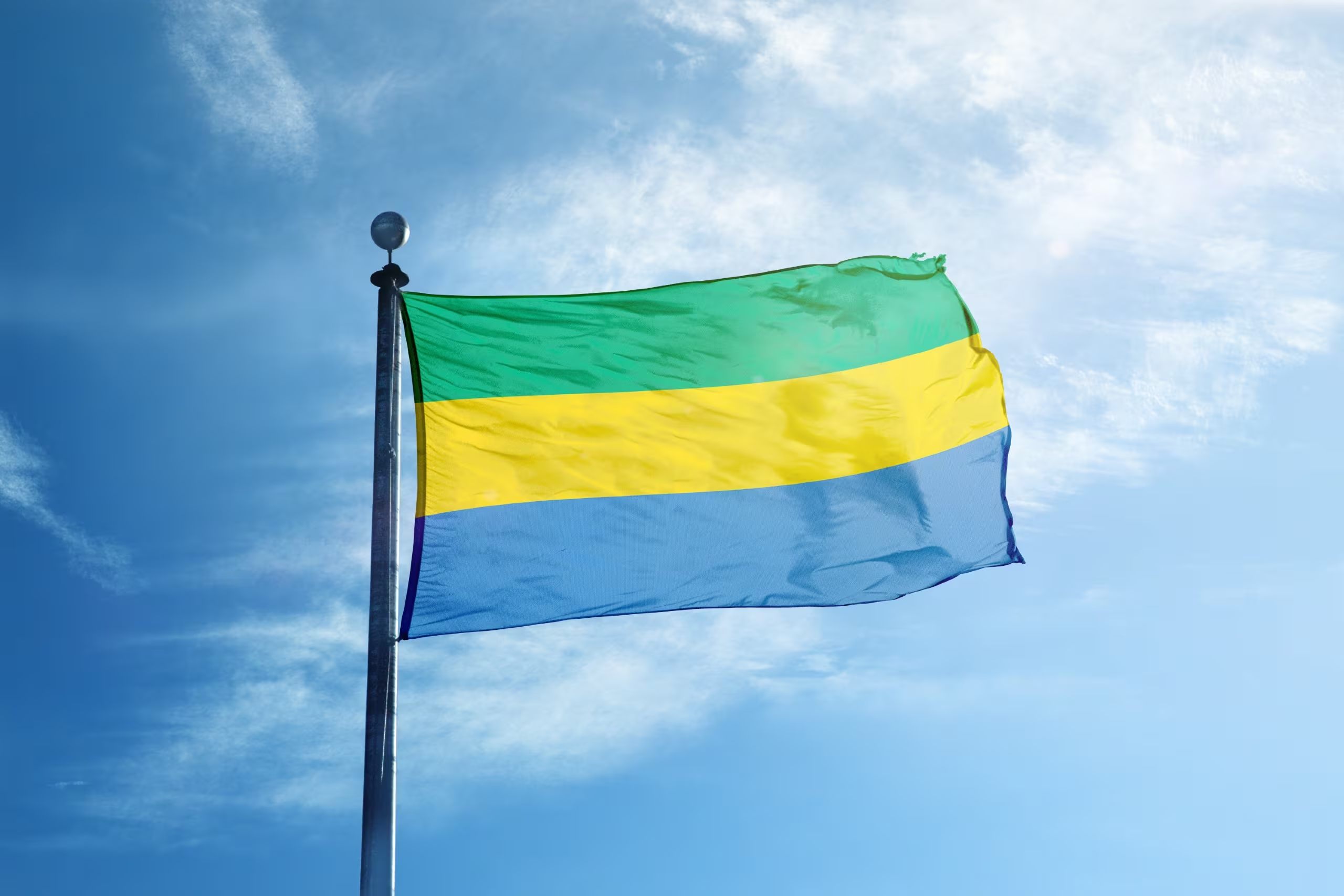
Gabon has secured vital support from around 10 financial institutions to restructure its local and regional debt while opening access to fresh financing — a significant development as the country tries to stabilize its economy after more than a year of political uncertainty.
The announcement, made on Monday by Gabon’s public accounts ministry, follows the election of Brice Oligui Nguema as president earlier this month. Nguema’s rise to leadership came after the military coup he led in 2023 against longtime president Ali Bongo — a dramatic political shift that many Gabonese citizens and African observers hoped would mark the beginning of a new, more accountable era.
Now, Gabon is taking bold financial steps to rebuild.
According to the ministry, the new plan will extend the average maturity of 592 billion CFA francs — roughly $1 billion — worth of treasury bills from 2.3 years to six years. This will be achieved through voluntary exchanges with participating banks. In addition, Gabon will convert 473 billion CFA francs in short-term government loans into longer-term government securities, a move designed to ease short-term pressure on the national budget. Most critically, the plan will unlock access to 338 billion CFA francs — about $550 million — in fresh funding that Gabon urgently needs.
These financial measures come at a pivotal time.
Since early 2025, Gabon has faced a severe liquidity crisis, worsened by the World Bank’s suspension of funding disbursements in January due to mounting arrears. This freeze not only limited Gabon’s ability to fund government programs but also sent a warning signal to investors about the country’s financial health.
As a result, Gabon has been increasingly dependent on regional capital markets — an often fragile lifeline for African economies facing external debt shocks.
President Nguema’s government is betting that by extending debt maturities and reorganizing state obligations, Gabon can buy valuable time to stabilize its economy without falling deeper into a cycle of unsustainable debt.
The country’s heavy reliance on oil exports has made it vulnerable to global market fluctuations, and reforms to diversify the economy have so far been slow. Addressing liquidity issues now is critical to maintaining public services, ensuring political stability, and building long-term resilience.
For African and diaspora communities observing from around the world, Gabon’s move carries broader lessons.
In a continent where debt crises have historically been exploited by foreign powers to exert control, Gabon’s emphasis on regional partnerships and negotiated restructuring marks a push for greater economic sovereignty.
Rather than surrendering to external lenders’ harsh conditions or international financial institutions’ pressures, Gabon is working to create homegrown solutions — an approach that resonates deeply with ongoing movements for African self-determination.
However, challenges remain.
The success of Gabon’s debt restructuring depends heavily on the trust and cooperation of domestic and regional financial actors. It also hinges on whether President Nguema’s government can maintain political stability, introduce transparent governance reforms, and attract investment into non-oil sectors such as agriculture, tourism, and technology.
Critics warn that without fundamental changes to how public finances are managed, new loans and extended debt maturities could only delay — rather than prevent — future crises.
Additionally, concerns persist about the democratic legitimacy of Nguema’s presidency, given the military origins of his rise to power. Ensuring that financial reforms benefit ordinary Gabonese citizens — and not just elites — will be key to building real legitimacy at home and abroad.
Still, for many across Africa and the diaspora, Gabon’s efforts signal something important:
A shift away from crisis-driven dependency toward strategic economic planning led by Africans themselves.
In an era where global economic systems still often disadvantage African nations, Gabon’s attempt to renegotiate its path on its own terms offers a blueprint — imperfect, but necessary — for others to study.
As Gabon moves forward, much is at stake.
Economic recovery could strengthen a fragile political transition and inspire confidence both inside and outside its borders.
Failure, however, could deepen disillusionment and instability — not just for Gabon, but for a region still grappling with the aftershocks of political upheaval and economic exclusion.
Gabon’s next chapter is still being written — but for now, it is clear the country is determined to reclaim the pen.