Summary: Your Complete Rwanda Travel Guide
Here’s a simplified version:
This Rwanda travel guide takes you from Kigali’s spotless streets to gorilla trekking in Volcanoes National Park, canopy walks in Nyungwe Forest, and the country’s poignant history. You’ll get practical details on costs, safety, visas, and what makes the “Land of a Thousand Hills” so unique. As of 2026, Rwanda is one of Africa’s most captivating destinations, offering both adventure and a powerful story of resilience and renewal.
Rwanda Travel Overview: Quick Facts
Before diving into the detailed itinerary, here is a snapshot of essential travel information for planning your trip to Rwanda in 2026.
| Feature | Details |
| Capital City | Kigali |
| Safety Rating | Top 5 safest countries globally; safe for solo/female travellers at night |
| Gorilla Permit Cost | $1,500 USD (10% goes directly to local community funding) |
| Best Time to Visit | June–September and December–February (Dry seasons) |
| Currency | Rwandan Franc (RWF), though USD is widely accepted for tourism |
| Plastic Bag Ban | Strictly enforced; single-use plastics are illegal |
Why Visit Rwanda in 2026?
Rwanda, known as the “Land of a Thousand Hills,” has emerged as one of Africa’s most compelling, forward-thinking destinations. Rwanda represents a profound story of resilience, environmental leadership, and calculated modernisation. From the immaculate, pedestrian-friendly streets of Kigali to the ancient, misty rainforests of the north, Rwanda offers an intentional travel experience. This is where tourism directly funds wildlife conservation and community development.
Why Visit Rwanda in 2026?
I’ll be honest with you, I almost didn’t go to Rwanda.
Not because I didn’t want to. I’d been hearing about it for years from friends who’d passed through Kigali for conferences and come back talking about it like they’d visited the future. But I’m someone who trusts a healthy dose of scepticism over travel hype. Especially when it comes to African countries that everyone suddenly starts calling “the Singapore of Africa.” That kind of label always makes me nervous.
However, when the invitation landed in my inbox to spend ten days crossing the country, from Kigali to the Congo border to the volcanic north, I said yes. I packed a bag with layers (because someone had warned me about the mountain chill), a notebook, and as few expectations as I could manage.
What I found wasn’t a country trying to be anyone’s Singapore. What I found was a place quietly, determinedly itself — and it forced me to confront some uncomfortable questions about what we’ve convinced ourselves is possible on this continent.
Related reading:
If you’re planning multiple African destinations, check out our guide on African Countries Nigerians can Relocate to for more African travel inspiration.
The City That Breathes Differently: Kigali
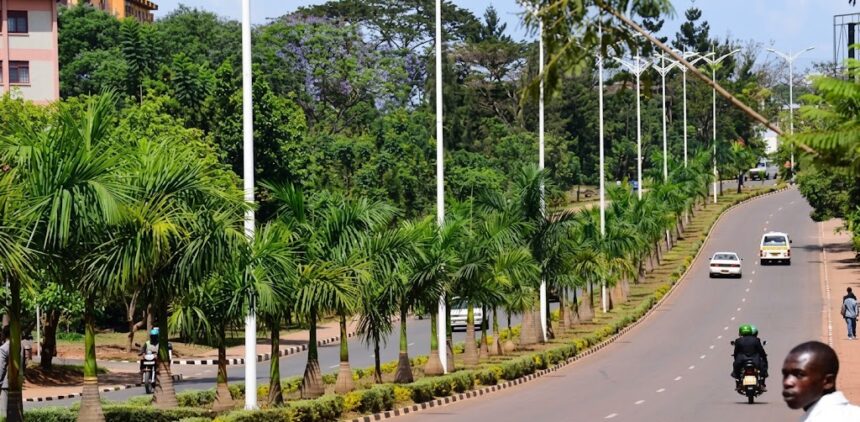
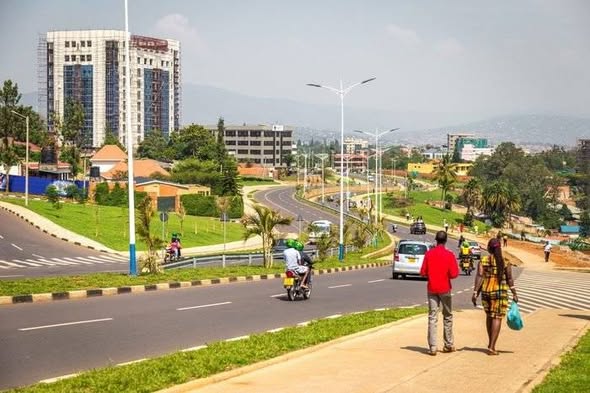
The drive from Kigali International Airport into the city sets the tone. I got a kind of strange feeling because the roads are smooth, and the sides of the roads are landscaped. Like with shrubs and flowers, the kind of intentional greenery you associate with a wealthy suburb, not a capital city in East Africa.
My host, a woman named Jeanette who would become my guide and translator for much of the trip, laughed when she saw me staring.
“You’re noticing the roads,” she said.
“I’m noticing all of this,” I replied.
Kigali rolls across endless green hills. That’s why they call it the Land of a Thousand Hills. You can’t go two minutes without climbing or descending, and after three days of walking the city, my legs were sending me strongly worded letters. But it’s also what gives Kigali its character; there are views everywhere, vistas around every corner, like the city unfolding in layers below you.
The Car Free Zone
We ended up downtown in the Car Free Zone, a pedestrian-only stretch in the city centre with boutiques, outdoor seating, and—I couldn’t believe this—free public Wi-Fi that actually works. I sat down, sent a message back home to my sister in Abuja. My cultural shock was that there was no honking, no chaos, and no one was rushing. Public space here felt like it belonged to the public.
And did I mention that the ground was clean?
The Umuganda (Community Service)
Jeanette explained that Rwanda banned single-use plastic bags back in 2008. I think that is what Lagos is trying to do in Nigeria. But Rwanda is the first country in East Africa to do it. But the real reason the streets look like this is what she called Umuganda. Nigeria tries it too but their own is more intense. On the last Saturday of every month, from seven in the morning until noon, the entire country shuts down. Like everywhere must be closed including roads. People only come outside to clean their neighbourhoods, and repair roads.
I happened to be there on an Umuganda Saturday. When we finally came out, we only saw groups of people with brooms and trash bags, laughing as they worked. It was surreal. I have never seen anything like it anywhere I’ve travelled.
External Resource: Learn more about Rwanda’s environmental policies at Rwanda Environment Management Authority (REMA)
Order, Safety, and the Questions They Raise
Now, I know what some of you are already thinking, because I was thinking it too. Clean streets and empty roads on a Saturday, what does that order cost? Who is it for? What happens when you step out of line?
Those are fair questions. I asked them constantly. There is a visible police presence in Kigali. I saw officers regularly throughout the city centre. There are thousands of security cameras across the capital. Motorbike taxi riders all wear helmets, stop at red lights and for pedestrians. I tested this twice, deliberately stepping onto a crossing, and both times traffic came to a complete halt. If you’ve ever tried to cross a road in Lagos or Johannesburg or Nairobi, you know how disorienting that feels.
Safety Baseline
I spoke to a moto driver named Emmanuel who’d been riding in Kigali for eight years. I asked him about the police presence, the cameras, all of it. He was quiet for a moment before he answered.
“I ride this bike to feed my children,” he said. “If a policeman stops me because I didn’t wear my helmet, I pay a fine. If I am in an accident because I wasn’t wearing my helmet, my children have no father. Which one would you choose?”
Does it really work?
I walked home alone at night twice. Both times past eleven o’clock. Actually, I was scared the first time, but I was not afraid anymore. Jeanette told me she jogs at five in the morning, alone, and never thinks about it. “Safety is not a privilege here,” she said. “It is a baseline.”
Coming from where I’m from, that’s a hard thing to wrap your mind around. It doesn’t answer every question about governance, about freedom of expression, about the trade-offs every society makes between order and liberty. Those conversations are real, and Rwandans have them too. But walking through Kigali at night, breathing the cool hill air without looking over my shoulder, I understood why the people who live here talk about this with such fierce pride.
Related: Understanding visa requirements is crucial. Read our Schengen Visa Application Guide for tips on navigating complex visa processes.
You Cannot Look Forward Without Looking Back: The Kigali Genocide Memorial
You can’t honestly write about Rwanda without writing about 1994.
I am not going to summarize the genocide in a few paragraphs. In roughly 100 days, over 800,000 people were systematically murdered by neighbors, friends, and militias. I visited the Kigali Genocide Memorial on my third day. It was scary, man.
But what I really want to talk about is how they handled the incident. After the killing stopped, Rwanda made a choice. In many places, the aftermath of atrocity leads to decades of revenge and violence. However, Rwanda chose to rebuild. It chose a model of justice and reconciliation and now, former enemies live side by side, work together, marry, and raise children.
Visit the Kigali Genocide Memorial website to learn about their educational programs and plan your visit.
A Palace of Grass and Cows That Sing to Kings: King’s Palace Museum
I wanted to understand what Rwanda was before colonisation, before the genocide, before today’s borders. So I drove south from Kigali to Nyanza District, home to the King’s Palace Museum, a reconstruction of the traditional royal residence. The drive alone gave me enough views. I saw endlessly beautiful terraced hills, tiny farms on impossibly steep slopes, banana groves, tea plantations, and distant blue mountains. I made the driver stop twice for photos.
The King’s Palace
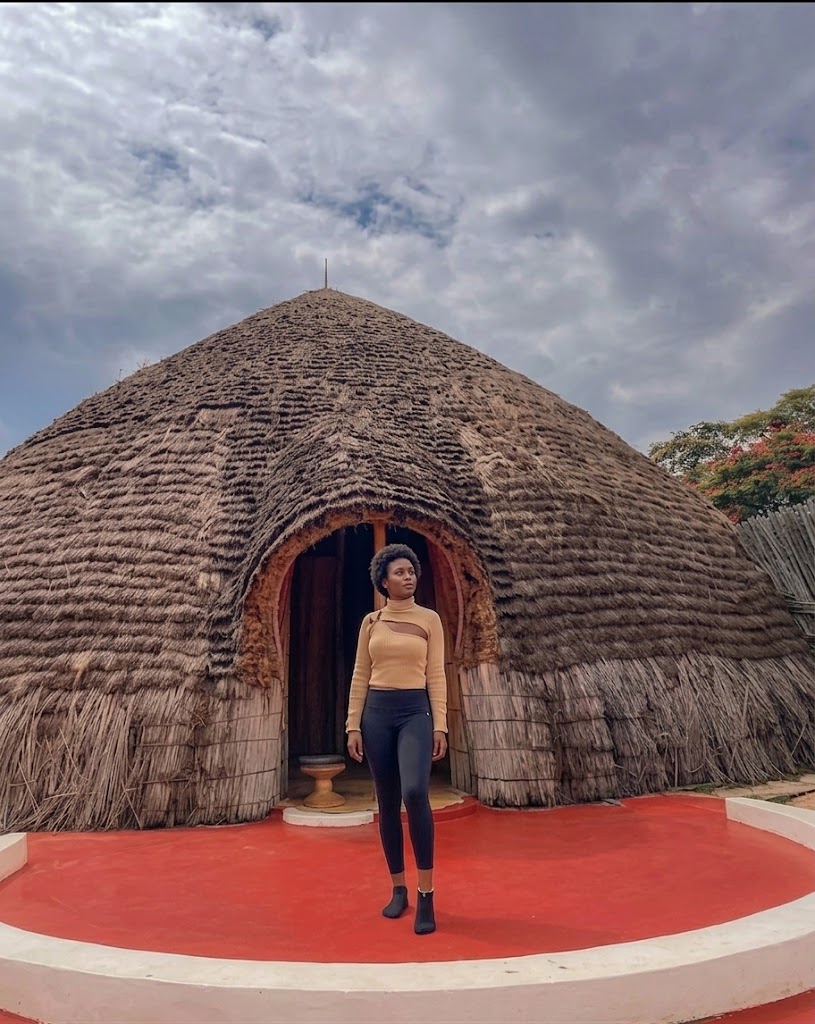
The palace is a massive dome, woven by hand from wood and dried grass. Inside, the ceiling soars so high that the firelight (a traditional fire kept burning) barely reaches the top. A soft-spoken historian named Claudia explained how the palace was built in eight months to a year, with villagers from across the kingdom contributing, and how social life revolved around the royal court.
The Inyambo: Sacred Cattle
But the real stars at Nyanza are the cows. They’re not ordinary cows, but the Inyambo. The sacred long-horned cattle of the Rwandan kings. Raised only for beauty and ceremony, their extraordinary horns curve like dark scimitars over five or six years. They move with slow dignity. Traditional caretakers, the Abatara, grow up with the cows, sing to them to keep them calm, and treat them like royalty.
A Living Connection to the Past
Watching a keeper murmur to one of these massive animals as it chewed slowly, I felt a deep gratitude. These traditions survived everything colonialism threw at them. Rwanda may be racing toward the future, but the Inyambo are a reminder that it doesn’t have to leave its soul behind.
Two Kilometres of Terror (and Joy) Above an Ancient Forest: Nyungwe National Park
By this point, my solo trip had become a group adventure with other writers and photographers. We headed southwest to Nyungwe National Park, one of Africa’s oldest rainforests, largely undisturbed for over a million years. A million years of trees, rivers, and chimpanzee calls, long before any of us existed.
The Canopy Walk
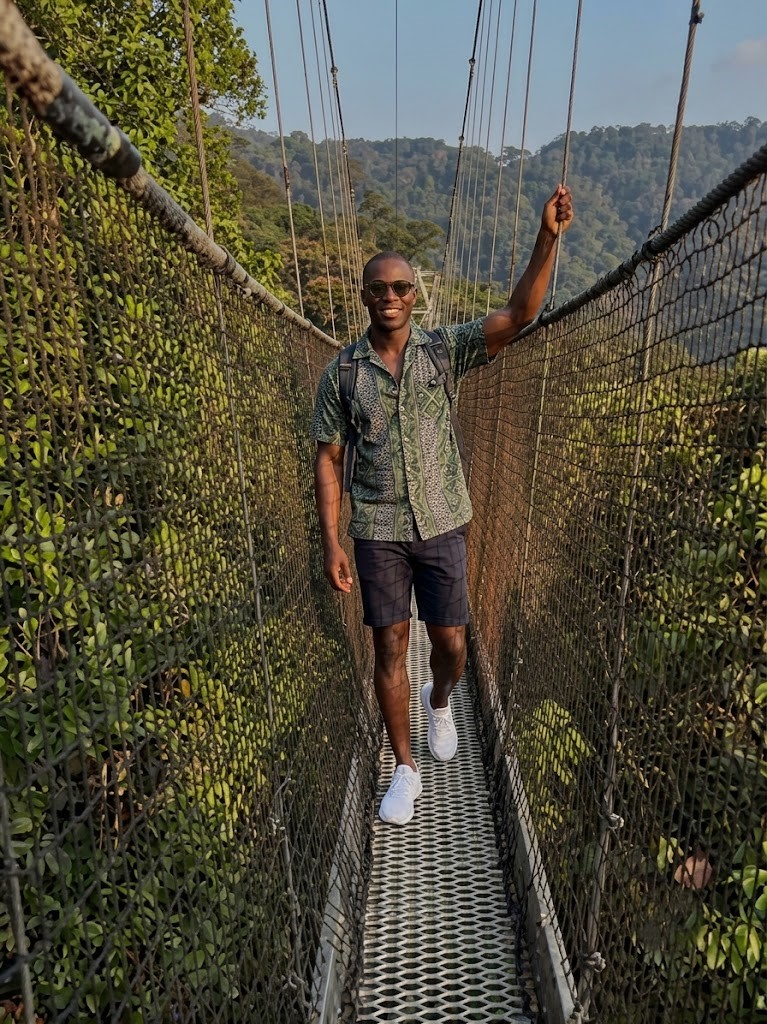
We started with the canopy walk, a suspended bridge nearly a hundred meters above the forest floor. I’m not great with heights, and my legs gave up halfway across. Amina, a Kenyan filmmaker in our group, was so terrified she had to be talked across by a ranger while the rest of us yelled “encouragement” from the far platform. She still hasn’t forgiven us.
The Zip Line
Then came the zip line. Nearly two kilometres long, flying over the rainforest, the world a blur of green as you scream your lungs out. Those 90 seconds were pure, unfiltered joy. We stumbled off giddy and shaky, already asking to go again.
A Night in the Cloud Forest
We slept in A-frame eco-cabins on the edge of the park. Waking up in a cloud forest is hard to put into words: cold enough to see your breath, mist curling through trees, unfamiliar bird calls echoing through the valley. I sat on the porch with strong Rwandan coffee and didn’t touch my phone for an hour.
Plan your visit at Nyungwe National Park Official Site (Rwanda Development Board)
Face to Face with a Silverback: Gorilla Trekking in Volcanoes National Park
Let’s talk about the gorillas. This is what draws most visitors to Rwanda, and for good reason.
A Conservation Success Story
Volcanoes National Park in the Virunga Mountains of northern Rwanda is one of the last refuges of the mountain gorilla. Barely more than a thousand of these animals remain on Earth. In the 1960s, when Dian Fossey began her research here, there were fewer than 300. Poaching and habitat loss were pushing them toward extinction within a single human lifetime.
Today their numbers are actually growing. This is thanks to relentless conservation: anti-poaching patrols, community investment, and careful tourism management. A gorilla trekking permit costs $1,500. I winced when I first heard that number. Then I learned that ten percent of every permit goes directly to communities around the park, funding schools, health clinics, and clean water projects. The overall revenue from gorilla tourism, over $200 million a year, finances the entire conservation system that protects them.
The economics are almost poetic. The gorillas are worth far more alive, wild, and protected than they could ever be worth dead or in cages. Every country should be studying this conservation model.
Into the Forest
The trek itself was harder than I expected. We hiked for nearly an hour and a half through dense bamboo forest, uphill, with armed rangers leading the way. Forest buffalo and elephants live in these mountains, and they are not interested in making small talk with tourists. By the time our trackers signaled we were close, I was sweating through my jacket, my boots were caked in mud, and I was genuinely wondering why I hadn’t taken up a gentler hobby like painting.
Meeting the Family
Then we saw them.
First, a baby, maybe two or three years old, swinging from a vine not twenty feet away and watching us with what looked exactly like amusement. Then a couple of juveniles tumbling over each other in a patch of sunlight. Then the females, calmly eating leaves and ignoring us with the practiced indifference of animals who have learned humans aren’t a threat. And then, the silverback.
The Silverback
He was enormous. Easily five hundred pounds, a wall of muscle and dark fur moving slowly through the vegetation, keeping a watchful eye on his family. Our guide, François, signaled for us to keep our distance and stay still. The big male stopped. He looked at me. I looked at him. We held eye contact for what felt like a very long time, though it was probably three seconds. Then he sighed, a deep and rumbling ancient sound, and moved on.
Worth Every Dollar
I’m not someone who cries easily in front of strangers, but I had to turn away for a moment. Being in the presence of an animal that magnificent, in its own home and on its own terms, rearranges something inside you. I’ve been fortunate to travel to extraordinary places and see extraordinary things. Nothing has compared to that hour in the forest. The $1,500 permit felt like a bargain before I even made it back down the mountain
You can book your gorilla trekking permit through the Rwanda Development Board and learn about conservation efforts from the Dian Fossey Gorilla Fund.
Related: Interested in wildlife conservation tourism? Check out our guide on Study & Work Abroad for pathways to work in conservation.
A Lake That Forgives You: Lake Kivu
After the intensity of the gorilla trek, our group needed to exhale. We drove west to Lake Kivu, one of Africa’s Great Lakes, on the border with the Democratic Republic of Congo. The lake doesn’t look like a lake. It’s too big, too blue, too surrounded by rolling green hills that tumble down to the water. It looks like an ocean misplaced in the middle of the continent. We stayed at a small lodge outside Gisenyi. On our first evening, we took a boat out at sunset. Our boatman, Patrick, took us to a spot where local herders bring their cattle to swim between islands.
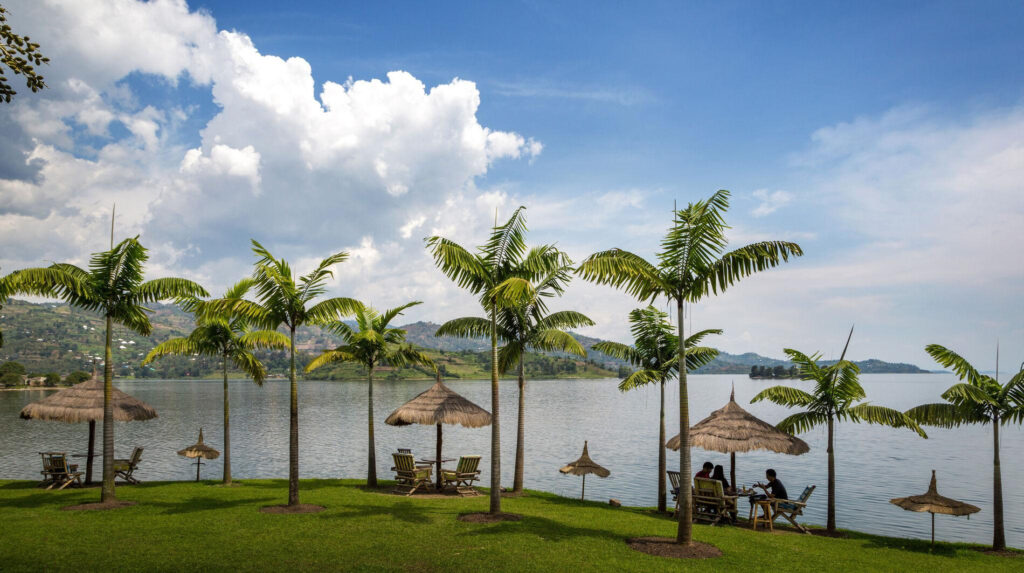
Swimming Cows
I laughed when he told me. Then I saw them: a herd of maybe twenty cows, paddling calmly from one shore to another, their horns bobbing above the water like dark buoys. I’d never seen a cow swim on purpose. Patrick said they like it, seeking out the water on hot days. I sat in that boat watching a cow do a slow breaststroke across a great lake, the sky turning pink and orange behind the Congolese mountains, and I thought: This is why I travel. For the things no one warned me existed.
A Peaceful Evening
That night, we sat at a long table by the water, eating grilled tilapia and drinking local beer. No one was in a hurry. No one checked their phones. After a week of canopy walks, zip lines, and gorilla encounters, we were tired, sunburnt, and happy. I realized Kivu was the emotional counterpoint to everything Rwanda had shown me. If Kigali is ambition and Volcanoes National Park is awe, Kivu is peace.
Practical Information for Your Rwanda Travel Guide
Visa Requirements for Rwanda
Most nationalities can obtain a visa on arrival or apply for an e-visa online before travelling. The single-entry visa costs $50 and is valid for 30 days. Some African Union passport holders can enter visa-free.
Apply for your visa at Rwanda Immigration Services
Getting Around Rwanda
- Moto taxis: Affordable and ubiquitous in Kigali. Download the SafeMoto or Yego Moto apps for safer, metered rides.
- Private drivers: Ideal for intercity travel and national park visits. Expect to pay $80–$150/day depending on distance.
- Public buses: Comfortable coaches connect major cities. Companies like Virunga Express and Jaguar Executive Coaches are reliable.
Accommodation Costs
- Budget: $20–$50/night (hostels, guesthouses)
- Mid-range: $80–$200/night (boutique hotels, eco-lodges)
- Luxury: $300–$1,500+/night (high-end lodges, especially near gorilla parks)
Best Time to Visit Rwanda
- Dry seasons (June–September, December–February): Best for gorilla trekking and wildlife viewing
- Wet seasons (March–May, October–November): Lush landscapes, fewer tourists, lower prices, but trekking can be muddy
Health & Safety
- Yellow fever vaccination is required if travelling from a yellow fever endemic country
- Malaria prophylaxis is recommended
- Tap water is not safe to drink; use bottled or filtered water
- Rwanda is one of the safest countries in Africa for travellers
Rwanda Travel Guide: Common Questions Answered
Is Rwanda safe for tourists?
Yes. Rwanda is consistently ranked as one of the safest countries in Africa. Violent crime against tourists is rare. The capital Kigali is particularly safe, and many solo travellers (including women) report feeling comfortable walking alone, even at night. Standard travel precautions still apply.
How much does a Rwanda safari cost?
A typical 7-day Rwanda safari including gorilla trekking ($1,500 permit), accommodation, transport, and meals ranges from $3,000–$7,000+ depending on your accommodation choices. Budget travellers can do it for less by skipping gorilla trekking or choosing budget lodges.
Do I need a tour operator or can I travel independently?
You can travel independently in Rwanda, especially in Kigali and between major cities. However, for gorilla trekking, you must book through a licensed tour operator or the Rwanda Development Board. Safari activities in national parks also require guides.
What should I pack for Rwanda?
- Layers (temperatures vary significantly between day/night and elevation)
- Rain jacket (even in dry season)
- Sturdy hiking boots for trekking
- Long pants and sleeves (for gorilla trekking to protect from stinging nettles)
- Gardening gloves (for gorilla trekking)
- Insect repellent
- Sunscreen and hat
- Power adapter (Type C, 230V)
Can I use my phone in Rwanda?
Yes. Rwanda has excellent mobile coverage, especially in urban areas. MTN and Airtel are the main providers. You can buy a local SIM card at the airport or in town for around $5–$10 with data packages available.
What currency is used in Rwanda?
The Rwandan Franc (RWF). USD is widely accepted for tourism activities (gorilla permits, hotels, tours), but you’ll need local currency for small purchases, restaurants, and transport. ATMs are available in Kigali and major towns.
The Question I Came Here To Answer
I went to Rwanda expecting to decide whether it’s the model for the rest of Africa. However, I don’t think that’s the right question anymore. Rwanda is not a model to copy and paste. Every African country has its own history, complexities, and scars. What works here was born from a specific, almost unimaginable national trauma that no one would wish on another country. The order you see in Rwanda isn’t just good governance or visionary leadership. But the product of a nation that looked into the abyss and collectively said never again. You cannot manufacture that or import it.
What Rwanda Can Teach
But here’s what you can learn, and what I brought home. Public goods matter. Clean streets, safe sidewalks, and working public Wi-Fi aren’t Western luxuries. They are choices. Trees in a city aren’t decoration. A country can look at its most precious wild animal and protect it so fiercely that it becomes the engine of an entire tourism economy. Building an arena so a continent can come watch basketball is, in its own way, foreign policy. When you make it genuinely easy to start businesses and build homes, people, including your own diaspora, will come home.
Not a Perfect Model
Rwanda is not perfect. No country is, and the people I met were the first to say so. There are hard and valid conversations to be had about political freedoms, the pace and nature of democracy, and the voices that are amplified or quieter than they should be. Those conversations matter. They don’t cancel out what this country has built.
Choices, Not Miracles
If Rwanda can do what it has done from where it started, what’s stopping every other country on this continent from at least trying to do better? To keep the streets clean, to protect the trees, to make sure a woman can walk home alone at night, to treat public space like it belongs to the public, and to protect the wild things that make a country unique while making them work for the people who live there? These are not impossible things. They are not Western things. They are choices. Rwanda made them. The rest of us can too.
That’s the gift Rwanda gave me. Not answers, really, but a better set of questions.
Ready to Visit Rwanda?
This Rwanda travel guide has given you a comprehensive overview, but experiencing the country firsthand is irreplaceable. Whether you’re drawn to the emotional depth of the genocide memorial, the thrill of gorilla trekking, the adventure of Nyungwe’s canopy walk, or simply the peace of Lake Kivu’s shores, Rwanda offers something transformative for every traveller.
External Resources to Plan Your Trip:
- Visit Rwanda Official Tourism Site
- Rwanda Development Board
- Rwanda Immigration Services
- Kigali Genocide Memorial
Related reads on Travel Radio Live: