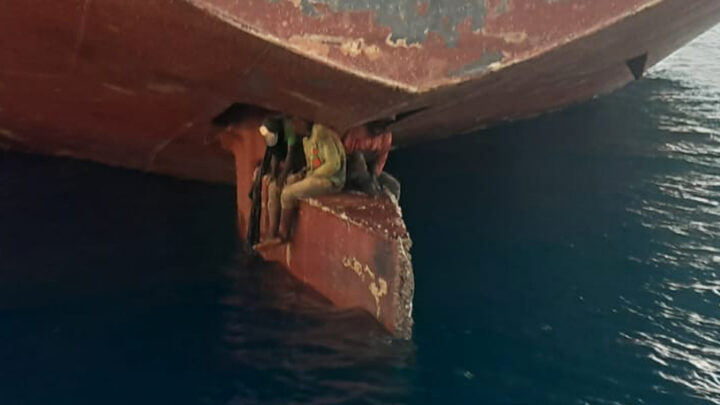
Adeleye’s story from the bustling neighborhood of Ajegunle in Lagos, Nigeria, tells of a life marked by resilience, dreams, and the harsh realities of poverty.
Born in 1991, he grew up amidst the vibrant yet challenging environment of AJ City, where dreams clashed with the daily grind of survival.
His childhood aspirations of becoming a nurse were thwarted by financial pressures, forcing him to abandon school and seek work in Lagos’ factories to support his family.

In 2021, Adeleye, driven by desperation and a longing for a better life, embarked on a perilous journey as a stowaway, aiming to escape Ajegunle’s hardships. With the help of Tolu, a facilitator in the underground world of human smuggling, Adeleye navigated the treacherous waters around Snake Island, awaiting a chance to board a vessel bound for Togo.
Their method was risky, relying on patience and secrecy until the opportune moment to sneak aboard a ship bound for another country. Their journey across the Gulf of Guinea was fraught with danger and uncertainty.
Adeleye recounted the tense moments hiding on the ship, navigating precarious conditions to evade detection while clinging to hopes of a new beginning.
Their eventual arrival in Togo marked a small victory, but it also posed new challenges — dealing with authorities, uncertain futures, and the complicated logistics of stowaway operations.
The allure of stowaway journeys, according to Adeleye and others like Boluwatife, lies in the potential financial reward upon arrival at a port. In destinations like Togo, stowaways expect compensation for their capture, often arranged through informal agreements with local agents.
This financial windfall, though risky and illegal, presents a lifeline for many in Ajegunle facing dire economic circumstances.
However, the journey is not just about financial gain; it’s a gamble with life itself. Many stowaways face harrowing conditions aboard ships, enduring days in cramped hiding spots with limited food and water.
The risks of discovery, harsh weather, and accidents loom large, making each voyage a perilous undertaking.
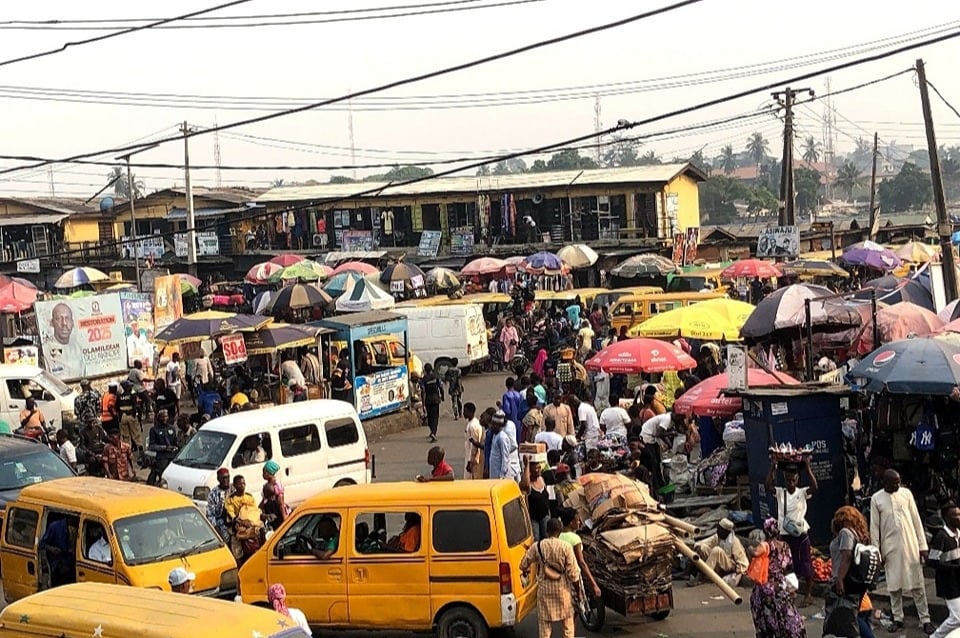
The prevalence of stowaways from Nigeria reflects broader socioeconomic challenges, where individuals like Adeleye see limited opportunities at home and turn to risky alternatives for survival.
The Nigerian Navy’s frequent interceptions underscore the scale of the issue, with numerous attempts foiled and lives endangered in the process.
Despite the dangers, the practice persists, fueled by the stark realities of poverty and the persistent hope for a better future.
Adeleye’s story, while a testament to human resilience and determination, also highlights the complex web of motivations and risks entangled in the stowaway phenomenon.
It sheds light on the individuals behind the statistics, driven by dreams of escaping poverty and making a meaningful change for themselves and their families.
In conclusion, Adeleye’s journey encapsulates the harsh realities and desperate aspirations of those caught in Ajegunle’s cycle of poverty. It underscores the profound human toll of economic hardship and the lengths individuals will go to seek a better life, even at great personal risk.
His story, while unique, resonates as a poignant reflection of broader issues facing marginalized communities in Nigeria and beyond.