ADDIS ABABA, Ethiopia (Travel Radio) –Ethiopia, the land of origins, is a country that demands time to explore. But for travelers with limited schedules, a well-planned 72-hour itinerary can still unlock the richness of its culture, history, and urban vibrancy. From the bustling streets of Addis Ababa to the rock-hewn churches of Lalibela, a short stay can offer a deep and transformative experience.
Day 1: Addis Ababa – The City in Motion
The Ethiopian capital, whose name means “New Flower” in Amharic, is undergoing rapid transformation. Construction cranes dominate the skyline, yet the city retains its deep cultural roots. We started the day where Ethiopia’s most famous export, coffee, takes center stage—Tomoca Coffee. A steaming macchiato, served in the country that birthed Arabica coffee, was a fitting start. To truly experience Ethiopia’s coffee culture, though, one must attend a traditional coffee ceremony. The aroma of freshly roasted beans, mixed with wafting incense, set the stage for a sensory immersion that remains central to Ethiopian hospitality.

A short drive led us to Merkato, one of Africa’s largest open-air markets. Here, a kaleidoscope of goods—from handwoven baskets to fragrant spices—lined the labyrinthine alleys. But it’s not for the faint-hearted; navigating Merkato requires patience and awareness, as it is a haven for both vibrant trade and pickpockets.
For a more curated shopping experience, we headed to Shiro Meda Market, where habesha kemis (traditional Ethiopian dresses) and intricately embroidered scarves filled the stalls. At Safi Honey, we sampled unique local varieties, from black cumin to cactus-infused honey, reflecting Ethiopia’s deep-rooted beekeeping heritage.
As the sun set, we found ourselves at the 360 Lounge, a rooftop venue offering panoramic views of Addis’ evolving skyline—a contrast of modern high-rises and tree-lined neighborhoods that embody the city’s changing identity.
Day 2: Encountering Ancient History at the National Museum

A journey to Ethiopia isn’t complete without meeting Lucy, one of the oldest hominid fossils ever discovered. Housed at the National Museum of Ethiopia, her remains underscore the country’s role as the ‘Cradle of Humanity.’ The museum also hosts exhibitions on African art history, reinforcing Ethiopia’s position as a cultural and historical anchor on the continent.
Day 3: Lalibela – The Spiritual Heart of Ethiopia
An early one-hour flight transported us north to the Amhara Region, home to one of Ethiopia’s most astonishing landmarks: the rock-hewn churches of Lalibela.
Over 800 years ago, King Lalibela sought to create a “New Jerusalem” carved directly from volcanic rock. The result is a breathtaking network of 11 monolithic churches, interconnected by tunnels and passageways. The scale and craftsmanship defy belief—local legend even attributes their construction to divine intervention.
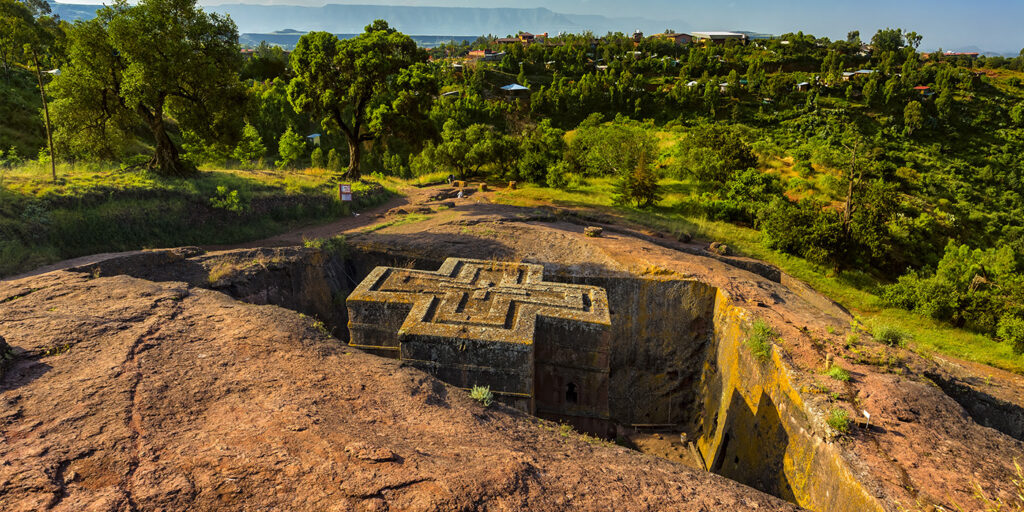
Biete Medhane Alem, believed to be the world’s largest monolithic church, is a commanding sight with its forest of carved pillars. But the most iconic is Biete Ghiorgis (Church of Saint George), cut in the shape of a perfect cross. Looking down into its sunken courtyard, we understood why these churches are not just architectural marvels but also places of deep spiritual significance.
The visit coincided with Orthodox Christmas preparations, drawing thousands of pilgrims dressed in white shawls, chanting prayers as they moved through the ancient corridors. Many had walked for weeks to be here, reaffirming the site’s religious importance.
That evening, at Kana Restaurant and Bar, we reflected over a plate of awaze tibs—succulent beef in a spicy sauce—paired with fresh injera. As the sun dipped behind the highlands, we realized we had barely scratched the surface of Ethiopia. But even in 72 hours, this journey had offered a profound glimpse into a country that continues to shape Africa’s past, present, and future.