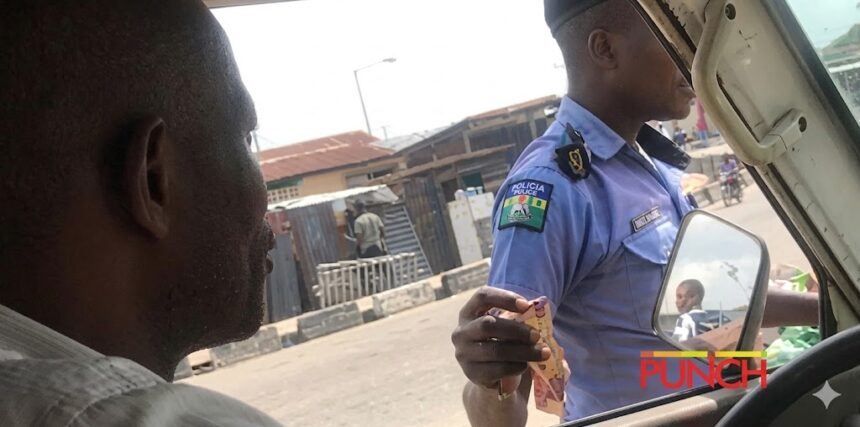
It was a rental car with tinted glass windows, and we were naturally cruising the Lagos-Ibadan expressway when our hire car coughed its last breath and died in the middle of that chaotic stretch of broken tarmac. I wasn’t scared because I felt at home. I just need to call the rental company. We were also near one of the many Nigeria police checkpoints along that road.
One of the tired officers in a rumpled uniform came over and asked what the problem was. I unfortunately answered with my American accent (out of habit). He saw that all my documents were intact. The next thing I knew, the officer leaned on the window and said, “Oga, you know this road is dangerous for people like you. These ‘Agberos‘ will eat you alive, but we can protect you, for a small ‘settlement‘, of course.”
I had been paying for the last few checkpoints. This one was the biggest, since I was also paying for “protection”. This article will help you understand how to protect yourself when travelling in Nigeria, whether as a Nigerian or a foreigner.
TL;DR About Nigeria Police Checkpoints
- Highways with Nigeria police checkpoints are patrolled by at least five uniformed agencies: Police, Army, FRSC, NSCDC, and NDLEA and officers from each of them extort travellers.
- South-East Nigeria is the most checkpoint-dense corridor in the country, with up to 32 stops in a single 105 km stretch.
- A 2025 civil society report estimated that security forces extorted ₦21.8 billion from motorists in the South-East in just two months (December 2024 – January 2025).
- Legally, police can only demand three documents at a checkpoint: vehicle licence, driver’s licence, and certificate of insurance.
- A 2026 Federal High Court ruling confirmed that Nigerians have the constitutional right to record police officers on duty in public.
What Actually Happens at Nigeria Police Checkpoints?
Nigeria police checkpoints are supposed to be a security feature, but are they? Whether you are a Nigerian or a foreigner, you will encounter them on any interstate journey. And they will most likely stop you, and use any means, including intimidation or threat to life, to extort you.
Again, let me restate that the official purpose of Nigeria police checkpoints is security. They are supposed to verify documents, deter crime, and monitor movement on federal roads. However, the reality is that many of these Nigeria police checkpoints function as unofficial toll booths.
Checkpoints in Nigeria have become a site of anxiety, coercion, and systemic abuse. Across cities, towns and highways, drivers encounter police officers stationed at intervals, often at locations where no checkpoints previously existed. They can stop you, conjure unlisted crimes or items, and when you say you don’t have one, they call an amount for you to ‘bail’ yourself. Sometimes, these offences are real. For example, you are supposed to drive with items like a fire extinguisher, a warning triangle, etc. But instead of issuing an official ticket, they call big money up to x100 of the ticket.
You can see the official List of Offences and tickets here: Offences and Penalties
If you are a foreigner, you become a more attractive target. This is documented by multiple governments in their Nigeria travel advisories, like Ireland and Australia. There are high numbers of authorised and unauthorised vehicle checkpoints throughout Nigeria. Some are for security checks, others to extort drivers.
Which Agencies Run Nigeria Police Checkpoints?
When you encounter Nigeria police checkpoints, it is like playing Russian roulette. You never know which agency you will meet there. Personnel from other agencies also participate in these practices.
Let me breakdown every uniformed body you are likely to encounter on Nigeria’s major highways:
#1. Nigeria Police Force (NPF)
These are the most visible presence on federal highways. The NPF is legally authorised to conduct vehicle checks, but this authority has been widely abused.
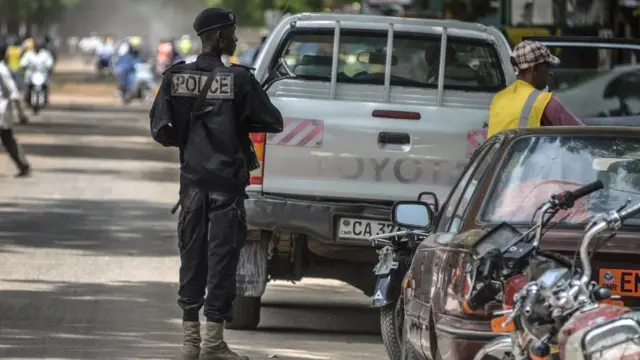
Officers at highway stops frequently demand money, delay vehicles, or ask for documents they have no legal basis to request.
In 2025, a viral video of officers on the Benin Bypass in Edo State demanding ₦5,000 or five litres of fuel from motorists triggered disciplinary action from the Inspector-General of Police. The Inspector General of Police, Kayode Egbetokun, condemned their actions as shameful, distasteful, and utterly unacceptable and ordered the immediate commencement of disciplinary procedures against all six officers involved. The fact that it took a viral video to prompt action tells you everything about the day-to-day reality.
#2. Nigerian Army/Joint Task Force (JTF)
Army checkpoints are most concentrated in the South-East, nominally due to security operations.
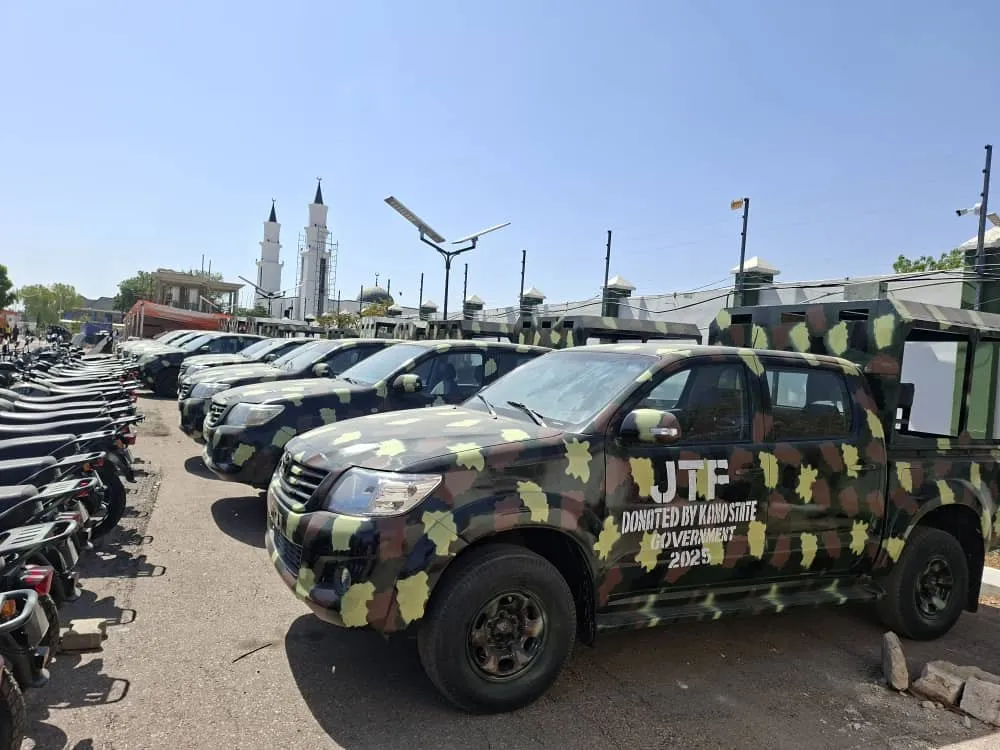
However, in practice, they treat road users as if they were illegal immigrants in their own country. They harass, intimidate, and humiliate people before extorting money. And nothing serious has been done by the military and police high command to rein in their men despite the outrage it has been generating.
The Igbo National Council formally petitioned the Defence Headquarters over 90 listed checkpoints where military personnel were extorting civilians.
#3. Federal Road Safety Corps (FRSC)
The FRSC is constitutionally responsible for road safety enforcement. They are to check driver’s licences, vehicle roadworthiness, and speed violations.
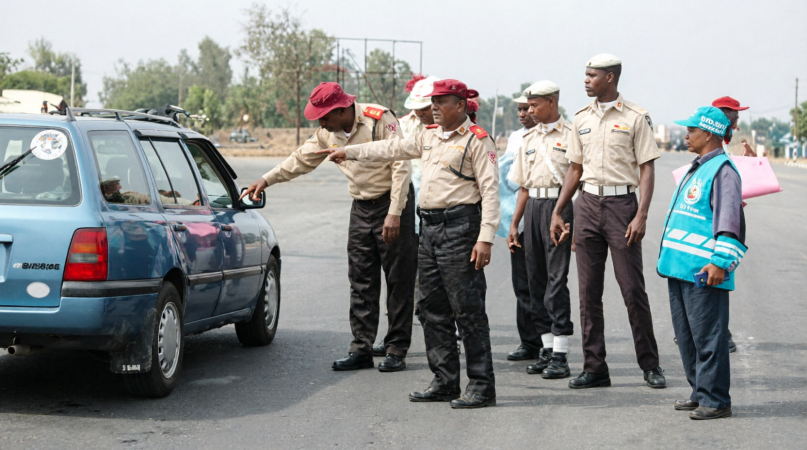
However, FRSC personnel, alongside the police and army, are involved in extortion. Almost all checkpoints mounted by the Police, Army, FRSC, NDLEA, and various task forces across the states are actively collecting bribes from motorists, even giving change to those who give them more than the agreed bribe fee.
#4. Nigeria Security and Civil Defence Corps (NSCDC)
This agency is technically a paramilitary agency focused on critical infrastructure protection. The NSCDC has no mandate to stop civilian motorists on highways. Yet you will still find them at checkpoints, particularly in the South-East. Travellers on the Awka-to-Enugu expressway have encountered NSCDC stops alongside Navy, Police, and FRSC stops within the same 50 km stretch.
#5. National Drug Law Enforcement Agency (NDLEA)
The NDLEA’s job is to enforce drug abuse laws. And that gives them legal grounds to stop vehicles, if they suspect you. However, they have joined the others to convert expressways into collection zones.
#6. Nigeria Customs Service (NCS)
This one is the most hilarious. Driving on the road and finding Customs officers on inland highways, far from any border. No matter the case, NCS personnel should not be behaving like ICE agents. They have no clear legal basis for stopping private vehicles. It appears most frequently on commercial goods routes and on approaches to state borders in the South-East.
#7. Vehicle Inspection Officers (VIO) and State Traffic Agencies (e.g. LASTMA in Lagos)
State-level agencies add another layer of stops, particularly in Lagos and on exit roads from major cities. On the Badagry-Seme Road in Lagos, at least eight different agencies have been reported operating at a single stretch. At most of the checkpoints, security officers use area boys, also known as Agberos to collect money from motorists. They extort not only drivers of commercial vehicles but also car owners, especially car importers.
Where Are Nigeria Police Checkpoints Worst?
Now, which parts of Nigeria should you expect the most Nigeria police checkpoints? From experience and research, if you want to travel through these routes, expect multiple encounters.
South-East Nigeria: The Heaviest Checkpoint Corridor
The South-East: Anambra, Enugu, Imo, Abia, and Ebonyi states, is the most documented case of highway extortion in Nigeria at Nigeria police checkpoints. The numbers are staggering. A traveller moving just 105 km from Onitsha to Enugu will endure 32 checkpoints. On the Port Harcourt-Aba road, a 60 km journey, a civil society group counted over 30 stops. Between Awka and Enugu, an independent investigation documented at least 20 checkpoints in a 50 km stretch.
Officers extorted a staggering ₦21.8 billion from motorists in the South-East over two months, from December 2024 to January 2025. This amount has tripled over the last year. A 2026 report by civil society group FENRAD estimated that nearly 200 checkpoints in the region extracted approximately ₦1.3 trillion from citizens annually.
The checkpoint density maps closely to the security response to insecurity in the region, but the evidence shows no correlation between checkpoint numbers and actual crime prevention. Kidnapping still occurs along the road on a near daily basis despite the numerous checkpoints.
Abuja–South-East Corridor
A road trip from Abuja to the South-East is known for the misdemeanours of police officers and security agents against motorists. Many drivers along this route document extortion at multiple points. The Abuja-to-Onitsha route passes through multiple state boundaries where agencies reset their expectations at each crossing.
Lagos–Badagry Expressway
By early 2025, despite federal orders capping checkpoints at four, reporters counted 21 stops between Badagry and Seme alone, a distance of just 15 miles.
Lagos–Onitsha Highway
The Senate of Nigeria raised this route formally. A serving senator documented that travellers between Lagos and Onitsha face 60 checkpoints. The Senate subsequently asked the Inspector-General of Police to reduce checkpoint numbers. We have not seen a positive response to that yet.
What Documents Can Police Actually Demand at Nigeria Police Checkpoints?
This is the most important practical question for any traveller facing Nigeria police checkpoints.
The Nigeria Police Force’s own spokesperson laid it out clearly on record:
At any checkpoint or on routine patrol, police officers can only demand three things: your vehicle licence, driver’s licence, and certificate of insurance, especially for private car owners. Any officer who asks for more, like customs papers, is acting outside their authority. However, sometimes, it is not you who must say this to them. This information is for you to know how to calmly react when they try to intimidate you.
A 2026 Federal High Court judgment ruled that Nigerians have the constitutional right to record police officers performing their duties in public. While this ruling has caused a lot of controversies, it sets a major precedent for accountability and civil liberties.
The FRSC has its own separate mandate on road safety documents. At an FRSC-manned checkpoint, officers may legitimately check additional vehicle safety certificates. But a police officer at a checkpoint has no authority to check FRSC documents unless operating in a declared joint operation.
How Should You Handle Yourself at Nigeria Police Checkpoints?
I mentioned earlier that you should not unnecessarily aggravate an officer by telling him his job. Well, depending on your tone and manner of speaking, you may either get him so angry that he will set you up or let you go freely.
Whether you are a Nigerian returning home for the holidays or a foreign visitor who has just picked up a rental car, these are the practical rules that reduce risk at Nigeria police checkpoints.
Before you travel:
- Ensure your three core documents are valid and accessible: driver’s licence, vehicle licence, and insurance certificate.
- Keep photocopies or phone screenshots of your documents. Present copies first; hold originals unless physically necessary.
- Travel during daylight hours. The worst extortion, humiliation and intimidation happen at night.
- Share your travel itinerary and expected arrival time with someone who can follow up.
- Keep small change (₦100–₦200) accessible. This is entirely optional as you are legally not required to pay anything. But…
At the checkpoint itself:
- Slow down early and stop completely. Do not give officers a reason to escalate.
- Greet politely. “Good morning, officer” costs nothing and sets a calm tone.
- Present only the three required documents. Do not volunteer your phone, wallet, or personal bags.
- If asked for something outside the three documents, calmly say: “Sir, I was told by the Force PRO that these are the only three documents required at a police checkpoint.”
- Do not argue loudly, make threats, or use phrases like “I know my rights” in an aggressive tone. Stay calm and conversational.
- If you are a foreigner and an officer suspects you may pay more, the same calm approach applies. Do not show panic or willingness to negotiate.
- Since the 2026 Federal High Court ruling, you have the constitutional right to record the interaction, though exercise this carefully and do not be confrontational about it. If possible, use video recording glasses.
- As long as you are firm and do not offer too many answers to their questions, you will generally be fine.
If an officer demands a bribe or detains you without cause:
- Note the officer’s badge number and name if visible.
- You can report misconduct to the Nigeria Police Force via: 090-3000-0003 (Police Public Complaint Rapid Response Unit). If possible, don’t threaten, just act.
- The X-Squad and Monitoring Unit of the NPF are specifically tasked with assessing highway checkpoint behaviour. Their existence is precisely because the problem is institutional.
Do Foreigners Face Different Treatment at Nigeria Police Checkpoints?
Yes, they do. A foreign accent, a rental car, or visible confusion at a checkpoint signals to extortive officers that you may not know the rules and may pay to avoid trouble. The standard response at Nigeria police checkpoints is calm, polite, presenting only the required documents. The difference is that foreigners tend to carry more cash, show more visible anxiety, and are less likely to know what they can refuse.
If you are driving in Nigeria as a non-citizen, several official travel advisories recommend specific precautions. Police checkpoints are common throughout the country. Be prepared to present a certified copy of your identification. Do not hand over your money or original documents unless you feel threatened.
Is Anything Being Done About Nigeria Police Checkpoints Extortion?
What we know is that there have been plenty institutional responses to Nigeria police checkpoints problem, but we have not seen any effective results. For example, the Inspector-General of Police has issued orders banning highway checkpoints multiple times over the past decade. After each ban, they will reduce it for a while, then return to the status quo. The Senate has passed motions on the issue. Peter Obi, the former Labour Party presidential candidate, raised the matter publicly in January 2026 after witnessing the gridlock checkpoints created during the festive season.
Civil society groups have recommended intelligence-driven strategies, like use of body cameras, and digital accountability tools for highway patrol officers, alongside the creation of accessible complaint channels for motorists and strict disciplinary action against officers found guilty of extortion.
None of these has been implemented at scale yet. The systemic reason is that most personnel reportedly remit a percentage of the money they make to a senior officer who posted them to the beat. This means checkpoint extortion is not rogue behaviour at the individual officer level, it is, in many stations, a managed revenue stream that flows upward.
Frequently Asked Questions About Nigeria Police Checkpoints
What documents do I need at Nigeria police checkpoints?
Depends on which agency is at the checkpoints. If it is the NPF, you need three: a valid driver’s licence, your vehicle licence (registration), and a certificate of insurance. Police officers have no legal authority to demand customs papers, tinted glass permits, phone access, or proof of destination at a routine checkpoint.
Can Nigerian police search my phone at a checkpoint?
No. Searching a personal phone requires a court order or credible legal grounds linked to a specific criminal investigation. A routine checkpoint stop does not meet that threshold. A 2026 Federal High Court judgment affirmed this position.
Which region has the highest density of Nigeria police checkpoints?
The South-East, covering Anambra, Enugu, Imo, Abia, and Ebonyi states, is the most heavily checkpointed region for Nigeria police checkpoints. Researchers have documented 32 stops in a single 105 km stretch between Onitsha and Enugu.
As a foreigner, do I have to pay at Nigerian police checkpoints?
No. There is no legitimate fee payable to police officers at a highway checkpoint. If you are asked to pay, you are being extorted. Present only your documents, remain calm, and do not negotiate.
Can I film or record at a Nigerian police checkpoint?
Yes. In March 2026, a Federal High Court in Warri ruled that Nigerians have the constitutional right to record police officers performing their duties in public. Exercise this right calmly and without confrontation.
How do I report extortion at Nigeria police checkpoints?
You can report to the Nigeria Police Force Public Complaint Rapid Response Unit at 090-3000-0003. Document the officer’s name, badge number, station, and the details of the incident before calling.
Is it safe to drive at night through Nigerian checkpoints?
Night travel carries higher risks. Checkpoint extortion and intimidation are documented to intensify after dark, and the risk of criminal groups posing as security personnel also increases. If possible, travel during daylight hours.