I was at work one morning, maybe not so beautiful because the usual traffic on the Third Mainland Bridge had just dealt with me on my way to the Island. I was still trying to get over the situation a few hours into work when we took a short break, and as it is my custom to check what’s trending, a tweet caught my eye.
It says, “China to Establish Electric Vehicles Factories in Nigeria”. Trust me, a lot of questions ran through my head. It is a positive move for Nigeria, but with which infrastructure? And, if you are a constant social media user, you’ll know that the comments section is where the real fun begins.
Nigerians in the comments appreciated that it’s a welcome development. But one comment made me laugh aloud, “Is it this same Nigeria or another Nigeria that we don’t know about?” I’ll tell you more about this in the blog. But before I go on, let me tell you what this EV revolution is about.
What does the China-Nigeria EV Deal Mean?
The China-Nigeria EV deal is a recent plan that the Chinese government discussed for building electric vehicle factories in Nigeria. At first thought, it might seem like another collaboration idea that would join the long history of resource exploitation. But this is what makes the difference this time around.
This initiative was born from the fact that Nigeria has abundant lithium deposits, which are key components in electric vehicle production. This alone places us at an advantage. Undoubtedly, Nigeria is blessed with abundant natural resources. I remember learning about this back in my secondary school days. However, the issue is the proper infrastructure to utilise these resources for ourselves.
Well, reports said this initiative aligns with our President, Bola Tinubu’s economic diversification agenda and China’s drive for African industrialisation.
I’m particularly excited about this innovation as a tech enthusiast. This innovation, if appropriately implemented, could open doors across various sectors in Nigeria. Imagine if Nigeria’s lithium is processed locally and batteries are produced right here; it will boost our economy. It will also reduce our dependence on imports, contribute immensely to job creation and strengthen our industrial self-sufficiency.
The image below depicts an electric vehicle assembly line in progress.
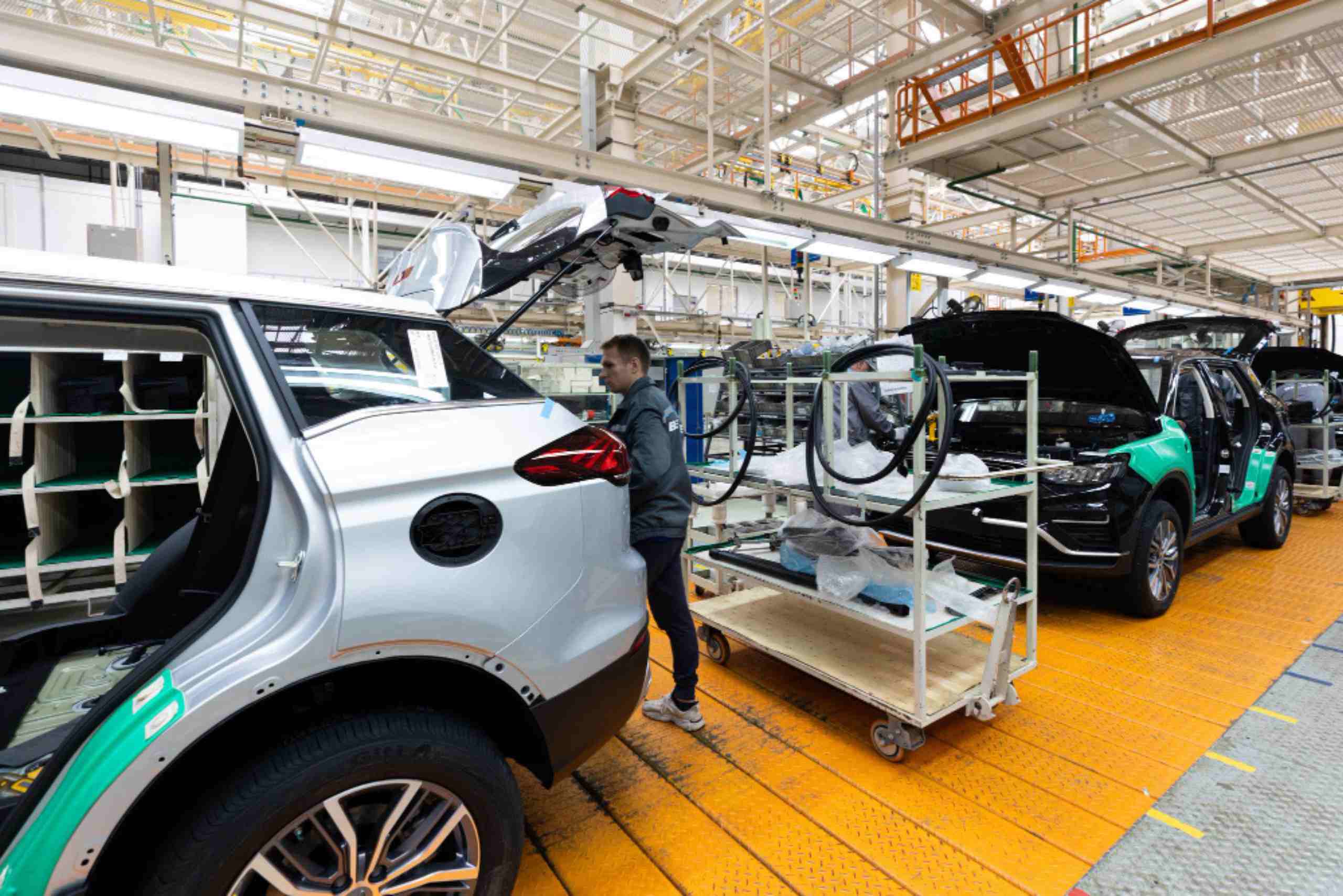
Image Source: Freepik
Possible Challenges of EV implementation in Nigeria
Price, power, poor policy, and bumpy roads are the real challenges that could hinder the effectiveness of this EV movement in Nigeria. Let’s face the real situation before we start getting excited about Tesla in Ojota, Lagos.
Power Issues
Nigeria cannot boast of a 24-hour uninterrupted power supply currently. As someone in the tech space who needs a reliable electricity supply, I struggle to have this basic need in Nigeria. And before anyone starts blabbering about “you should have an inverter since you work remotely”. The truth is that electricity should be a basic need, not a luxury, that we should still be struggling with in this age. How do we support EV charging stations nationwide with our epileptic grid?
Low Economy
Electric vehicles are not cheap. In a country where the population struggles greatly with fuel subsidy removal. Most people can barely afford transport fares, and many struggle to fuel their generators. So, what’s the actual feasibility of EV adoption in such a country?
Lack of Standard Policy
Policy is another crucial factor. Are we sure these Chinese Electric vehicle factories won’t be assembling parts and shipping them back to Nigeria? Nigeria’s government needs to ensure adequate regulatory frameworks are in place to ensure that the raw materials required are developed in Nigeria by trained locals. Otherwise, we might leave things to chance and find the cycle of dependency on imports repeating itself.
Bad Roads
Nigeria roads are another major concern. Are our roads even ready for this? Will the EVs be built to withstand the potholes on our road networks?
We need to rethink and rebuild our road systems to accommodate this change if we desire that this revolution will work.
The image below shows a lithium-ion battery.

Image Source: Canva
Final Thoughts
EV vehicles will radically reshape the future of transportation in Nigeria. Because, they will significantly offer a more sustainable transportation option for Nigerians, reducing noise pollution from cars on the road. At least I’ll rest from the nightmare of Danfo drivers’ bus noise haunting us in Lagos.
This move also indicates that Nigeria is entering into a new tech frontier. It is shifting away from raw resource export to value-added products.
More importantly, it gives the youths a new kind of employment pipeline where engineering graduates wouldn’t have to be bothered about being posted to schools to teach subjects they didn’t study during their NYSC program. Instead, they would have better establishments to practice real Engineering and clean energy systems.
So, even if we can’t afford Teslas yet, we know that Nigeria will soon be in the era of electric vehicles, and we can also join the conversation about the experience.
I believe if the challenges I discussed above are worked up on, the adoption in Nigeria wouldn’t be an hassle.
I hope you enjoyed reading this.
What’s your opinion about this development? Please share with me in the comments.
Listen to Travelradio. live for up-to-date travel news.