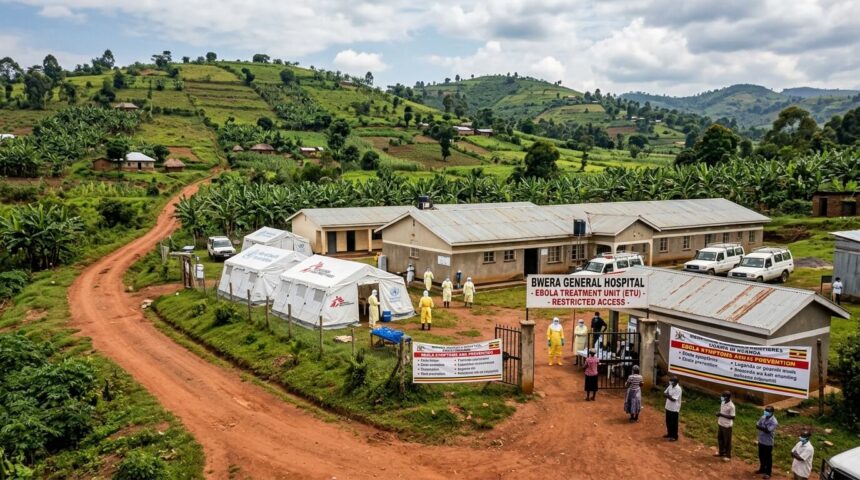
Have you booked tickets for gorilla trekking, the Virunga landscape, the mist that rolls through Bwindi at five in the morning, or the red dirt roads that connect Kampala to the border? A new Ebola outbreak in Africa has caused major changes to where you can and cannot go.
This is the news from the BBC.
On May 16, 2025, the US Department of State issued Level 4 Do Not Travel advisories for the Democratic Republic of Congo and Uganda, and a Level 3 Reconsider Travel advisory for Rwanda. Why? There has been an active outbreak of the Ebola Bundibugyo Virus in the region. The World Health Organisation has declared a global health emergency following more than 130 confirmed deaths.
This Ebola outbreak in Africa spreads through direct contact with an infected person or their bodily fluids.
For people who have booked travel with overland routes through eastern DRC, or a Rwanda circuit that swings through Volcanoes National Park, this Ebola outbreak in Africa matters now.
Understanding the Level 4 Travel Advisory During the Ebola Outbreak in Africa
A Level 4 advisory doesn’t mean the entire country is on fire. It means the US government, using its own risk calculus, has decided American citizens face risks serious enough to warrant the strongest possible warning. It is the Ebola outbreak in Africa has prompted these severe warnings.
What the Level 4 Travel Advisory Means for Your Trip in Uganda and Rwanda
Uganda is a large country. Kampala, Jinja, and the western highlands are not the same place as a border zone with active transmission. Rwanda, notably, received only a Level 3, a meaningful distinction that suggests proximity concern rather than confirmed spread.
None of that changes the fact that your travel insurer almost certainly just rewrote the fine print on your policy. And your airline’s force majeure clause didn’t get softer overnight.
Ebola Bundibugyo Virus: Risk Zones vs. Tourist Destinations
The uncomfortable thing about Ebola, about this strain in particular, is that the Bundibugyo variant has appeared before. It was first identified in Uganda’s Bundibugyo district in 2007. It killed roughly a quarter of those infected. It came back in the DRC in 2012. This Ebola outbreak in Africa tends to emerge in regions that share the geography most beloved by safari and ecotourism operators. That is dense forest corridors, cross-border river systems, and communities that straddle national park boundaries.
Is Gorilla Trekking Safe During the Ebola Outbreak in Africa?
The tourism economies of Uganda and Rwanda are not incidental to this conversation. Rwanda built a USD 500 million tourism sector largely on gorilla permits that cost USD 1,500 a day.
Uganda’s western national parks sustain conservation programs, anti-poaching units, and tens of thousands of jobs tied directly to foreign visitor arrivals. When advisories drop, bookings drop. When bookings drop, the funding infrastructure that keeps these ecosystems protected starts to stretch. The Ebola outbreak in Africa has ripple effects far beyond health concerns.
A blanket “cancel everything” response is not conservation. It is not solidarity with the communities that guide, host, and protect what travellers come to see. But neither is ignoring a WHO emergency declaration because you’ve already paid the deposit.
How the Ebola Outbreak in Africa Impacts Your Booked Safari
I know you may still want to travel to Uganda, Congo, or Rwanda despite this Ebola outbreak in Africa. You may have navigated yellow fever requirements, malaria prophylactics, and cholera advisories. Africa is not a monolith, and a disease outbreak in one province is not a continent-wide event. The Ebola outbreak in Africa requires this nuanced understanding.
However, Ebola is not malaria. It doesn’t respond to prophylactics. There is no pill you can take before boarding that can make you immune to Ebola. The 2014–2016 West Africa outbreak, a different strain, a different geography, killed more than 11,000 people, partly because the international community’s early response treated it like a problem that lived somewhere else.
The previous Ebola outbreak in Africa taught valuable lessons. The lesson from that outbreak was not that travel is dangerous. The lesson was that speed of information and speed of decision-making matter more than bravado.
Checking official guidance is not panic. It is the minimum a competent traveller does.
Current Status: DRC, Uganda, and Rwanda Travel Advisory Levels (May 2026)
So here is where things stand as of today.
The DRC advisory is Level 4.
Uganda is Level 4.
Rwanda is Level 3.
South Sudan also sits at Level 4.
The WHO’s emergency declaration means international health resources are being mobilised. That’s actually good news. It means surveillance is being scaled up, not that containment has already failed. The response to this Ebola outbreak in Africa is being coordinated internationally.
If you have a trip booked to Rwanda in the next 60 days, call your operator today, not to cancel, but to ask what their monitoring protocol is and what the rebooking conditions look like. If your itinerary includes eastern Uganda or any DRC corridor, get current information from your government’s travel advisory page and from operators on the ground. Do not rely on what was true three weeks ago.
The gorillas will still be there when this resolves. The question is whether you’ll go in with your eyes open or with the outdated assumption that a booking confirmation is the same thing as a safety clearance. The Ebola outbreak in Africa demands informed decision-making.