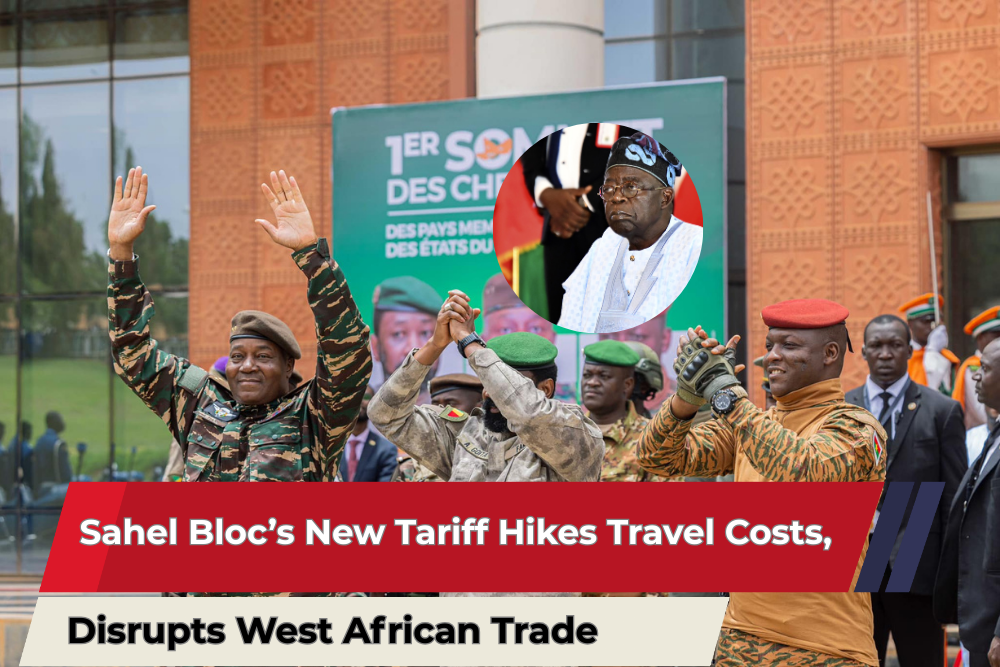
The military-led governments of Mali, Burkina Faso, and Niger have imposed a 0.5% import duty on goods from ECOWAS nations, marking a major shift in West Africa’s economic landscape. The decision, which takes immediate effect, threatens regional trade stability and raises concerns about increased travel costs and economic uncertainty for African businesses and travelers.
This tariff follows the Sahel states’ withdrawal from ECOWAS in 2024, signalling a further breakdown in West Africa’s once-integrated economic framework. Key ECOWAS economies such as Nigeria, Ghana, and Côte d’Ivoire now face new trade barriers when dealing with their northern neighbours.
Rising Costs and New Barriers for African Travelers
For travellers and businesses operating across West Africa, the new import tax is expected to drive up costs and complicate cross-border movement.
- Increased Travel Expenses: The cost of transportation, accommodation, and essential goods such as fuel and food is expected to rise as import duties impact pricing.
- Border and Visa Uncertainty: The Sahel bloc has introduced a biometric passport, raising concerns that ECOWAS travelers may soon face new visa restrictions when visiting Mali, Burkina Faso, or Niger.
- Trade Disruptions: Cross-border traders, a significant portion of whom are women, may struggle with higher logistics costs and delayed shipments due to new customs duties.
“The introduction of this import duty is a direct response to political tensions, but it will have real economic consequences for everyday Africans who rely on regional trade and mobility,”
said economic analyst Kwame Ofori.
Political and Economic Fallout
The Sahel bloc’s departure from ECOWAS in January 2024 was triggered by the sanctions imposed following military coups in the region. Since then, the alliance has taken steps to build economic self-sufficiency, though it remains dependent on ECOWAS nations for essential goods and trade.
In addition to introducing new tariffs, the Sahel states have:
- Strengthened ties with Russia while expelling Western military forces.
- Launched a biometric passport exclusive to the Alliance of Sahel States (AES).
- Promoted economic independence, despite relying on ECOWAS for key imports.
What’s Next for West Africa?
Diplomatic resolution remains critical to preventing further economic fragmentation in West Africa. Analysts warn that prolonged tensions between the Sahel bloc and ECOWAS could lead to:
- Rising travel costs and business expenses in the region.
- Potential visa restrictions between ECOWAS and Sahel nations.
- Weakened regional trade, affecting African entrepreneurs and traders.
With the future of regional integration uncertain, African travelers and business owners must prepare for a more complex trade and mobility landscape. The coming months will determine whether West Africa can navigate this growing divide or face deeper economic instability.