Maputo, Malawi – The promise of conservation in Malawi has turned into a nightmare for rural communities along the Malawi-Zambia border, as they launch legal action against the International Fund for Animal Welfare (IFAW) over a disastrous elephant relocation. The movement of 263 elephants to Kasungu National Park, initially hailed as a conservation victory, has resulted in at least 12 deaths, numerous injuries, and widespread devastation, exposing the often-overlooked human cost of such projects.
Residents, represented by British law firm Leigh Day, are demanding that IFAW take responsibility for the “irreparable harms” caused by the relocated elephants, which have consistently breached park boundaries.
“We’re not against conservation,” stated a local farmer, “We just want to live safely in our homes again.”
The scale of the crisis is immense. A local non-profit has documented over 11,000 individuals suffering losses, with damages estimated in the millions of dollars. Fields, vital for food security, have been decimated, plunging already vulnerable communities into further hardship. The elephants, consuming up to 150 kilograms (330 pounds) of vegetation and 200 liters of water daily, have become a formidable force of destruction.
“The failure to properly assess and mitigate the risks before the relocation has had catastrophic consequences,”
says a legal representative from Leigh Day. The communities assert that IFAW, despite claiming a limited role of financial and technical support, must be held accountable for the outcomes of the project.
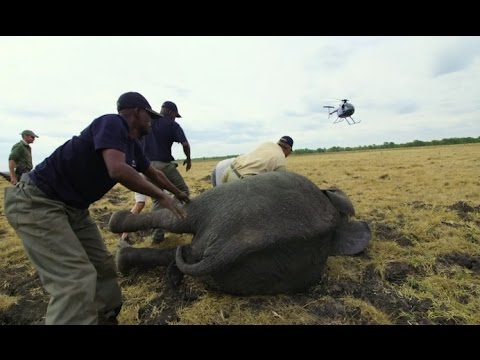
IFAW, in its defense, maintains that the responsibility for managing national parks and wildlife lies with the Malawi government. However, the Malawi Department of National Parks and Wildlife has yet to address the mounting concerns of the affected residents.
This situation exposes a critical issue: the need for conservation efforts to prioritize the rights and safety of local African communities. It mirrors broader challenges faced across the continent, where increasing wildlife populations, while a conservation success, often lead to heightened human-wildlife conflicts. Countries like Botswana, grappling with similar issues, have resorted to controversial methods like culling, sparking international debate.
For Black and African travelers, this story underscores the importance of understanding the complexities of conservation efforts when engaging with wildlife tourism. It highlights the need to support initiatives that prioritize community involvement and sustainable solutions. It also serves as a stark reminder that travel experiences should not come at the expense of local livelihoods and safety.
The legal battle now looming over IFAW will serve as a crucial test case for accountability in international conservation. It will determine whether organizations can be held responsible for the unintended consequences of their projects on African communities, and whether the voices of those most affected will finally be heard.