Would you ever believe it if someone told you that UK water isn’t safe to drink? It sounds impossible. After all, the UK is known for its strict water regulations. But here’s the shocking truth: recent reports have shown that some sources of the country’s water have been exposed to toxic chemicals.
In this blog post, I’ll uncover some facts about UK water contamination, what’s being done and how you can stay safe as a traveler therein.
Perfluoroalkyl and Polyfluoroalkyl (PFAS) ‘Forever Chemicals’: The Invisible Threat in Your Water
According to the National Institute of Environmental Health Sciences, per- and poly-fluoroalkyl substances (PFAS) are a large, complex group of synthetic chemicals used in everyday products. Per- and poly-fluoroalkyl substances are often called “forever chemicals” because they build up over time and break down slowly. People are most likely exposed to these chemicals by consuming per- and poly-fluoroalkyl substance-contaminated water or food, using products made with these chemicals, or breathing air containing them. Surprisingly, per- and poly-fluoroalkyl substances are commonly used in industries that make life easier.
Below are some of the industries and products where per- and poly-fluoroalkyl substances are used.
- Aerospace
- Automotive industry
- Construction industry
- Electronics industry
- Nonstick cookware
- Grease-resistant food packaging
- Waterproof clothing
So, why should you be concerned about per- and polyfluoroalkyl substances? Exposure to these chemicals poses health-related risks for us. Below are some of these health risks.
- Thyroid disease
- Liver damage
- Fertility issues
- Abnormal fetal development
- Testicular cancer
- Increased cholesterol levels
How Per- and Poly-fluoroalkyl Substance Contamination has been Found in UK Water Sources
About 35% and 37% of watercourses tested in England and Wales contain medium or high-risk levels of perfluorooctane sulfonate (PFOS) and perfluorooctanoic acid (PFOA), respectively, which are both types of per- and polyfluoroalkyl substances. Below are some sources of the contaminants.
- Sewage Spills: Three UK water companies were fined £168 million for illegal sewage discharges into rivers and the sea, harming the environment and customers.
- Agricultural Runoff: Farming pollution impacts 40% of UK water bodies, contributing to poor water quality.
- Transport Runoff: Polluted surface water picks up contaminants from vehicles such as oil spills, tire and brake wear, etc.
- Industrial Chemicals, including heavy metals, per- and polyfluoroalkyl substances, and solvents.
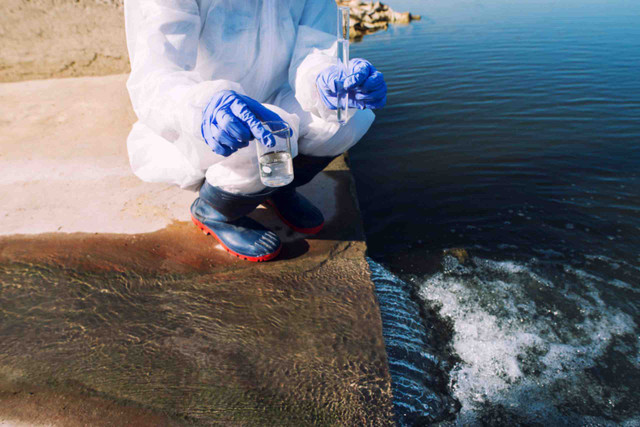
The image below shows a contaminated water body.

Image Source: Pixabay
Is UK Tap Water Safe to Drink? The Truth Unveiled
According to Discover Water, British water is one of the best water supplies in the world, with a rating of 99.96%. However, detecting per- and poly-fluoroalkyl (PFAS) “forever chemicals” in some water sources has raised significant concerns about UK drinking water safety.
UK water is still regularly monitored by the Drinking Water Inspectorate (DWI) to ensure it is clean and safe to drink. Although certain minerals are inevitably present in tap water, some are deliberately added to improve water quality, while others occur naturally. Below are some of the minerals and chemicals found in UK tap water.
- Chlorine: Chlorine is often used as a natural agent to kill harmful bacteria. However, high concentrations can result in an unpleasant taste and smell.
- Limescale: Often found in areas with hard water, limescale comprises calcium and magnesium carbonate. It usually forms when water is heated, producing a chalky substance that is not harmful to drink but may be unsightly.
- Fluoride: Fluoride occurs naturally but is sometimes artificially added. However, some argue that excessive fluoride consumption is unhealthy.
- Lead: Rarely found in water, lead can sometimes be absorbed from old pipes. It is highly poisonous when ingested and is usually found in areas with soft water.
In a discussion among the Nigerians in the UK community on X, a user expressed concern after noticing that people were buying bottled water instead of drinking tap water. However, an influencer responded to reassure him that tap water in the UK is generally safe and subject to strict quality regulations. He also advised that a water filter could reduce mineral content depending on the area – especially where the water is hard.
Am just seeing that people are buying bottled water in this country instead of the regular tap water? Egbami have i been drinking rubbish since ni 🤔🤔
— Abeem (@AbeemAbeem) February 9, 2025Tap water in the UK is generally safe to drink. It is among the cleanest in the world and is subject to strict quality regulations set by the Drinking Water Inspectorate (DWI). The water is treated to remove harmful bacteria, chemicals, and other contaminants.
However, in some…
— Sola Mathew™ (@GlobalSola) February 11, 2025
Image Source: Freepik
What’s Being Done to Fix the UK Water Crisis?
The UK government actively addresses the water crisis through regulations and policies to improve water safety. Below are some of the policies and regulations.
- Companies are expected to conduct regular inspections of hot and cold water supplies and adhere to improved testing protocols to detect and prevent contaminants effectively.
- Companies must use better materials and fittings in water systems to protect against potential pollutants entering the water supply.
- Companies are expected to limit the levels of per- and polyfluoroalkyl substances (PFAS) in drinking water.
- Water companies are required to install real-time monitors at every sewage outlet, with data independently scrutinized.
- Water companies will face severe fines for pollution and water resources offenses.
As much as regulatory authorities monitor and ensure water safety, as an individual, a little action from you can also make a difference. Below are some ways to also ensure you’re drinking safe water.
- You can ascertain the safety of the water in your area by asking your water provider for data on PFAS testing. If they have no data, encourage them to monitor for a wider range of these chemicals.
- You can also invest in-home water filters to reduce contamination levels in your drinking water.
- You can also consider bottled water if you’re in high-risk areas.
Final thoughts
Despite concerns about contaminants like PFAS, UK tap water is generally safe to drink due to strict monitoring and treatment processes. However, pollution from industrial runoff, sewage spills, and agricultural waste remains challenging, prompting government policies to improve water safety.
As a traveler visiting the UK, I’ll advise you to stay informed by checking local water quality reports and using water filters if necessary. As much as regulatory authorities are working to ensure water safety, take simple precautions to ensure clean drinking water for yourself.
Follow Travelradio.live for more amazing travel tips.