This is the deepest FIFA World Cup 2026 travel guide for Africans:
The referee had his FIFA accreditation and his visa was stamped and ready, but he wasn’t allowed to do his job. Omar Artan, ranked by FIFA as Africa’s top referee in 2025, was turned away at Miami International Airport and sent back to Istanbul just because of his Somali passport.
That story, which broke in the opening days of the tournament, is the most honest summary of what attending the FIFA World Cup 2026 looks like if you are travelling from Africa.
This FIFA World Cup 2026 travel guide gives you the practical truth so you can make informed decisions rather than expensive ones.
TL;DR About FIFA World Cup 2026 travel guide
- This FIFA World Cup 2026 travel guide covers the tournament running June 11 – July 19, 2026, across 16 cities in the USA, Canada, and Mexico is the largest tournament in history with 48 teams.
- The US Trump-era travel ban hits 39 countries, including Nigeria, Senegal, Côte d’Ivoire, and Ghana.
- African fans face visa denial rates or severe backlogs even with match tickets in hand.
- FIFA PASS gives ticket holders priority interview slots, but does NOT guarantee a visa.
- Mexico and Canada are significantly easier entry points and cheaper to stay in.
- Hotel prices across US host cities have surged by an average of 328% compared to non-tournament dates.

FIFA World Cup 2026 Travel Guide: Host Cities and Venues
The 2026 FIFA World Cup is co-hosted across 16 cities in three countries, running from June 11 to July 19, 2026. The final is set for MetLife Stadium in New Jersey on July 19, with a capacity of 82,500 seats.
United States (11 cities — 78 of 80 matches, including all knockout games from the quarterfinals onward):
Atlanta, Boston, Dallas, Houston, Kansas City, Los Angeles, Miami, New York/New Jersey, Philadelphia, San Francisco Bay Area, Seattle.
Mexico (3 cities — 13 matches):
Mexico City (Estadio Azteca), Guadalajara (Estadio Akron), Monterrey (Estadio BBVA)
Canada (2 cities — 13 matches):
Toronto (BMO Field), Vancouver (BC Place)
FIFA has organised the venues into three regional clusters to reduce cross-border travel. There’s a Western cluster (Vancouver, Seattle, San Francisco, Los Angeles, Guadalajara). There’s a Central cluster (Houston, Dallas, Kansas City, Atlanta, Monterrey, Mexico City). And an Eastern cluster (New York/New Jersey, Boston, Philadelphia, Miami, Toronto).
This is the first World Cup held across three nations simultaneously. And that structure is supposed to determine how you plan your visa and travel strategy.
Which Countries Are Banned or Restricted From Attending the US Matches?
The United States’ current travel ban framework, expanded under Presidential Proclamation 10998, effective January 1, 2026, now covers 39 countries in total. For fans from affected nations, attending US matches is either legally blocked or practically impossible due to visa denial rates.
The ban divides into two tiers:
Full entry suspension (B-1/B-2 tourist visas blocked entirely):
Burkina Faso, Mali, Niger, South Sudan, Syria, Laos, Sierra Leone, Somalia, and others. Fans from these nations cannot receive US tourist visas under any circumstances, including World Cup attendance.
Partial restrictions (visa applications accepted but systematically difficult):
Nigeria, Senegal, Côte d’Ivoire, Ghana, Angola, Benin, Gabon, The Gambia, Malawi, Mauritania, Tanzania, Togo, Zambia, Zimbabwe, and others.
Understanding these restrictions is a critical part of this FIFA World Cup 2026 travel guide. Players and coaching staff from all competing nations are exempt under a FIFA-negotiated carve-out. Fans are not exempt.
The numbers tell the story clearly. Of 150 Ghanaian fans who applied for World Cup visas, 147 were rejected. Embassy backlogs in Lagos, Accra, Rabat, and Cairo stretched to months even before the tournament began. Senegal and Côte d’Ivoire, both qualifying nations, by the way, saw their own fans effectively locked out of the majority of matches. The countries carrying the heaviest burden under these restrictions are, disproportionately, Muslim-majority, Black-majority, or African nations.
What About Nigeria Specifically?
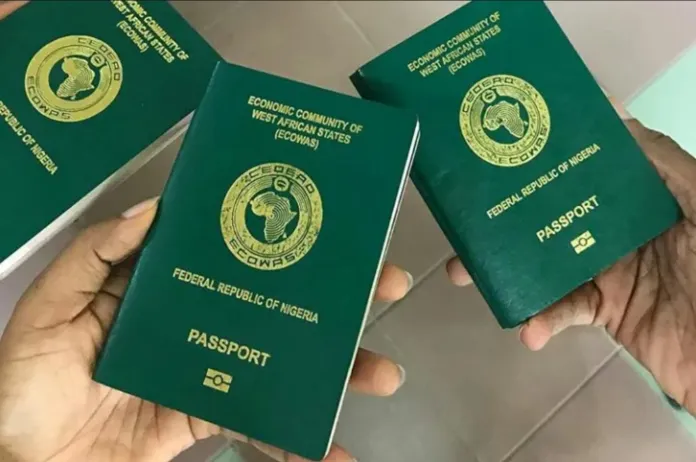
Nigeria sits on the partial restriction list under Proclamation 10998. Nigeria also did not qualify for the 2026 tournament. That removes the team-linked travel facilitation that qualifying nations’ fans sometimes access.
For Nigerian fans attending as neutrals or supporting another team, the standard B-1/B-2 visitor visa process applies, with no special facilitation and with the structural disadvantage of the partial restriction classification in the background.
What Is FIFA PASS and Does It Actually Help?
FIFA PASS (Priority Appointment Scheduling System) is a joint programme between FIFA and the US State Department that gives World Cup ticket holders priority access to visa interview appointment slots at US embassies worldwide.
As highlighted in this FIFA World Cup 2026 travel guide, here is how it works:
- Log in to your FIFA.com account and submit the FIFA PASS opt-in form.
- Complete your DS-160 visa application, upload your photo, and pay the visa fee.
- Schedule your interview using the priority appointment system.
What FIFA PASS does: Gets you faster access to an interview slot.
However, the FIFA PASS does not guarantee a visa. The State Department itself states clearly that applicants subject to Presidential Proclamation 10998 “may be ineligible for visa issuance or admission to the United States” even after attending their interview. A ticket and a PASS opt-in change nothing about your country’s restriction status.
FIFA’s communications around PASS created confusion. Many fans interpreted it as a special visa category or a near-guarantee of entry. Multiple reports from advocacy groups and travel organisations confirm that African fans have gone through the PASS process, attended interviews, and still received denials.
The visa bond waiver (a separate Trump administration measure) was available only to nationals of competing countries who purchased tickets before April 15, 2026, and opted into PASS by that date, and only for those “otherwise fully eligible for a US visa.” It does not override the ban.
Should African Fans Skip the US Matches and Target Mexico or Canada Instead?
For fans from restricted countries, Mexico and Canada are the strategically sound alternatives. When building your FIFA World Cup 2026 travel guide itinerary, these alternatives are essential.
Mexico: Easiest Entry Route for Nigerian Passport Holders
Mexican matches are in Mexico City, Guadalajara, and Monterrey. Mexico does not operate a specific World Cup visa. Standard tourist entry rules apply.
However, Nigerian passport holders can enter Mexico without a separate Mexican visa if they hold a valid US B-1/B-2 visa or a valid Canadian TRV (Temporary Resident Visa). Once either of those documents is in hand, Mexico requires no additional application and no additional fee.
If you secure a Canadian TRV, you can attend matches in both Toronto/Vancouver and all three Mexican cities. That means 26 of the 80 total matches, without ever applying for a US visa.
Nationalities from countries that are permanent residents of Canada, the US, Japan, the UK, a Schengen Area country, or Pacific Alliance member states also enter Mexico visa-free.
Canada: Separate Application, Significantly Less Hostile
Canada is not subject to the US travel ban framework. The Canadian Temporary Resident Visa is a separate application processed by Immigration, Refugees and Citizenship Canada (IRCC). Canada’s denial rates for Nigerian applicants are not equivalent to the current US situation.
The eTA (Electronic Travel Authorisation) applies to Visa Waiver Program nationals. Nigerian passport holders require the full TRV.
Processing time for the Canadian TRV runs approximately 6 to 12 weeks. If you are planning to attend any 2026 World Cup matches, apply for the Canadian TRV now if you have not already done so.
How Expensive Are Hotels? A FIFA World Cup 2026 Travel Guide Breakdown
Hotel prices across North American host cities have increased by an average of 328% during the tournament window compared to three weeks earlier, according to hospitality data from Lighthouse.
The average total cost of attendance per person across all 11 US host cities is approximately $5,440, including ticket, hotel, food, and local transport, not including flights.
The cheapest and most expensive host cities by average nightly hotel rate:
| Host City | Average Nightly Hotel Rate (Tournament Window) |
|---|---|
| Houston, USA | ~$173 |
| Monterrey, Mexico | ~$207 |
| Guadalajara, Mexico | ~$230 |
| Mexico City, Mexico | ~$267 |
| San Francisco Bay Area, USA | ~$270 |
| Kansas City, USA | ~$335 |
| Dallas/Arlington, USA | ~$380 |
| Atlanta, USA | ~$370 |
| Miami, USA | $435–500 |
| Philadelphia, USA | ~$440 |
| Los Angeles, USA | ~$450 |
| Boston, USA | ~$535 |
| New York/New Jersey, USA | ~$540 |
| Seattle, USA | ~$565 |
| Toronto, Canada | ~$299 |
| Vancouver, Canada | ~$404 |
Sources: Lighthouse hospitality data, Hotels.com, Expedia Research, January–April 2026.
Mexico dominates in affordability. Skyscanner’s full trip cost analysis (flights plus three hotel nights) places Guadalajara at $856 per person. Monterrey follows at $926. All three Mexican host cities rank in the top five most affordable options globally.
For African fans, this is where the economics and the visa strategy align. If you cannot get a US visa, targeting Mexico via a Canadian TRV is cheaper.
Match-Day Price Surges
Hotels charge a 31.44% average premium on nights when matches are played at their city’s stadium, compared to non-match nights. Vancouver carries the steepest surge. Houston and Mexico are the most predictable and affordable.
One practical option is booking through Crewfare or similar companies that hold room blocks specifically for World Cup fans, which lock in rates below market in cities like Seattle, Dallas, Atlanta, and Miami. Most of those blocks are now sold out, but residual inventory sometimes surfaces.
What Do Official FIFA Hospitality Packages Cost?
For fans who want the full VIP experience, On Location is the sole authorised FIFA hospitality provider for World Cup 2026. All official hospitality packages must be purchased through FIFA.com/hospitality or On Location’s official channels.
Package pricing runs from approximately $5,300 to $73,200+ per person, depending on tier:
- Entry-level packages (~$5,300+): Premium seating, access to a dedicated hospitality lounge, food and beverage service pre- and post-match, air-conditioned facilities separate from general admission.
- Mid-tier packages (~$15,000–$30,000): Shared suite access, multi-city hotel accommodation, ground transfers, and exclusive experiences.
- Top-tier/private suites ($30,000–$73,200+): Private suite access, hotel accommodation across multiple cities, stadium tours, meet-and-greet experiences with football legends.
These prices are per person per match package, not per tournament. For a neutral attending two or three matches with hospitality, the cost rapidly exceeds $20,000. Any comprehensive FIFA World Cup 2026 travel guide must account for these premium costs.
The ticket-only market for standard match tickets runs from approximately $400 for group stage matches to $10,990 for the final.
What Is the Cheapest Realistic World Cup 2026 Trip for an African Fan?
To conclude this FIFA World Cup 2026 travel guide, based on current data, the most realistic affordable World Cup 2026 trip for a fan from a restricted African country, targeting matches in Mexico via a Canadian TRV, breaks down roughly as follows:
- Canadian TRV application fee: ~$185 CAD (approximately $135 USD)
- Round-trip flight to Guadalajara or Mexico City from Lagos via a hub: $900–$1,400 depending on routing and booking date
- Hotel in Guadalajara for 3 nights (tournament window): ~$250–$350
- Match ticket (group stage): $400+ face value
- Local transport, food, and incidentals: $150–$300
Estimated total: $1,800–$2,500 USD for a realistic 3-night, 1-match trip to a Mexican host city — not including the visa denial risk on the US leg.
This is significantly more affordable than any US host city equivalent.
Frequently Asked Questions
Does a FIFA World Cup 2026 ticket guarantee entry to the USA?
No. As noted in this FIFA World Cup 2026 travel guide, FIFA states explicitly that a match ticket does not guarantee a visa or admission to the United States, Canada, or Mexico. Each country’s immigration rules apply independently.
What countries are on the US World Cup 2026 travel ban list?
The US travel ban now covers 39 countries across two proclamations. Countries with full tourist visa suspensions include Syria, Mali, Niger, Burkina Faso, South Sudan, Somalia, and others. Countries with partial restrictions, where visas can be applied for but face systematic difficulties, include Nigeria, Senegal, Côte d’Ivoire, Ghana, Angola, Benin, Gabon, The Gambia, Tanzania, Zambia, and Zimbabwe, among others.
Can Nigerian fans attend the World Cup at all?
Yes, but strategically. Nigerian passport holders who secure a Canadian TRV can attend the 13 matches in Canada (Toronto and Vancouver) and can also enter Mexico without a separate visa to attend the 13 Mexican matches, covering 26 of 80 total matches. The US matches require a separate B-1/B-2 visa application, which faces significant headwinds given Nigeria’s partial restriction status.
What is the FIFA PASS and does it bypass the travel ban?
FIFA PASS provides priority visa interview appointment access to ticket holders who need a US visa. It does not bypass the travel ban, does not guarantee visa approval, and does not create a separate visa category. Applicants subject to Presidential Proclamation 10998 remain subject to potential denial even after completing a PASS-linked interview.
Which World Cup 2026 host city is cheapest for accommodation?
Houston, Texas, is the cheapest US host city, with average hotel rates around $173 per night during the tournament window and a matchday index score of 94.66 out of 100. Among all 16 cities, Guadalajara, Mexico, offers the lowest overall trip cost at approximately $856 per person (three nights plus flights).
Where is the World Cup 2026 final being played?
The final takes place on July 19, 2026, at MetLife Stadium in East Rutherford, New Jersey, which has a capacity of 82,500 seats.
Are players from banned countries allowed to compete?
Yes. FIFA negotiated a carve-out for athletes, coaches, support staff, and immediate family members of competing nations. The travel bans apply to fans, journalists, and other non-accredited individuals.
Which African teams qualified for World Cup 2026?
CAF (the Confederation of African Football) received 9.5 qualification spots in the 48-team format. African nations that qualified include Morocco, Senegal, Egypt, Ghana, Côte d’Ivoire, Algeria, Tunisia, and others. Nigeria did not qualify.