We have covered many safari travel stories on Travel Radio Live. And we have covered luxury travel too. And I’m talking about the classic ultra-luxury African safari. And if there is one thing about luxury safari travel, it is exclusivity and an eye-watering price tag. I mean, it is for those who are loaded. You would think a “pay what you can safari” would be something ugly until…
This luxury safari lodge in South Africa has launched a pay-what-you-can initiative.
I mean, seriously, a luxury safari resort is asking its guests to pay exactly what they can afford.
What Will You Pay for Luxury?
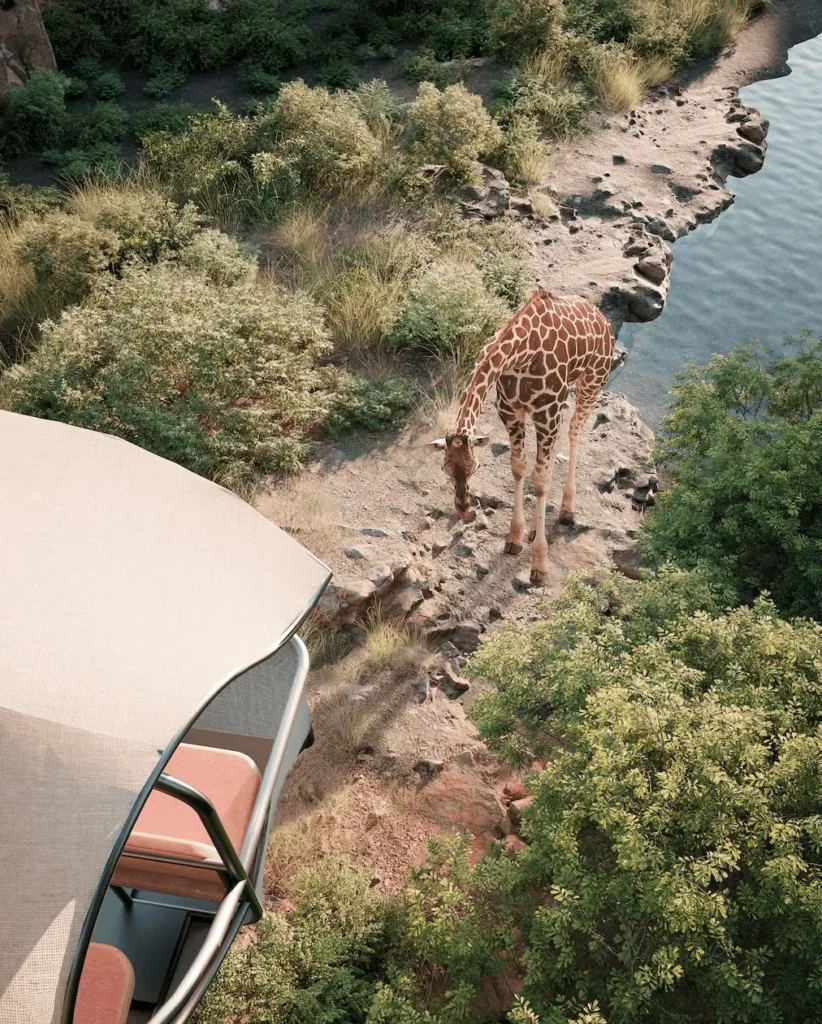
Imagine waking up in an architectural masterpiece perched on a rugged cliffside, overlooking the sweeping, primordial valleys of South Africa’s northernmost reaches.
By day, you track elusive leopards alongside master conservation trackers. By night, you indulge in fine farm-to-table cuisine under a brilliant canvas of the Southern hemisphere’s stars. Typically, an all-inclusive experience of this calibre easily commands upwards of $1,800 per person, per night.
Yet, Few & Far Luvhondo, a newly celebrated eco-luxury retreat nestled deep within Limpopo’s Soutpansberg Mountains, has completely disrupted the travel ecosystem.
They launched a “Nature Has No Price Tag” campaign. And they are extending an open invitation to global travellers to come, enjoy luxury and contribute whatever they can. This pay-what-you-can safari initiative is making headlines worldwide.
What’s in a Pay What You Can Safari Experience?
To many hospitality analysts, pairing “ultra-luxury hospitality” with a “pay-what-you-can” model sounds like commercial suicide.
However, the visionaries behind Few & Far are quick to clarify that this is not a flash discount, a cheap marketing gimmick, or a desperate effort to clear out unbooked rooms. Instead, it is a deeply calculated, application-based trust system designed to reframe how humanity assigns value to travel, conservation, and planetary connection. This pay-what-you-can safari model represents a fundamental shift in luxury travel.
How the Pay What You Can Safari South Africa Program Works:
The initiative works through an intentional, transparent application process. Prospective travellers submit a mobile-friendly application detailing their preferred travel dates, their party size, what draws them specifically to this pristine pocket of wilderness, and an honest declaration of what they are capable of contributing financially.
Applications are assessed on a rolling basis. Those who are selected receive the uncompromised, complete luxury lodge experience. This includes staying in one of the property’s six ultra-exclusive tented Cliff Suites, fully guided game drives in cutting-edge electric safari vehicles, guided bushwalks, e-bike excursions, and bespoke cultural day trips to the nearby UNESCO World Heritage site, Mapungubwe National Park.
“Travel isn’t a frivolous indulgence — it’s a vital act of connection. We launched this initiative with the belief that when you truly experience a place, you begin to care — and when you care, you naturally want to give back. By removing cost as a barrier, we’re making transformative, purpose-led travel more accessible without diluting its impact.” > — Sarah Dusek, Co-Founder of Few & Far Luvhondo
To Apply:
You have to fill out an application via the lodge’s website.
The Criteria: You will write your preferred travel windows, how many of you are coming, what deeply draws you to this remote pocket of wilderness, and an honest declaration of what you are willing to pay.
If you are selected, you will receive the complete, unwatered-down luxury experience like those in resorts that pay thousands of dollars per night. This is the promise of the pay what you can safari program.
Why This Pay What You Can Safari Initiative Matters in Today’s Travel Climate
The launch of the pay what you can safari initiative comes at a critical time for global tourism. Globally, travellers are facing major economic headwinds. Right now, we are still fighting about rising flight costs, relentless inflation, and shifting socioeconomic baselines that have compressed household vacation budgets, forcing millions of people to stay home.
Nowadays, elite wild spaces are becoming an exclusive playground strictly reserved for the ultra-wealthy. And the global connection to conservation dangerously narrows.
If everyday citizens cannot experience the planet’s great wild spaces, they are far less likely to champion or fund the complex battles required to protect them.
By removing rigid pricing barriers, Few & Far Luvhondo aims to invite a diverse, passionate global ecosystem of artists, scientists, educators, and advocates into the conservation dialogue. That will foster global empathy without compromising on the luxury experience. This pay what you can safari approach is revolutionary.
Few & Far Luvhondo: The Pay What You Can Safari South Africa Sustainability Metrics
To understand how the lodge can support this flexible pricing model, one must look at its foundational design as a regenerative project:
Location: Soutpansberg Mountains, Limpopo, South Africa (set inside the critical UNESCO Vhembe Biosphere Reserve).
Carbon Footprint: Certified carbon-negative; operates as an active, Verra-Registered Carbon Project.
Ecological Footprint: Actively protecting and restoring over 100,000 hectares of high-biodiversity wilderness.
Species Protection: Partners directly with the Endangered Wildlife Trust and the Panthera Project to strictly monitor and protect indigenous leopard populations.
Resource Management: 100% powered by self-sustaining renewable energy with zero single-use plastics on-site.
The pay what you can safari model is backed by serious sustainability credentials.
Redefining Luxury Safari Travel: Trust as the Ultimate Currency
For decades, the luxury travel sector has measured its prestige by the height of its barriers. They define exclusivity by who they manage to keep out. Few & Far is turning this philosophy completely on its head, proving that true 21st-century luxury can be anchored in trust, mutual generosity, and shared structural purpose.
Guests staying under the “Nature Has No Price Tag” model are met with the same warmth and high-touch hospitality as any retail guest. The underlying psychology is that when humans are treated with radical trust, they step up.
Guests frequently become lifelong ambassadors for the lodge’s ecosystem, often contributing emotionally, creatively, or through long-term advocacy to the lodge’s environmental goal of capturing roughly 100,000 tons of carbon annually. This is the power of the pay what you can safari philosophy.
Is This Pay What You Can Safari South Africa Model the Future of Global Tourism?
While it is unrealistic to expect massive, corporate hotel chains to eliminate fixed pricing tomorrow, this historic campaign represents a tipping point toward a conscious, regenerative hospitality market. Modern travellers, particularly younger generational cohorts, are demanding radical transparency. They want to know that their dollars are directly uplifting local communities and preserving fragile ecosystems.
By proving that a top-tier, carbon-negative safari lodge can comfortably operate by letting guests self-value their stay, Few & Far is setting a monumental precedent. It challenges the broader travel trade to look past short-term quarterly margins and look toward long-term ecological and human connections. The pay what you can safari model could reshape the industry.