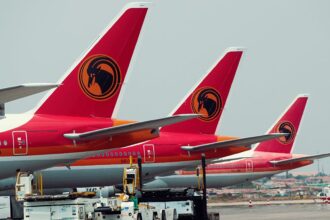
The Democratic Republic of the Congo is undergoing a major aviation turnaround, shedding its long-standing reputation for unsafe airspace and embracing modern, reliable air travel systems.
Backed by the African Development Bank Group, the transformation is already visible at N’djili International Airport the country’s main aviation gateway where upgraded infrastructure and cutting-edge technology are improving safety and efficiency.
Not long ago, pilots described Congolese airspace as a “black hole” due to poor navigation systems and weak communication networks. Today, that narrative is shifting fast.
Aviation Upgrade
The progress is driven by the Priority Aviation Safety Project (PPSA II), financed with about $105 million from the AfDB in partnership with the Congolese government.
Key upgrades include:
- Advanced aerial surveillance systems (TopSky technology)
- Controller-Pilot Data Link Communications (CPDLC)
- New airport fire stations
- Independent power supply systems
These improvements have brought operations at N’djili closer to the standards of major African aviation hubs.
Impact
The aviation overhaul extends beyond the capital.
Airports in Kisangani, Kindu, and Mbuji-Mayi have also benefited, including a fully rehabilitated 2.3-kilometre runway in Mbuji-Mayi, improving both passenger travel and cargo logistics.
In addition, eight new radio communication channels have been installed to strengthen air traffic coordination and safety across the country.
READ ALSO: U.S. Backing of Lobito Corridor Could Reshape Travel and Trade for Africa
Changing Perceptions
For years, safety concerns have limited the growth of aviation in parts of Africa, affecting connectivity, trade, and tourism.
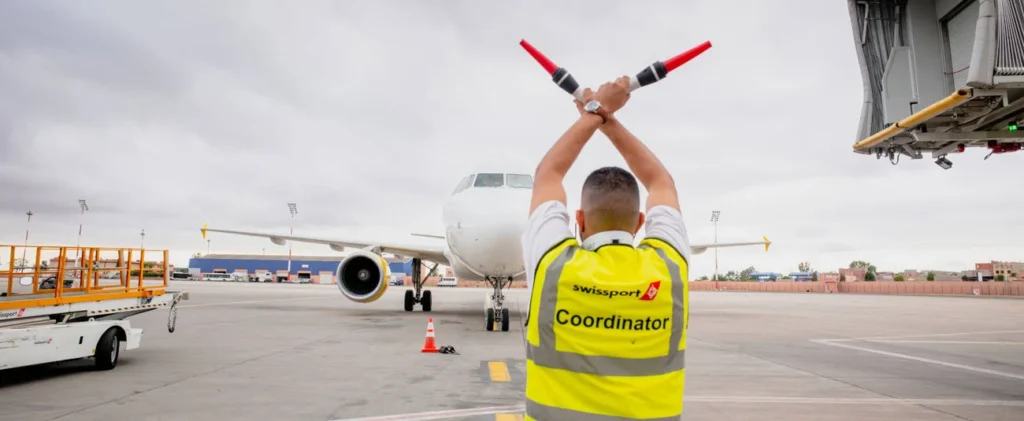
But the reforms in DR Congo reflect a broader shift. Air traffic controllers now operate with modern systems, and aviation professionals are receiving enhanced training boosting confidence among pilots and international carriers.
Officials say the country’s airspace is no longer the “black hole” it once was, but a functional and increasingly reliable aviation environment.
Economic and Social Benefits
The aviation improvements are already delivering wider economic impact:
- Increased flight traffic and connectivity
- More efficient business logistics
- Better access to emergency medical transport
- Stronger regional integration
Reliable air transport is also opening up opportunities for trade and investment, especially in remote parts of the country.
What Comes Next

Future phases of the project will expand radar coverage, deepen infrastructure upgrades, and continue training aviation personnel.
With safer skies and growing traffic, DR Congo is positioning itself as a more credible player in Africa’s aviation ecosystem one that supports economic growth, connectivity, and national sovereignty.