German leisure carrier Condor is stepping up capacity on its busy Frankfurt–Johannesburg corridor, adding a fourth weekly flight from mid-May 2026. The shift from three to four rotations per week brings more breathing room on seats and gives travellers extra flexibility, especially during the high-demand dry season when safari traffic peaks.
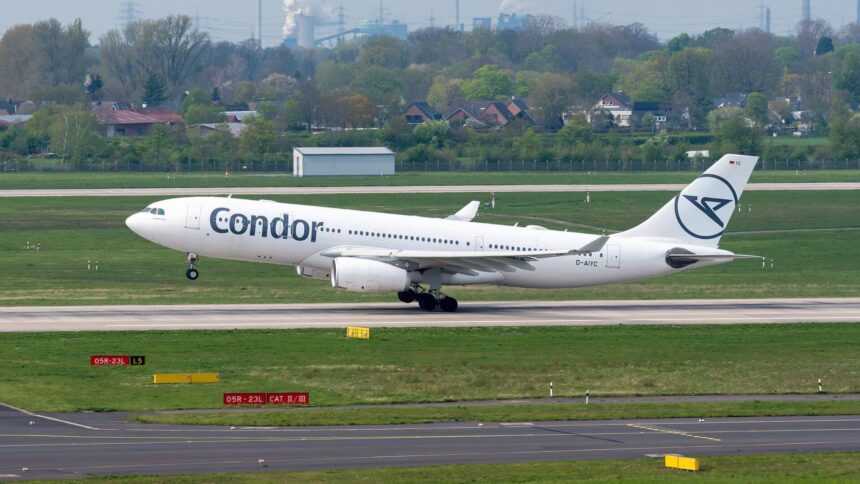
The expanded service runs between Frankfurt Airport and OR Tambo International Airport, operated by the modern Airbus A330-900neo. This next-generation aircraft delivers better fuel efficiency and improved passenger comfort—right in line with the rising push for more responsible long-haul travel. Evening departures from Frankfurt (typically between 8–10 PM) land in Johannesburg the following morning, while return flights mirror the same smooth overnight pattern. Flight time clocks in at roughly 11 hours.
Perfect timing for safari season
This added frequency lands exactly when it matters. From May through October, Southern Africa hits its wildlife-viewing sweet spot. Game sightings are at their best across Kruger National Park, Okavango Delta, and Hwange National Park, among others. Johannesburg remains the key gateway, offering seamless onward links to Cape Town, Maun, Victoria Falls, and beyond. Morning arrivals mean travellers can connect onward the same day—less waiting around, more time in the wild.
For travel professionals and experience-driven explorers across Nigeria and West Africa, this opens up sharper itinerary playbooks. Think Europe stopovers paired with Southern African safaris, or even mixing wildlife adventures with Atlantic coast beach escapes. More seats also ease planning pressure for families, couples, and solo travellers chasing authentic, nature-led journeys.
A modern fleet with a greener edge
Condor’s deployment of the A330-900neo signals a clear nod toward lower-emission travel. As demand growsespecially from German-speaking markets for meaningful, eco-conscious experiences, this capacity boost helps Southern Africa attract travellers who want both adventure and accountability. Better connectivity also deepens trade links and encourages longer stays, which translates to stronger benefits for local communities and conservation.
More options for African and diaspora travellers
Johannesburg’s role as a continental hub, supporting broader intra-African movement ambitions under frameworks like African Continental Free Trade Area.
Travel agents should keep an eye on booking systems early, as the fourth rotation may come with slight schedule tweaks during rollout. Locking in seats ahead of peak safari months is the smart move.
At its core, this move by Condor is a signal: Southern Africa isn’t slowing down. With world-class wildlife, rich landscapes, and solid infrastructure, the region is primed for travellers who want more than just a trip—they want something that sticks. And come May, these extra flights won’t just carry passengers—they’ll carry new possibilities.