
Ngozi Okonjo-Iweala, Director-General of the World Trade Organization (WTO) says Nigeria must lead the drive in Africa’s unified air transport market, describing aviation as a critical engine for trade, tourism, and economic growth.
Speaking at the Nigeria Aircraft Acquisition and Investment Summit (NAAIS) 2026 in Lagos, the WTO Director-General said the country must move quickly to support the Single African Air Transport Market (SAATM), a flagship programme aimed at creating a single, liberalised aviation market across the continent.
READ ALSO: Nigeria hosts aircraft investment summit to attract investment
Why the Air Transport Market Matters
Okonjo-Iweala stressed that Africa’s fragmented aviation system continues to limit growth. She noted that travellers often face long and costly routes even when flying within continents.
“Very often… passengers have to go through Europe,” she said, calling it “a structural constraint on growth.”
According to her, improving air connectivity is essential for boosting intra-African trade, which currently stands at about 16 percent, while Africa’s share of global trade remains just around three percent.
Nigeria’s Strategic Role
She argued that Nigeria, as Africa’s largest economy, has both the capacity and responsibility to lead the push for a unified aviation market.
“Nigeria has both an interest and a responsibility to lead that agenda,” she said.
The SAATM initiative, launched under the African Union’s Agenda 2063, is designed to remove restrictive bilateral agreements and open up African skies to greater competition and connectivity.
Aviation as an Economic Driver
Okonjo-Iweala urged policymakers to rethink how aviation is viewed, warning against treating it mainly as a revenue source.
Governments must see aviation as “a strategic economic enabler,” she said.
She explained that air transport plays a key role in moving high-value goods such as pharmaceuticals and electronics, making it essential for modern trade and e-commerce.
In 2025, air cargo accounted for nearly 30 percent of global trade by value, despite representing less than one percent by volume.
Challenges Holding Africa Back
Despite progress, she noted that Africa’s aviation sector still faces major structural challenges, including high operating costs, limited infrastructure, and weak connectivity.

Industry data shows that aviation already supports millions of jobs across the continent, but growth remains below potential due to policy fragmentation and high costs.
She also pointed out that Nigeria’s aviation sector, while improving, still contributes less than $3 billion to GDP—far below what is possible for a country of its size.
The Path Forward
To unlock growth, Okonjo-Iweala called for:
- Investment in airport infrastructure
- Expansion of airline fleets
- Lower taxes and operating costs
- Stronger public-private partnerships
She emphasized that aviation must be treated as core infrastructure supporting the African Continental Free Trade Area, which aims to transform trade across Africa.
The Bigger Picture
The push for a unified African air transport market is about more than aviation—it is about unlocking movement across the continent.
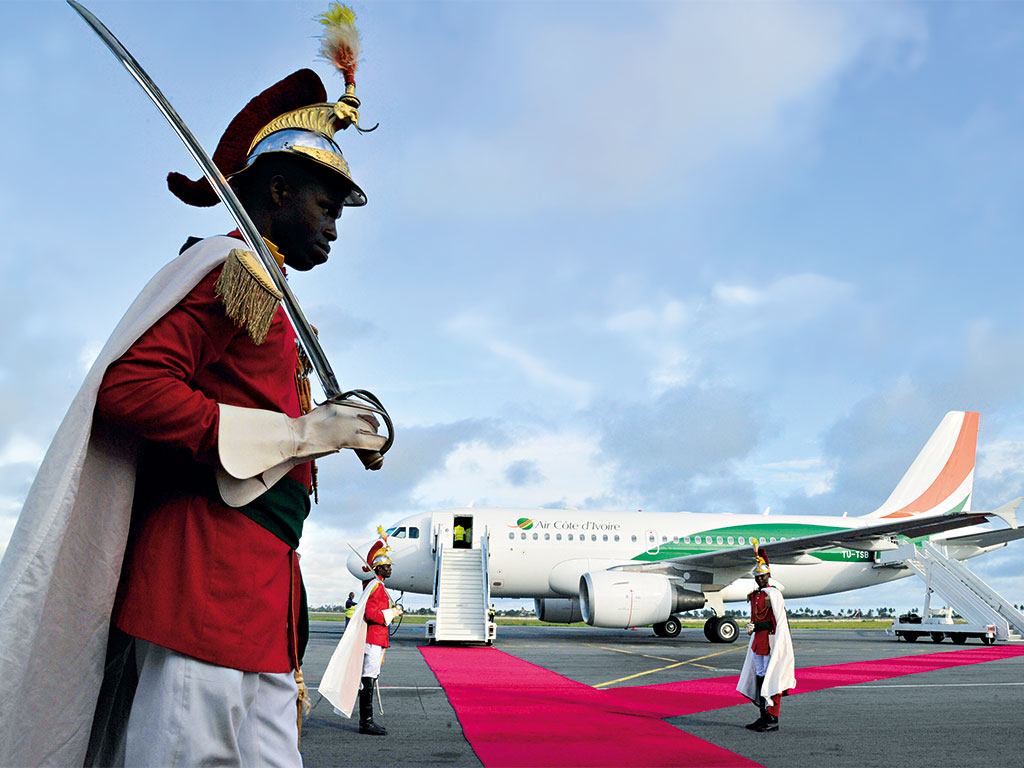
Faster connections mean more trade, more tourism, and more economic opportunity.
And for Nigeria, the message is clear: lead now—or risk being left behind in Africa’s next growth phase.